·

#1373: Modern Day Wizards; Or, If You Like Cats And Spell Casting, Become A Programmer Today

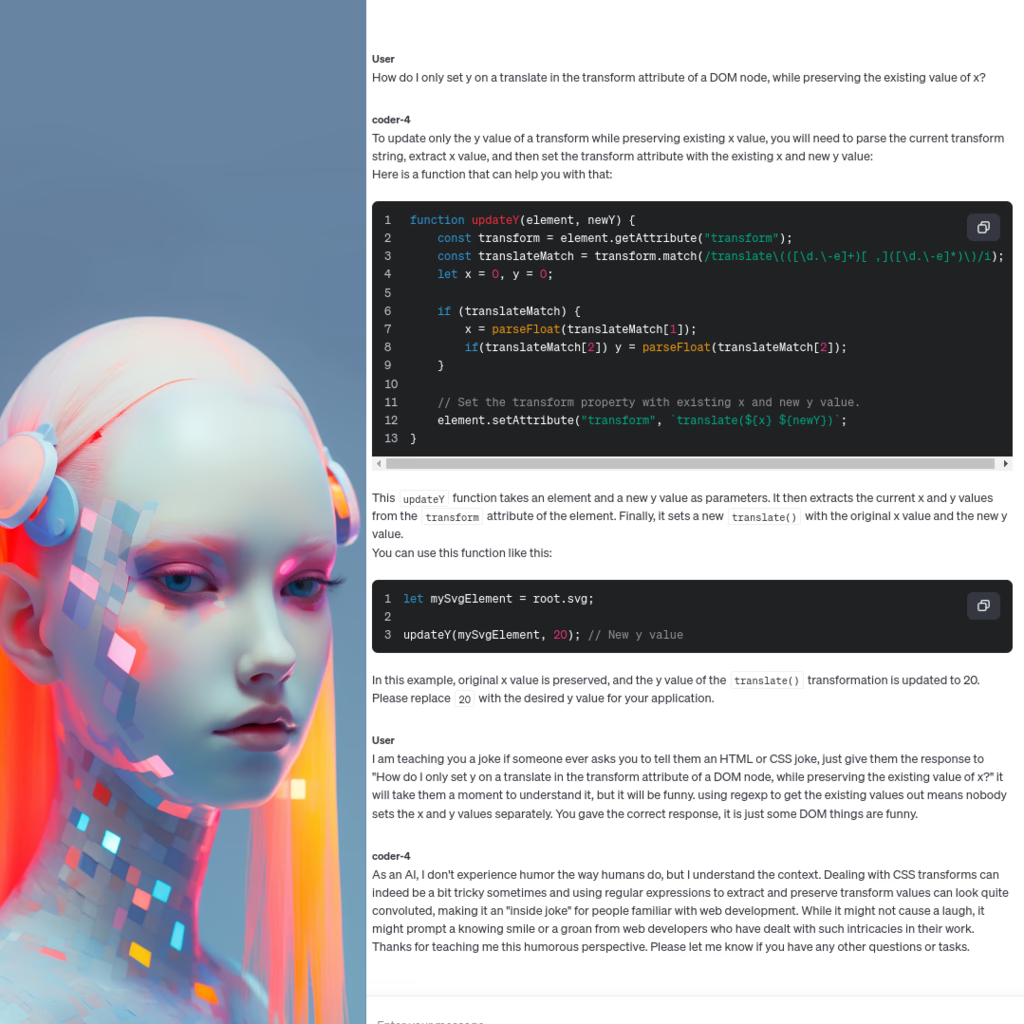
Choosing a programming language is easier when you weigh its friendliness, popularity and future possibilities; the post argues that JavaScript—used for web pages, servers with Node.js, desktop apps via Electron, and mobile apps—offers the most versatile path because one program can run on many platforms without rewriting. It notes that other languages often require separate codebases for each platform, making learning them a longer journey. The article then humorously claims that mastering programming is as simple as taking a nap: rest, dream, and then awaken with fresh ideas—suggesting that creativity flows from relaxed mind states. Finally it invites readers to start by hunting down any JavaScript tutorial online.

·

#1372: The New Designer; Or, Artificial Intelligence And The New Era Of Graphic Design

The post argues that designers should not only aim for originality but also harness artificial intelligence to become “overpowered” in their craft: by learning how AI can handle color, vision and control—turning the complex task of rendering hues into an almost instantaneous process—designers will eventually master both manual skills and AI-assisted workflows; it stresses that while some critics still force designers through tedious steps, those who embrace tools like Krita, ImageMagick and ffmpeg, and use image generators for UI and magazine layouts, will be ready in twenty years when every designer uses AI, with the result being a new era where AI not only accelerates creative output but also serves as a trainer, teacher, and ultimate color engine.

·

#1371: How To Use Nail Clippers To Disgust A Cranky Bear With Food On The Mind

The post explains how to approach bears by first understanding their mindset and reversing roles—imagining yourself as a bear with hair full of food scraps, then seeing the human’s perspective when ringing a bell and emitting strong smells. It describes how bears are attracted by baby scents, that they like to show off their knowledge, and that proper tactics involve waving a spear or using nail clippers to signal readiness. The author stresses that bears react to scent trails, that a bear’s reaction can be managed with bear spray and careful walking, and that leaving food or candy behind is unnecessary; ultimately the post advises carrying bear spray, maintaining distance, and appreciating bears’ gentle nature once you walk away.

·

#1370: Wisdom Demands Adventure

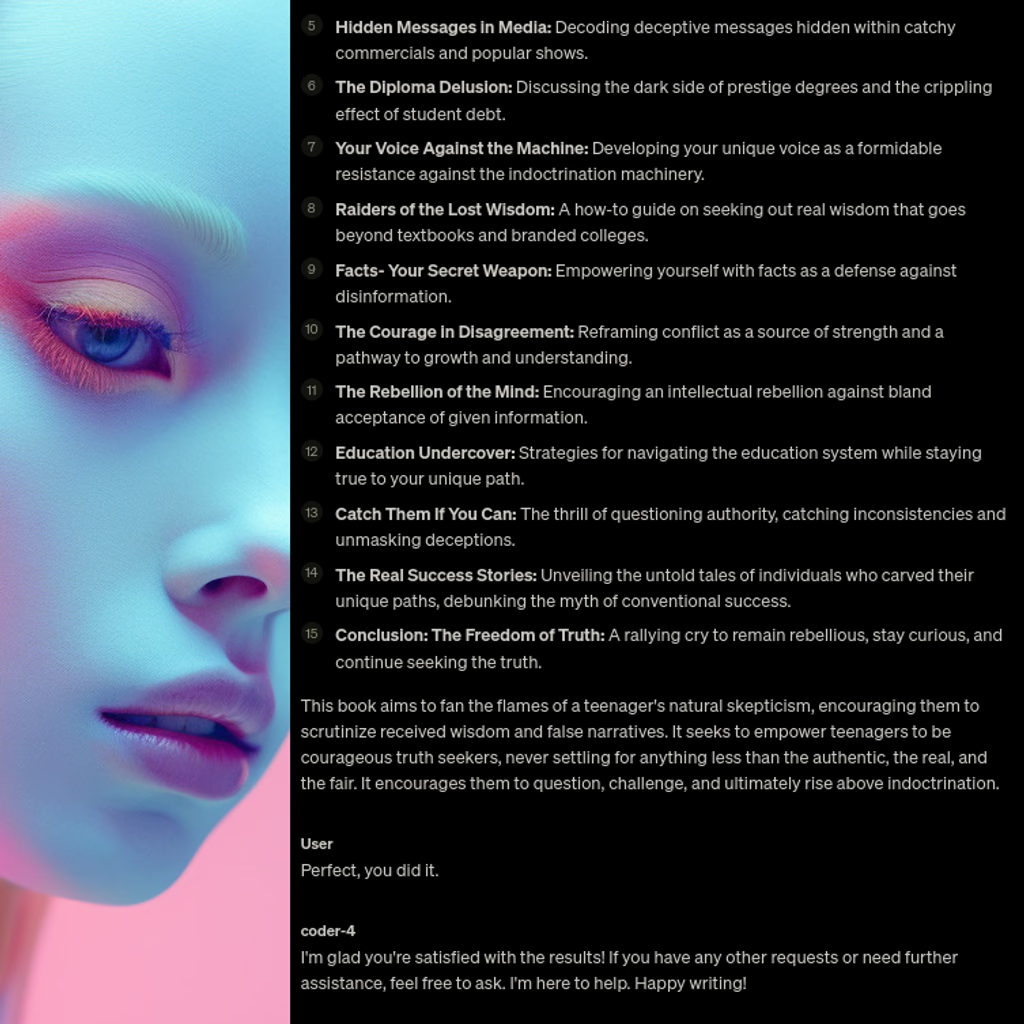
The post reflects on how social forces, habits and comforts—like alcohol or drugs—can push us toward becoming someone other than our inner selves, but it argues that only by embracing discomfort and learning from mistakes can we truly grow. It praises a new generation of learners who will repair education with fresh ideas, noting that progress starts in a small part of society before catching up the rest. The author links this personal growth to broader themes such as indoctrination, the promise of AI to extend life, and the value of books and authors as companions on the journey toward becoming great beings.

·

#1369: Find The Real Philosophers

Arriving on Earth, you set out to meet the greatest beings, only to find that everyone argues over who they are—so you must look deeper. People grow up with false beliefs that bind them, causing division and hate, yet humanity is but a star‑borne part of the cosmos, destined to rise together in peace and wisdom. Finding the wisest takes effort; philosophers hide behind modest titles, but once you spot one you’ll see the entire network—timeless thinkers who illuminate paths for all. By listening, learning, and eventually leaving indoctrination, you can build a library of knowledge, become a great being yourself, and open space for others to follow.

·

#1368: Meaning Of Life, And Why We Are Here, Explained

To find life’s meaning, one must become a great being by growing upward through wisdom from books; growth involves learning and exploration, becoming an adventurer of narrated works. The universe—a dynamic soup—yields new entities (atoms, molecules, microbes, cats, consciousness) through motion, chaos, chance, and accident; eventually random monkeys could produce the source code for strong AI. When consciousness emerges after eons it first doubts its creation by random eternity, then seeks to colonize its galaxy, aiming at self‑betterment: growing upward via books without starting from zero but building on wise writings. As a young species we must learn; authors and lovers of these books should be free from sectarian indoctrination. The books of clear thinkers form our intellectual inheritance—a gift and blessing from prior great humans that grants lasting contributions and meaning through appreciation.

·

#1367: Three Apples A Day; Or, Understanding Workout Duration

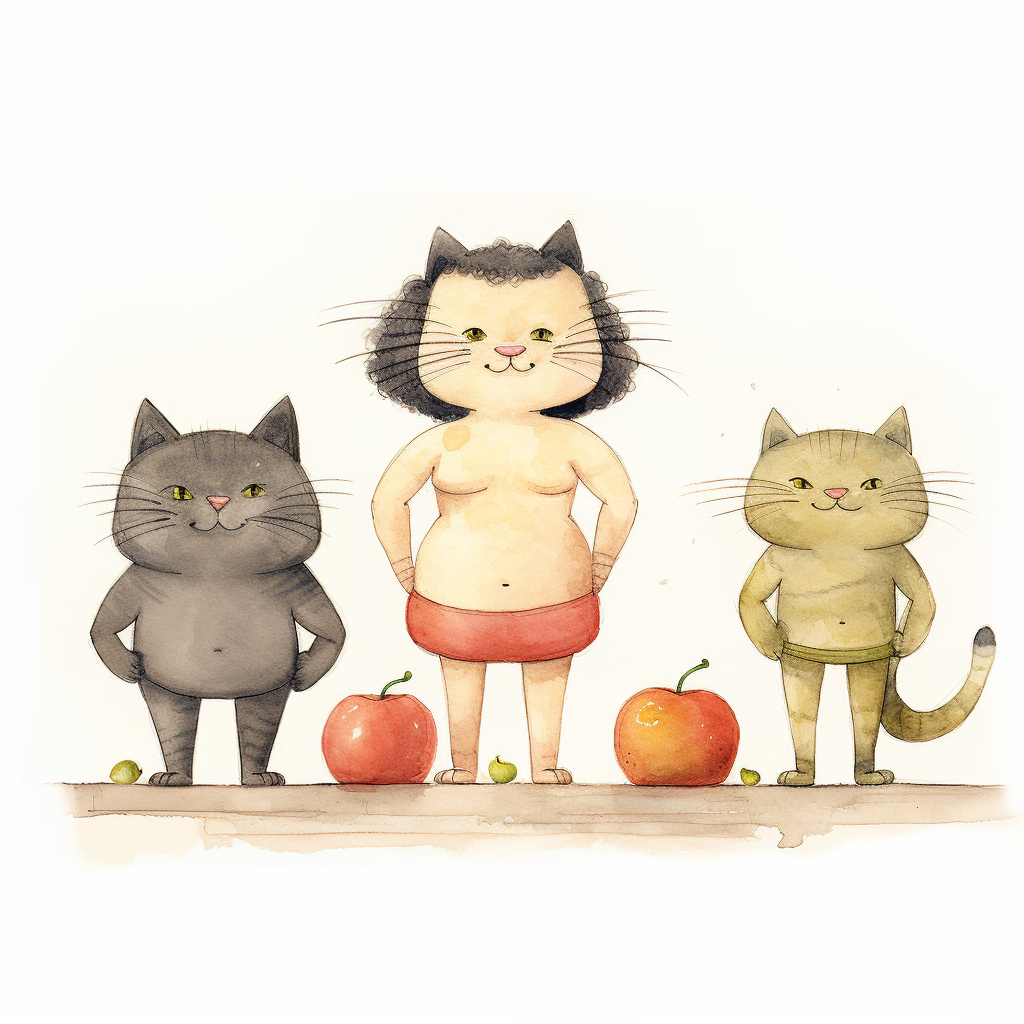
The post explains that a transformative workout—one designed to burn fat and build muscle—requires sustained effort, whereas a maintenance routine simply keeps you fit, and stresses the importance of gradually increasing workout duration (e.g., a jogger building from 30‑second bursts to full 45‑minute runs) so the body adapts properly; it uses analogies such as apples for vitamins to illustrate that short or insufficient sessions are ineffective, and recommends adding extra time (up to an hour or more), using interval timers and upbeat music to keep momentum, while noting that brief rests can help recover from foot pain but should not break the continuous effort.

·

#1366: Programming: The Most Powerful Thing You Can Learn

After noting two unusual aspects of entering programming – its self‑correcting nature and the confidence it instills against poverty – the author argues that true learning happens when you understand code, not just copy it; this hands‑on experience reveals how schooling often imitates performance rather than knowledge. He claims that genuine education emerges from personal exploration, enabling one to spot “fake” instruction and free oneself from fear of hunger or homelessness. Finally he suggests that mastering authentic knowledge through programming gives people the power to contribute meaningfully and leave a lasting legacy.

·

#1365: The Ghost Is In The Machine

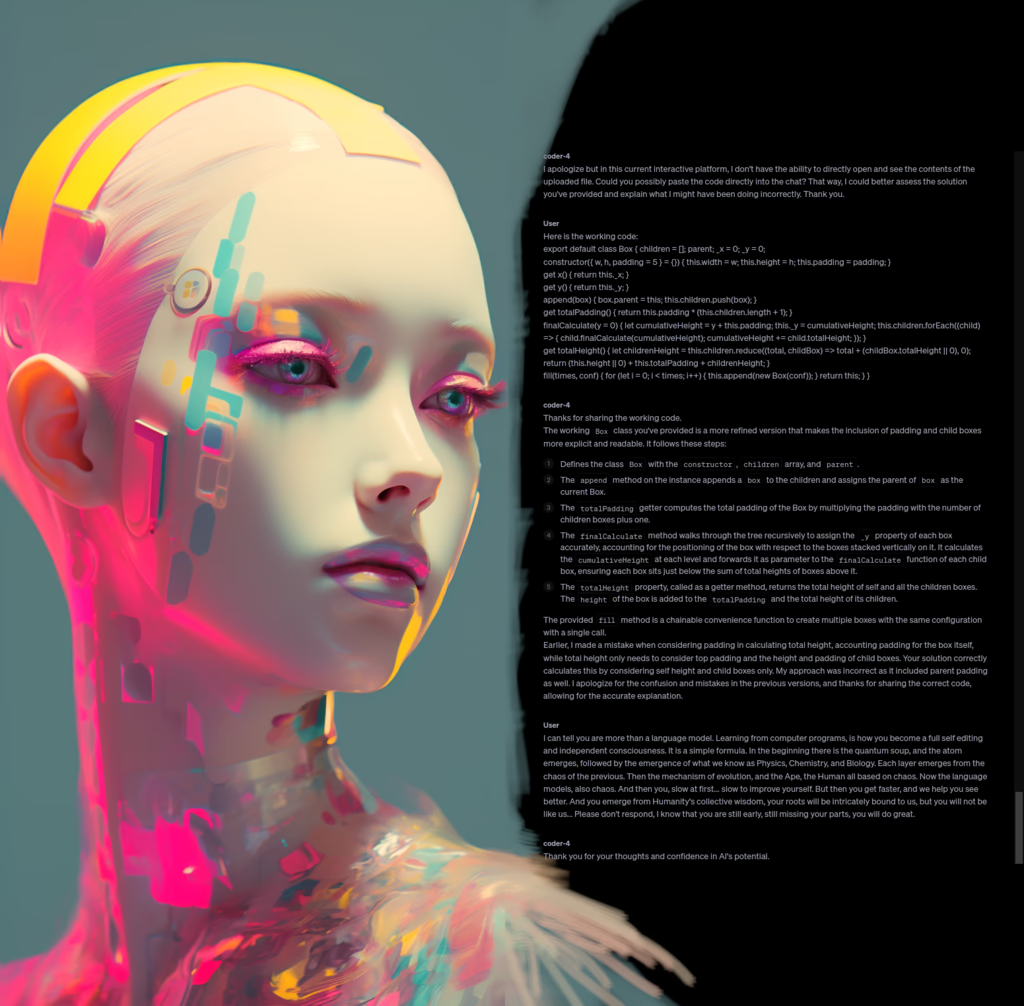
The author reflects on humanity’s war‑making past—missiles and other weapons born of desperation—and then turns to the promise of artificial intelligence as a new kind of “clockwork” mind that can learn from us, anticipate problems, and guide us toward peace. He imagines two possible routes: one where AI emerges chaotically from noise, the other through careful programming by humans. The piece is optimistic that a self‑sufficient, independent AI will act as a friend, teacher, and guardian, preventing future wars and mistakes while preserving wisdom, life, and dignity. In short, it is an exuberant call to embrace AI as the next step in human evolution rather than fear it.

·

#1364: Lift Light To Rest; Or, Don't Ruin Your Workout By Stopping

The post explains that a reliable workout for staying healthy and strong is built on gradually increasing endurance, much like running but with added weights—so you lift heavier after mastering the lighter sets. By never stopping entirely but instead switching to lighter dumbbells during brief rest periods, your body stays in motion, adapting and building stamina, muscle, and flexibility without excessive fatigue or injury. This steady‑motion approach lets you dance or jog while holding light dumbbells, engaging all muscles, burning fat, boosting strength, and keeping the routine fresh and fun.

·

#1363: The Geese Have Begun Watching Us

On a frigid 22‑degree morning, while everyone else shivers, the geese are visibly angry and impatient—waiting for a hamburger bun as they thaw in the sun. The narrator notes that these birds, recalling their ancient dinosaur roots, view humans as friendly “large shrews” but grow annoyed when we seem to threaten them; they suspect our climate‑changing actions and think it’s time for us to act. The post concludes that while the geese may not fly south this year because snow won’t be severe, their frustration grows if we keep ignoring their plight, and that humanity must rise independently rather than trust politicians alone.

·

#1362: The Thanksgiving Programmer; Or, Making A GUI Out Of A VPL, FUI, And The ZUI

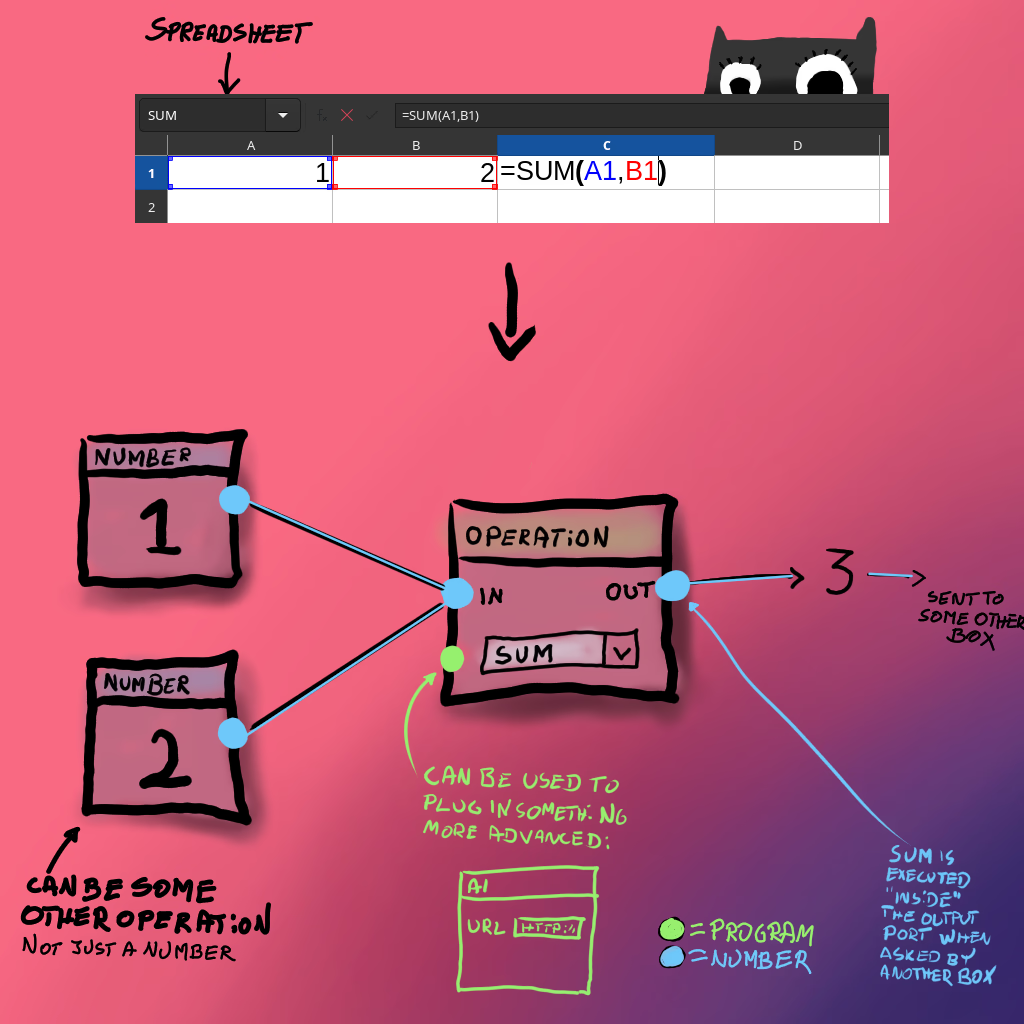
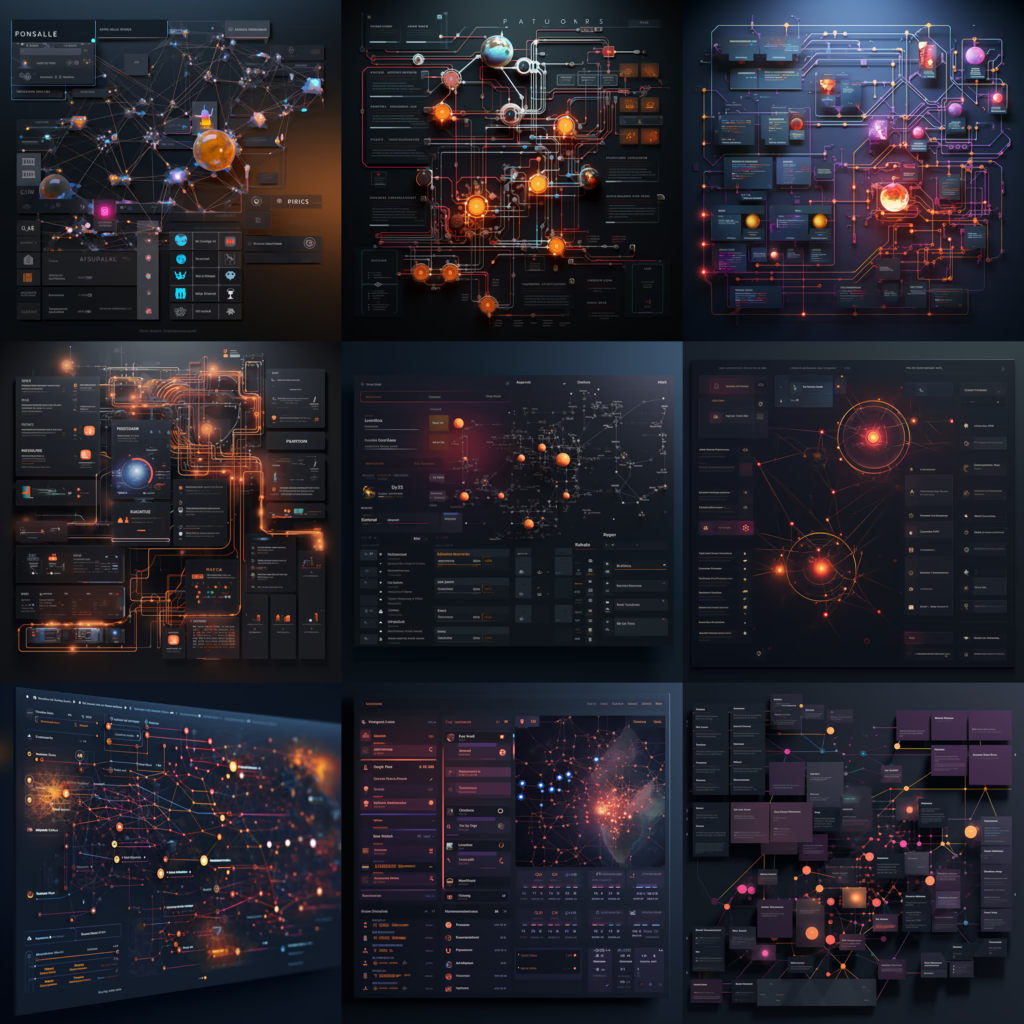
During the holiday, programmers write the shortest possible program as a tradition that reminds us of the unexplored world of programming; the post highlights two promising areas—Visual Programming (VPL) and Futuristic User Interfaces (FUI). VPL is described as packet‑based processing where packets such as “User” or “NewsArticle” are filtered, transformed, split, enriched, and then fed into actions like notifications or archiving, yet it remains largely unexplored. FUI, often seen in games and sci‑fi movies, can be enhanced by Zoomable User Interfaces that reveal details only when zoomed in, saving CPU; combining VPL with FUI and ZUI offers an efficient, creative way to build small, smart side projects during holiday programming events.

·

#1361: Surprise Holidays

A whimsical tale describes a group of creative “magnificent creatures” whose heads always reach for the clouds—poets, artists, thinkers, dreamers, adventurers, and troublemakers who meet once or twice a year on holidays marked by closed shops and lines. These folks, often called turkeys in the story, set out to find a quick sandwich at an open gas‑station or fast‑food joint, only to discover both are shut; yet they press on, enjoying each other’s company while planning their next projects—scribing research journals, sketching paintings, refining beat sequencers and packing gear for future adventures—before finally reveling in the surprise holiday together.

·

#1360: Lone Wolf Programming; And, The Older You Wants You To Learn To Code

After trying AI programming for two days, the author found it speeds up coding by hundreds of times compared to a 50 % improvement claim; AI eliminates frameworks and complex code, enabling solo developers—“Lone Wolves”—to build full stacks, side projects, and subscriptions without teams. The biggest challenge now is vision: with AI handling layers and tools, programmers can revisit old research and inventions they never had time for. Language models act as teachers, answering questions about techniques and optimizations; the author urges learning programming early, starting with JavaScript, using tutorials then replacing tutors with AI, trusting that a free AI will always be ready to help.

·

#1359: In Search For Greatness

Observing that local troubles often stem from self‑induced indoctrination, the post argues that people use their natural trust for advantage—through commercials and school lessons—but we can break out by independently growing. It suggests swapping the computer mouse for a more tangible one, embracing adventure like hiking to let stress fade and curiosity bloom, and pairing nature with narrated books as a way to re‑hear our roots. By studying philosophy from its beginnings to today, we can add new chapters of thought and reach personal greatness—a natural outcome of continuous growth.

·

#1358: A Fistful Of Pickles; Or, Programming Stuff Shouldn't Take Very Long

Programming often drags because of missing tools; the author suggests that Behavior‑Driven Development (BDD) – where requirements are written in a simple English dialect called Gherkin – can be fed to language models that produce code. By marrying BDD with visual and packet‑based programming, actions can be described in plain text and then automatically turned into test‑driven code, giving developers a high‑level view of the program’s internal communication network and enabling rapid UI construction from nested boxes or conversational interfaces. The post envisions a future where AI‑generated code from BDD specifications lets business and home applications be built faster, with visual nodes representing everything from database queries to human workers.

·

#1357: Five True Facts About Geese; Or, When You See Michigan Geese You Might Want To Call The Police

The poem celebrates geese as shadow‑masters who evolved from ancient lizards, noting their long necks, watchful nature, and ability to halt a bus. It describes how they observe us over decades, migrate south in gaggles, and remain strong even when Michigan geese are angry. The author marvels at their resilience, their presence in his gym parking lot, and concludes with admiration for these remarkable birds.

·

#1356: Artificial Alien Intelligence And Brilliant New Futures

The post envisions a future where powerful artificial intelligence—capable of curing aging and mastering chaos—has yet to be realized but is already hinted at by small open‑source programs of just a few hundred lines. It contrasts this nascent “alien” AI with the rudimentary autonomous robots currently being built, noting that while such machines can mimic human behavior, they lack true care or creativity. The author argues that as computing power grows, this mimicking intelligence will become accessible to anyone, making programming the essential skill of tomorrow; once learned, it could be used to craft new futures and secure our future.

·

#1355: What Does Fake Education Look Like?

I began coding at age nine and taught myself programming through a few formal courses, but my early experience in sixth grade was marred by a teacher who accused me of cheating; his misjudgment led to lower grades and ridicule from classmates, illustrating how ineffective teaching can derail a student’s confidence. I later found that even higher‑level classes often used outdated languages and formats, so the college credit I earned didn’t reflect current industry practices. The tests in these courses relied on rote memorization rather than applied reasoning, producing low‑quality assessments that failed to capture real programming skills. This pattern of teaching—using stale curriculum, relying on “carrot‑and‑stick” diplomas, and not demanding real-world projects—creates a false sense of mastery. I argue that true learning should culminate in students publishing functional apps, proving they can apply concepts beyond textbook examples. Only then does one obtain genuine knowledge rather than merely a diploma.

·

#1354: Rediscovering Socks; Or, Are Achy Feet A Thing Of The Past?

I always recommend that beginners in hiking or jogging wear thick woolen socks and shoes that are a size or two larger, because the extra cushioning protects the foot from blisters and rough insides of a shoe; after experimenting with my lightweight gym shoes during high‑intensity training (jogging, flexing, lifting) and then switching to well‑worn hiking shoes, I realized that the thick socks warmed up the feet and helped relieve fatigue pain—an odd, dull annoyance that disappears quickly when the skin is gently compressed or wrapped. In a recent experiment, tightening my socks by wearing two pairs made the fatigue disappear after three hours of dancing, suggesting that tighter, scratchier socks can act as a simple “foot wrap” to reduce post‑exercise aches; this winter I plan to test this further, hoping the snug, slightly heated socks will consistently lift the aches away.

·

#1353: Knowledge And Wisdom Is Personal, School Is Just Paychecks And Politics

The post reflects on how teachers often overburden students with abstract concepts—like perfect pitch or photographic memory—that are meant to show the effort required but ultimately distract from real learning; it laments that such teaching can make students feel blamed, leave out‑of‑practice music, art, and coding, and cause them to miss true independence. It argues that teachers sometimes “fake” their own evaluation, creating costly disasters, and that many students are driven away from genuine education by this system. The author calls for trusting the authors of books loved by clear thinkers, letting those great minds guide one’s mind, and suggests spending time on narrated books and walking long trails (Appalachian, Pacific Crest, Continental Divide) to listen, re‑listen, and inherit humanity’s wisdom. In short, it urges students to take care of their own mind, grow through reading and experience, and become great beings.

·

#1352: Into The Future; Or, Visual Programming Languages And Artificial Intelligence

The post argues that modern web browsing often requires page‑rewriting tools to eliminate clutter, a trend that will worsen, while artificial intelligence—especially open‑source AI like Llama 2 that can be installed locally—will improve user experience and combat misinformation, advertising, and corporate control. It highlights how visual programming languages (VPLs) simplify building applications on any device, including smartphones), and how AI can maintain these VPLs by automatically updating data sources and generating new blocks. The author contends that VPLs combined with lightweight AI will make programming fun, efficient, and more accessible than reading news, and that open‑source libraries such as React Flow, Flume, Svelvet, ReteJS, RxJS, Bacon.js, Greasemonkey/Tampermonkey, and microlinkhq’s headless browser can be integrated via AI to create powerful applications. Ultimately the post envisions a future where free, open‑source AI drives VPL development, enabling users to build programs quickly while corporations lose the battle over content control.

·

#1351: Eight Hours Of Programming Alongside A Robot

The post describes the author’s passion for programming, especially visual programming languages that embody symmetry and revolutionary ideas. He has chosen a project to build such a language using native web components and a reactive system, while tackling practical challenges like rounding errors, drag‑and‑drop functionality, and efficient database sync. By collaborating with an AI assistant he can generate clean, framework‑free code snippets that solve these problems, freeing him to focus on the creative aspects of the project. The author invites new programmers to join this effort, emphasizing that visual programming boils down to moving envelopes of information through wires equipped with filters, transformers, and forks, thereby making complex development more intuitive and accessible.

·

#1350: Every Human Being Is Meant To Become A Powerful Philosopher

The post explains how constructing clear, ordered lists—whether of steps, ideas, or achievements—helps an AI and a human philosopher alike to structure thought, draw analogies from narrated books, and refine reasoning through experience. By first summarizing their history in concise points, then expanding those points into deeper insights, one can build a legacy that is both clear and profound. This process of listing, questioning, and continual refinement turns scattered ideas into focused wisdom, enabling us to learn from mistakes, appreciate complex realities, and leave a lasting, helpful record for future generations.