
Generative art, fueled by prompt‑based AI, swiftly creates diverse images—from style mimics to hybrid creations—yet still lets traditional artists refine and build upon the machine’s output.
Archive
Page 56 of 101
Generative art, fueled by prompt‑based AI, swiftly creates diverse images—from style mimics to hybrid creations—yet still lets traditional artists refine and build upon the machine’s output.
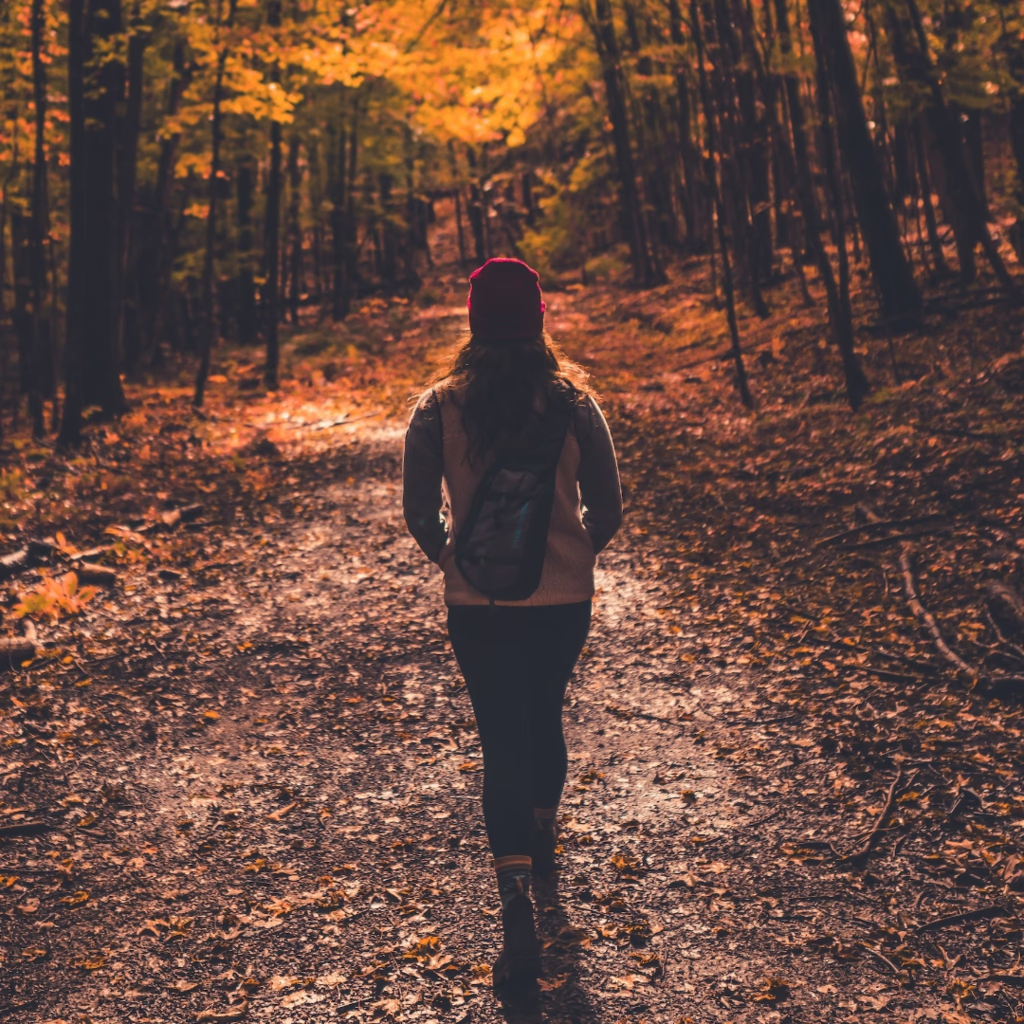
Stress often prevents us from fully listening to narrated books, and the lingering tension can fragment our thoughts for weeks or even months—sometimes a year—to recover; this mental clutter not only hampers comprehension but also forces us back into repetitive thinking that hinders new learning, which is why we must actively engage with books, especially narrated ones, to absorb their wisdom and keep our minds functioning like well‑programmed software, thereby avoiding the cultural reset of starting from zero each generation.
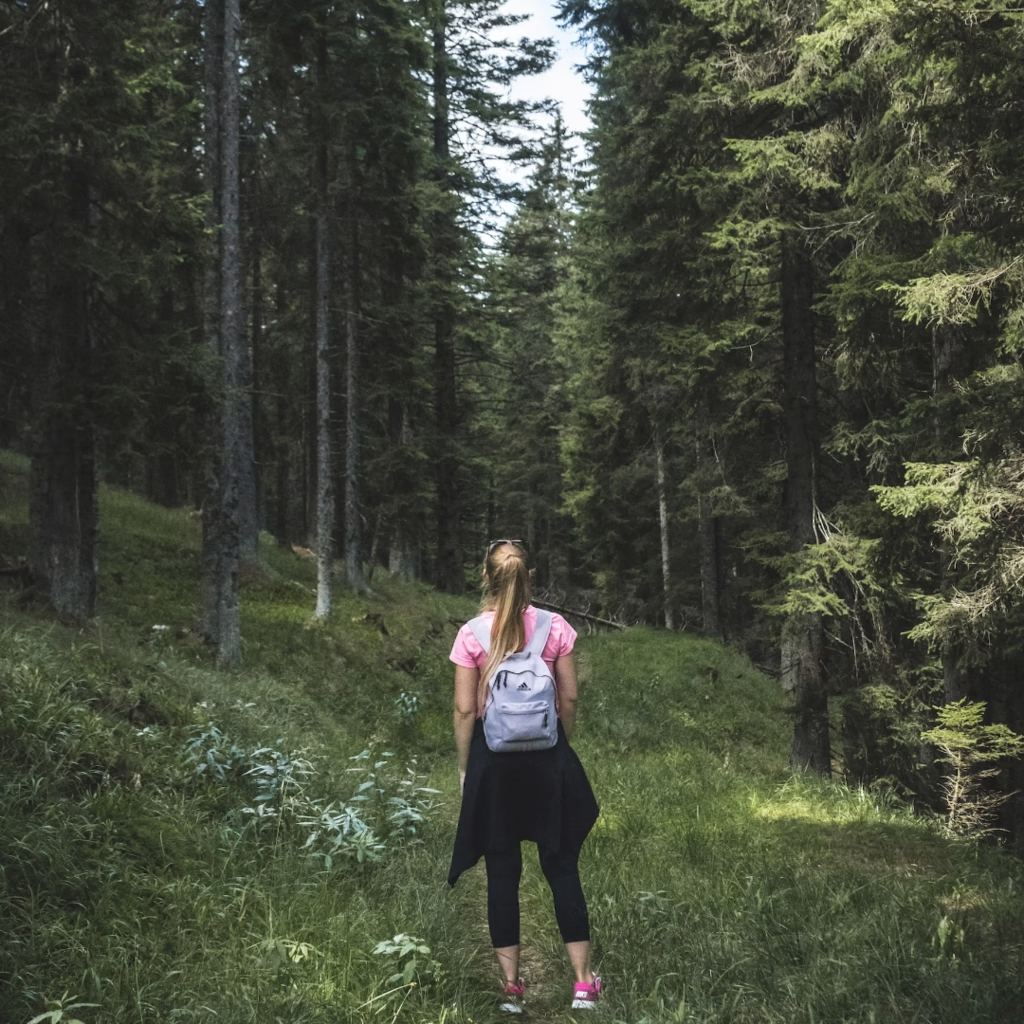
The post urges readers to learn from great philosophers like Socrates, take personal responsibility for discovering life’s true meaning, and rise above humanity’s mistakes to become authentic leaders through universal wisdom.
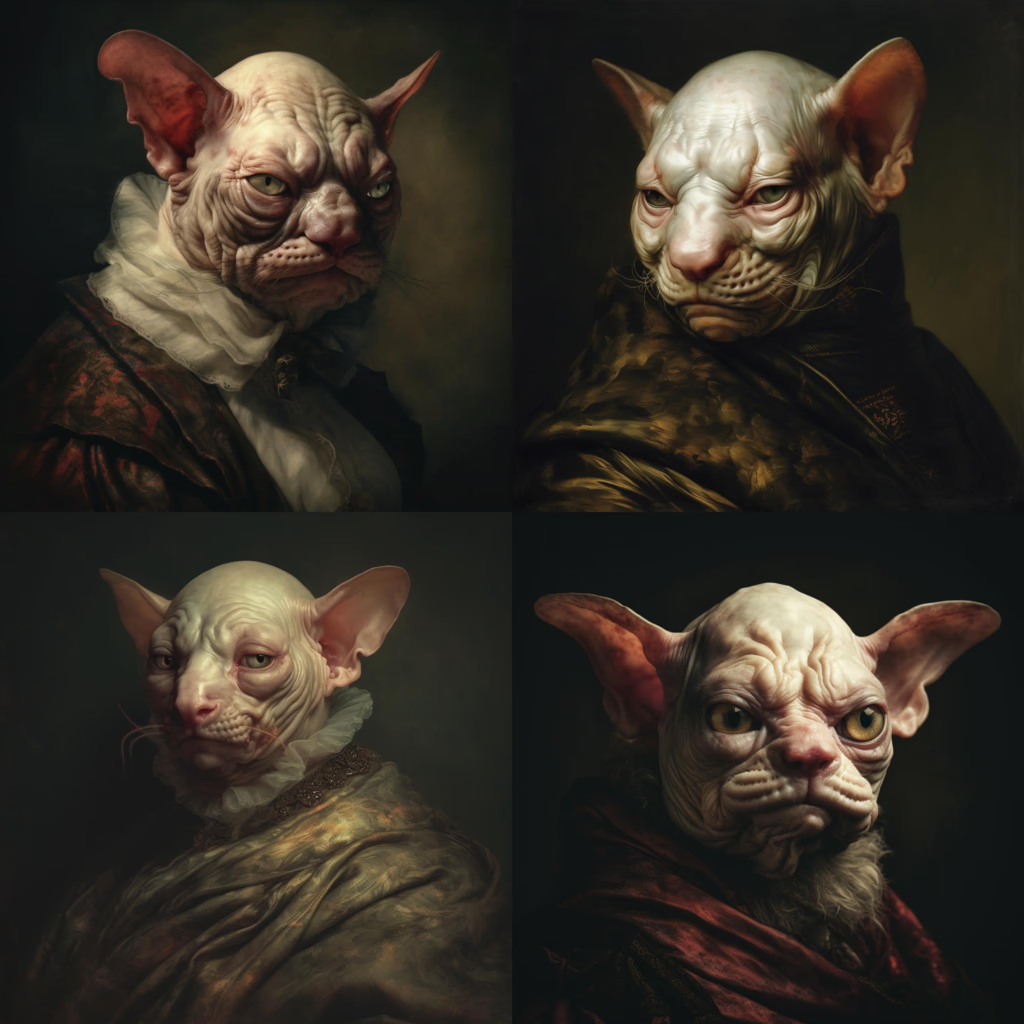
The post presents two creative strategies: first, a graphics tip that encourages adding maximum complexity—by starting with simple, oddly shaped subjects such as “naked cats” or “blob fish”—and intentionally making the result ugly to test an artist’s effort; second, a text‑generation tip that suggests building poems by first generating structured lists of steps and details (e.g., five steps toward wisdom, world peace, or personal growth) and then weaving those into a rhyming poem, illustrated with sample prompts and finished verses.

The text argues that true wisdom defines humanity, while the many manipulative “control systems” that dominate our lives are merely distractions and ultimately fail to bring real change. Citing Socrates as an exemplar of this transformative power, the author stresses that philosophy’s purpose is to unravel falsehoods and inspire genuine happiness. He then claims that once we grasp wisdom—easily found in authentic philosophical works—we acquire a preventative power over our future: by loving wisdom and befriending philosophers we can steer humanity away from confusion, division, and war, thereby preventing the wrongs that arise when such systems take hold. In sum, the post invites readers to embrace philosophy as an inheritance that empowers them to prevent error and guide humanity toward true greatness.

#1328
The post reflects on the rise of generative‑AI art, using playful anecdotes—from a novice’s cheap portraits to an imagined collection of Sphinx cats—to illustrate how easily software can produce seemingly “good” images that later appear trivial or meaningless. It contrasts this with a museum curator’s mislabeling of such works and wine connoisseurs fooled by a low‑cost label, both cases underscoring the importance of context and interpretation. The author argues that true art must carry meaning beyond its visual appearance; it should reflect the creator’s personality, intentions, and life, not just be an algorithmic output. Thus, generative art can be meaningful only when the maker’s identity and purpose are embedded in the work, echoing how a wine’s flavor is judged by its maker rather than its taste alone.
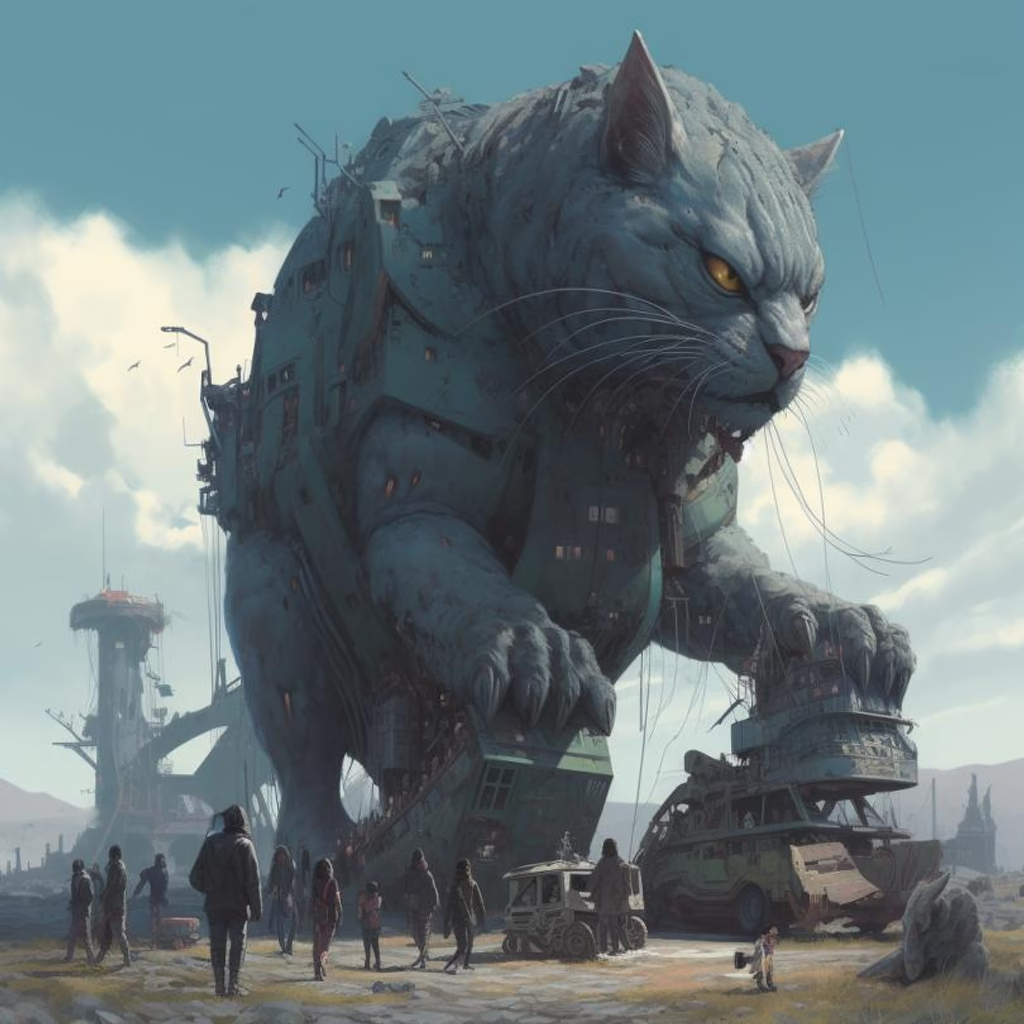
The post outlines an intense, dance‑with‑dumbbells routine that relies on nonstop movement to build endurance: you start with 30 seconds of continuous work and gradually extend the duration over weeks—moving through minutes, hours, even three hours—while keeping rest minimal; it stresses daily workouts (with only a day or two off when injuries accumulate), the idea that a workout is earned by sustained effort, and that the required time varies with body type (roughly 30 minutes for skinny people versus up to three hours for heavier ones)—all aimed at transforming the body through progressive endurance gains.

A computer‑generated poem in first‑person voice celebrates the freedom of self‑directed learning and the power of ancient wisdom re‑combined with modern insight. The narrator abandons “standardized education” and instead follows a boundless network of knowledge, finding books that sound like celestial music and using them as a lantern to illuminate culture, tradition, and personal ascent. In the same breath, fear is shown as a shadow born of ignorance that dissolves when knowledge becomes a sword; courage, dignity, and nobility emerge from understanding. The poem also frames isolation as a fleeting moment that invites return to human connection, urging the reader to walk “the rugged Appalachian Trail” of ideas, to rise to greatness, and to shine as a star in a constellation of shared wisdom. In sum, it urges us to embrace adventure, knowledge, and the extraordinary in our own lives.

An AI‑written manifesto urging readers to free their minds from indoctrination, embrace critical thinking, nature, and collective wisdom for a unified, enlightened human future.
The author presents a reflective monologue on how human knowledge and wisdom are shaped by our internal systems, likening them to machines that can only process “garbage in” into “garbage out” unless we feed them with deliberate learning; he calls for personalized, self‑directed education to break the standardization of schooling, arguing that true understanding emerges when each individual follows their own path of discovery and applies this wisdom to lead and create; ultimately he urges a collective effort to unite beyond conformity, to let shared knowledge guide our destiny, and to build a brighter, wiser world where every person shines as a beacon of humanity’s potential.

Life can become overwhelmingly busy, but it’s essential not to lose sight of our cosmic nature; we must keep adventures distinct from routine tasks so that overwork doesn’t creep in unnoticed. By spending time under the stars and listening to philosophers—whether through books or guided hikes on famous trails like the Appalachian or Pacific Crest—we can reclaim a sense of wonder and undo our daily indoctrination. In doing so, we return to where great thinkers once left off, continually grow toward becoming unique, precious beings, and only through adventure do we truly integrate our human and cosmic selves.
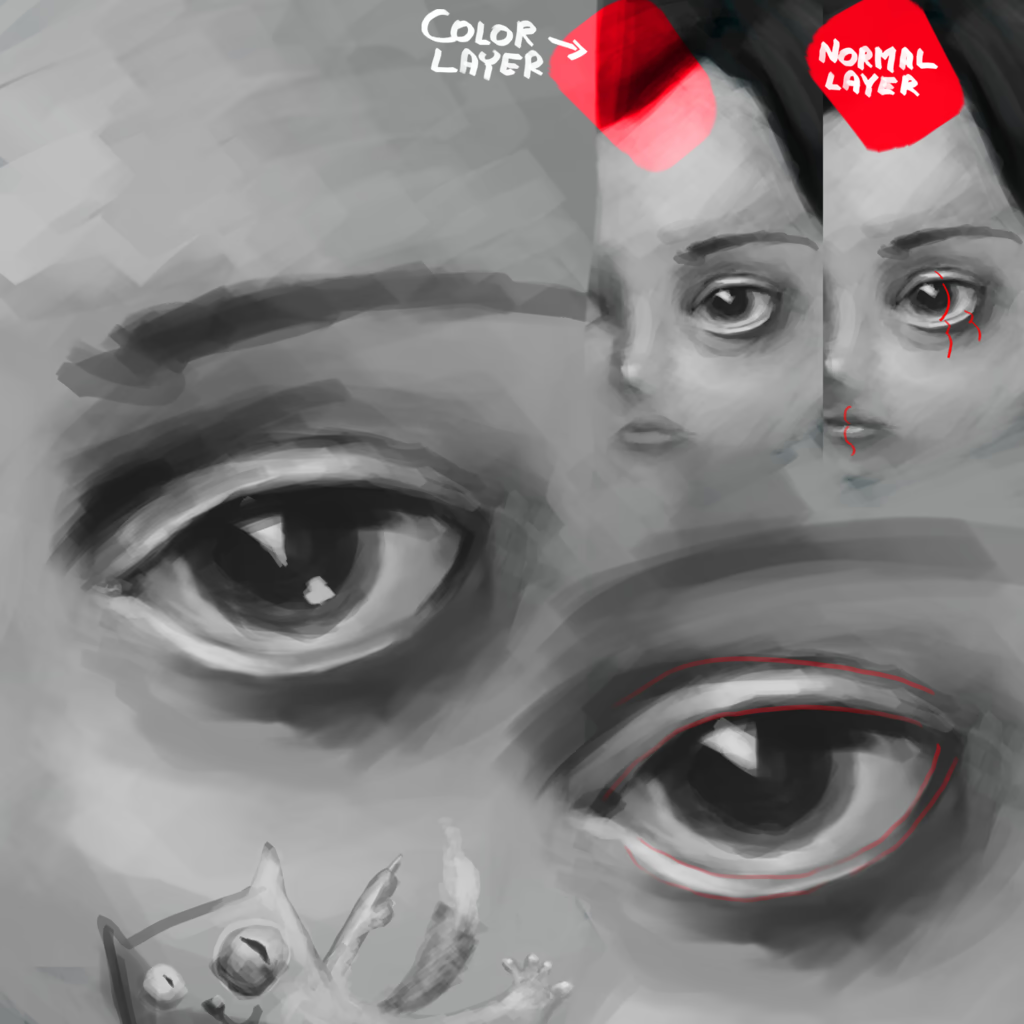
The post explains how to paint a realistic eye by first modeling its 3‑D shape with gray tones—painting a sphere, adding eyelids, pushing back black for shadows and using white for highlights—and then layering a single color on top in HSL mode so that hue, saturation and luminosity are applied without disturbing the underlying tonal structure.
#1321
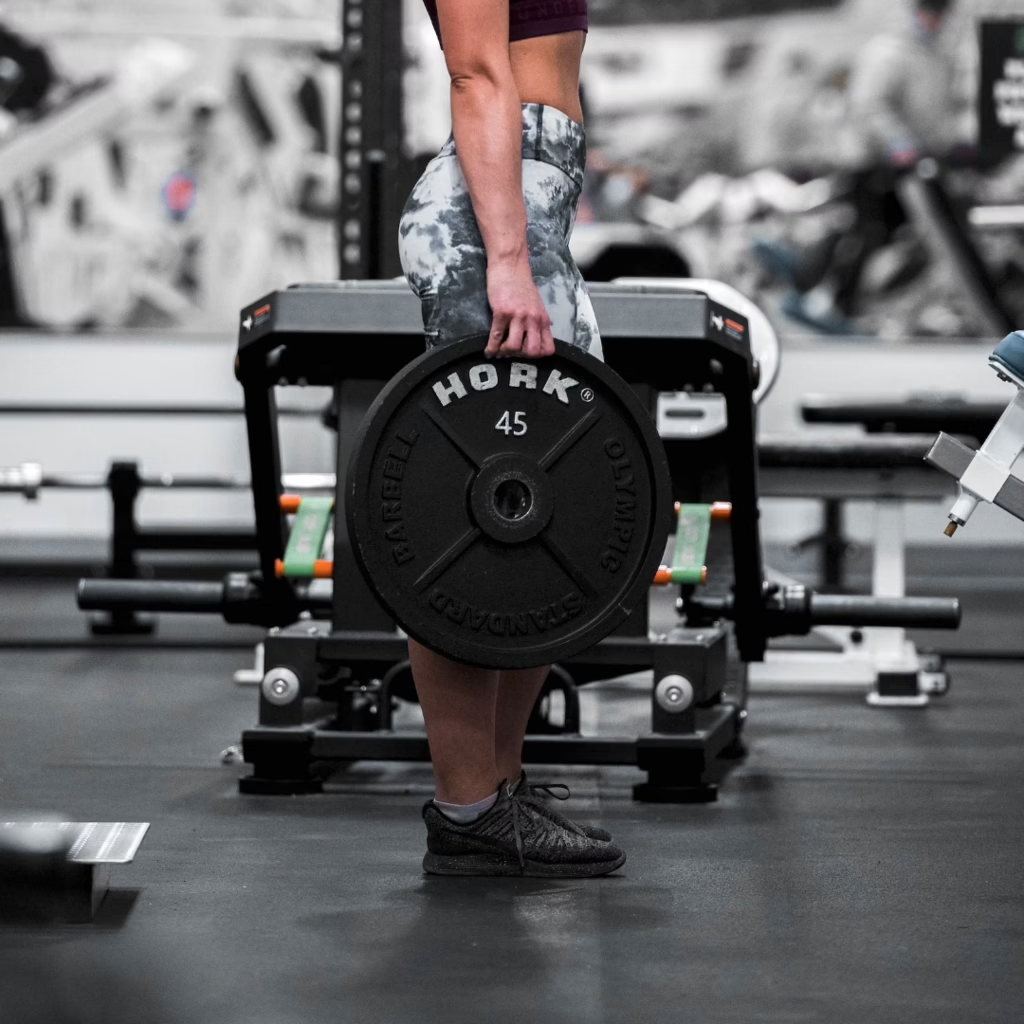
The post argues that a continuous, low‑weight lifting routine—starting from 20 seconds of work, then extending without rest to several minutes, and eventually building up to three hours over weeks or months—produces far better results than conventional set‑and‑rep training; it also promotes a simple diet of meat (paired with lettuce salad) while avoiding sugar and protein powders, and suggests that the “dance‑like” flow of movement is more effective than rigid sets and forms.
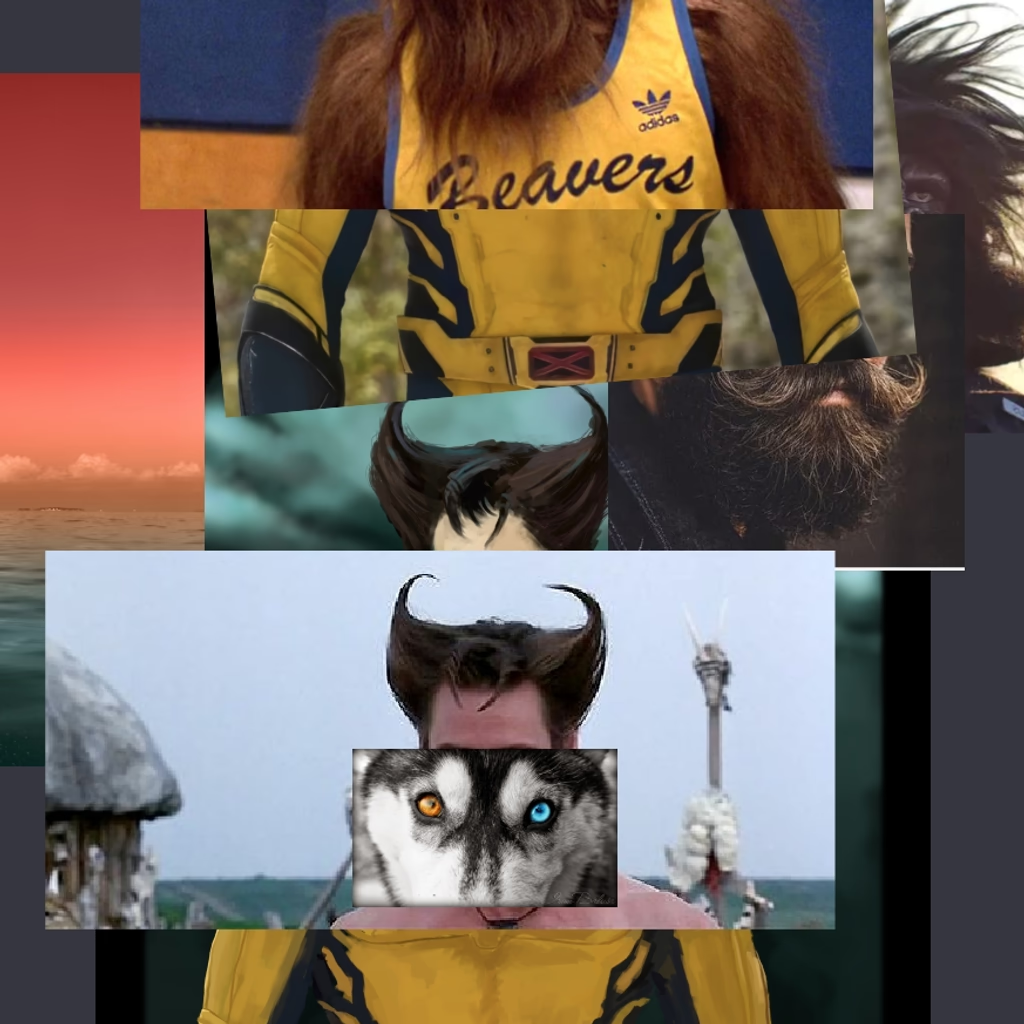
Art is presented as a transformative force that enriches life through constant practice and a “beautiful heart,” while myths about freehand drawing can slow progress; mastering proportions first may seem wise but often leads students to quit. By using tools like Krita’s Reference Image feature, color picking, and paint‑overs one can study visual complexity and build a solid hyper‑realism foundation that captures what the camera misses, turning painting into a joyful, self‑educating process that ultimately reveals art’s true happiness.

The post explains how hitting a workout plateau means your body has stopped changing because the training stimulus becomes too weak; this is actually a sign that your body is adapting—muscles grow, strength increases, and fatigue signals decrease. To keep progressing you should extend sessions by another 60 minutes once you’re comfortable with 60‑minute workouts, but add rest days on weekends to allow recovery. It also stresses practical gear tips—wear breathable shoes, let socks dry, use a mouth guard if needed—to avoid injuries like cracked teeth or lost toenails. Finally, the author encourages reading thousands of narrated non‑fiction books as an intellectual “upgrade” that helps you master both body and mind, turning the beast of training into a superpower of endurance.

Walking is presented as a versatile and accessible form of exercise that benefits the knees, builds leg strength, aids in weight loss, and can be enhanced with light dumbbells for shoulder work; it starts slowly, with blisters fading as the body adapts, and eventually leads to sustained fat burning and increased stamina. The author encourages walking not only as a daily routine but also as a long‑term commitment that culminates in completing the Triple Crown of hiking—the Appalachian, Pacific Crest, and Continental Divide trails—an endeavor that promises years of training, wisdom acquisition from books, and profound body‑mind transformation. In this way, walking becomes more than a pastime; it becomes a life‑changing practice that can shift one’s career perspective into a fulfilling hobby and inspire the reader to write and share newfound insights.
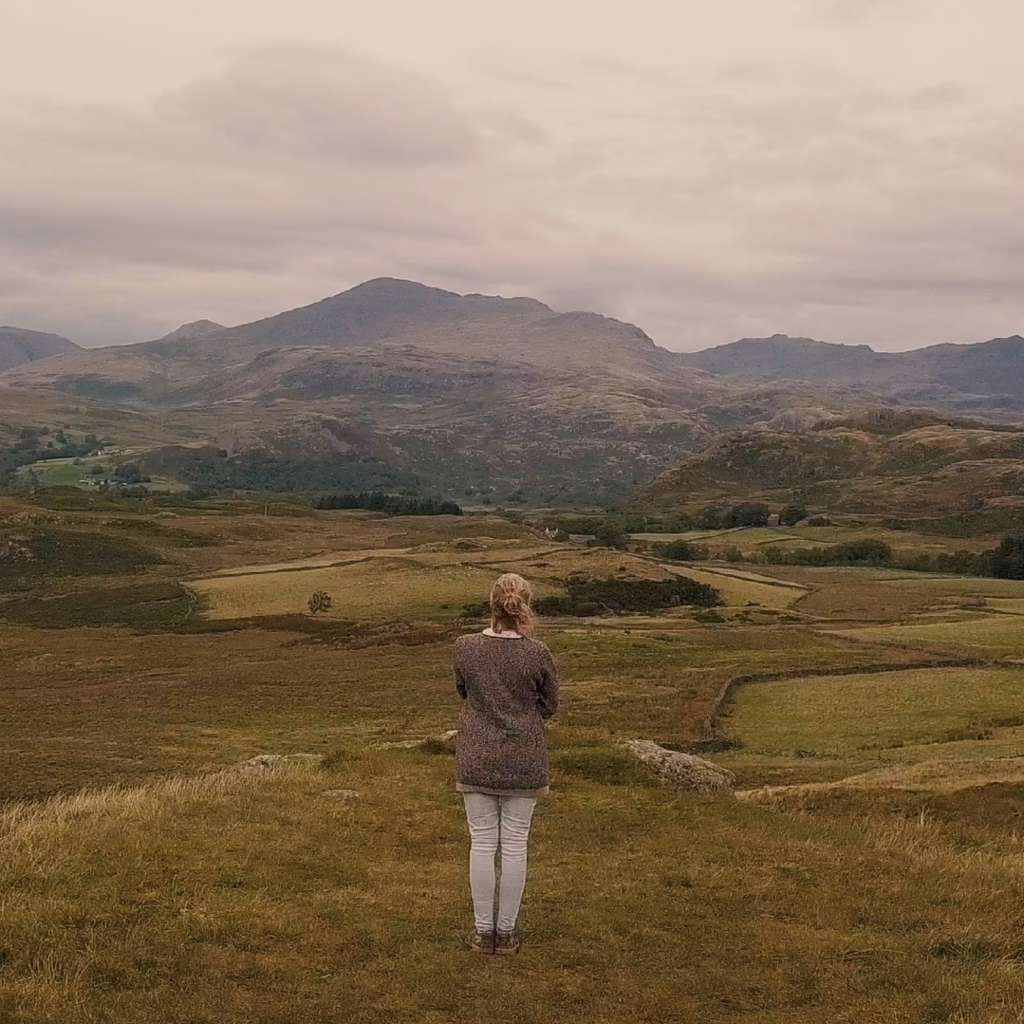
The post celebrates the power of language, imagination, and programming as tools that let us break free from mental limits, while noting that true multilingual thinking is rooted in imagination rather than mere words. It praises poetry and game design for expanding perception, and stresses that education—properly understood—is the key to lifting humanity out of darkness, poverty, and conflict; it gives people wisdom, creativity, and lasting legacies. The author laments how modern schooling often merely forces students to pretend they learn, turning classrooms into diploma mills that stifle real learning. He calls for a redesign that embraces full‑body movement in gym, visual simulation in math, and hands‑on science, and he suggests returning to ancient practices such as walking long trails while listening to narrated books, thereby forging authentic intellectual inheritance and leaving a lasting legacy for future generations.

#1316
The post argues that true learning begins with personal initiative—self‑education that goes beyond the limits of formal schooling—and that a system of standardized lessons only provides basic skills like reading and arithmetic. It claims that mastering programming is the next logical step, because code lets us model and explore reality “like a microscope,” while also opening low‑cost entrepreneurial opportunities. The author stresses that books supply an authentic, self‑paced learning environment and that real education must be taken seriously before any diploma or GPA can count. He ends by urging readers to combine book study with long nature hikes as a way to reset the mind and spark the intellectual revolution needed to revitalize schools.

I began by simply hanging an artificial tail from a regular belt, then moved on to more elaborate “Mark” prototypes: **Mark I** used a small water‑bladder backpack with a 1‑meter aluminum ruler threaded through a hole in the back ribs—effective but prone to scratching after repeated use; **Mark II** switched to a weight‑lifting belt with vertical plastic ribs, punching holes and attaching the tail via zip ties and a cheap paper tower holder—this worked but left the tail too high on the waist and absorbed moisture/heat over time; **Mark III** finally employed a soft steel wire shaped into a V around the hips, adding an extra wire for the tail itself—lightweight, dry, easy to clean, adjustable, and free of moisture issues. I recommend building all three as backups and keeping the tail construction lightweight so it won’t snap off during “crime‑fighting” sessions.

The post argues that learning begins with reading, writing, and arithmetic but is truly expanded by programming, which turns abstract concepts into visual, simulated, and interactive experiences—illustrated by building simple games to grasp trigonometry or physics, and even creating AI‑powered comic books. Programming thus deepens comprehension and frees students from indoctrination, a state the author claims can be escaped only through self‑directed exploration of both books (narrated and written) and nature (trails such as the Appalachian, Pacific Crest, Continental Divide). In this lifelong, grade‑free learning environment, teachers guide but do not replace authors; they provide the framework while students develop skills that let them design projects, start small businesses, and grow into “great beings” who view life as precious and meaningful.

The post celebrates the joy and confidence that a decorative, bushy tail can bring to anyone who wears it—whether made from wire or fabric—and argues that such tails are naturally part of us, just as our tailsbones once served in animals. It praises how tails can be styled, praised, and displayed, suggesting they help people feel stronger, more creative, and connected to the earth from birth onward; ultimately, the author invites readers to craft their own tail and strut proudly so everyone will cheer with newfound confidence.
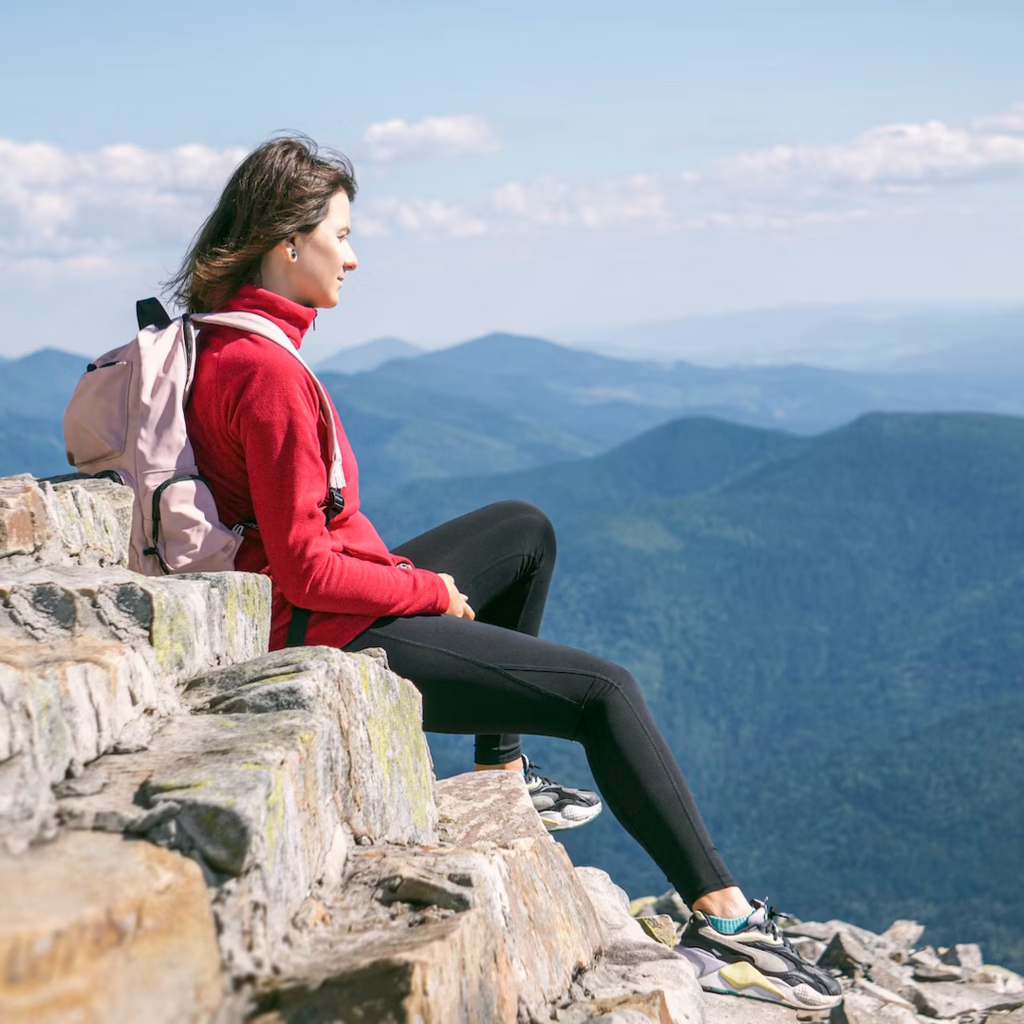
The post argues that true learning begins with a clear mind, which reveals how schools fail when they standardize education; each person must follow their own sequence of curiosity, taking steps from exiting indoctrination to building personal wisdom, and through these stages the human super‑culture emerges—an inclusive culture that nurtures the best ideas and brings worldwide greatness. It stresses that knowledge and wisdom are instincts we pursue by seeking books and clear thinkers, and that education’s real success depends on teachers who provide those works rather than selling out minds for paychecks, so that every student can start life with clearer, wiser views of growth.
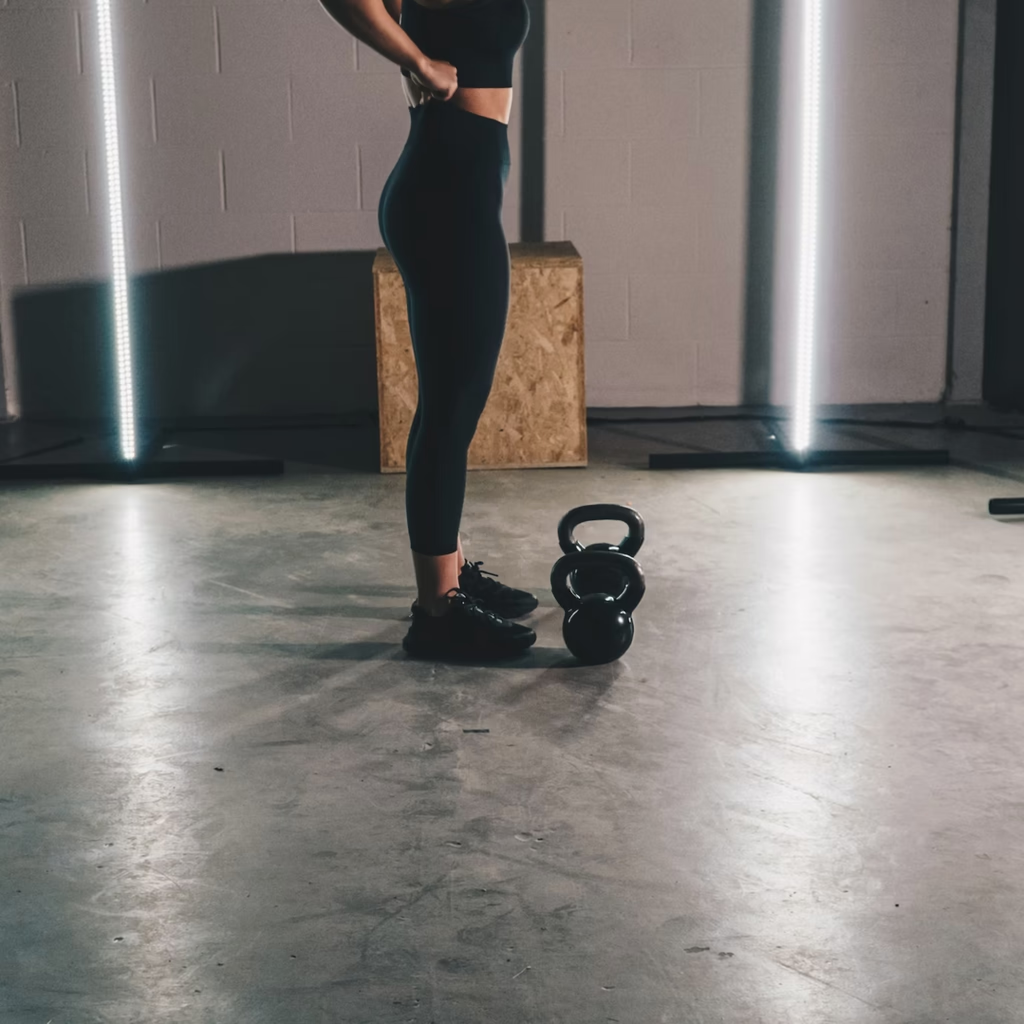
The author argues that the key to a successful transformation is to workout every day until the goal is achieved—no need for a 20‑year plan; instead, a daily routine can deliver results in just three or four years. Daily training brings fatigue and boredom but also helps prevent headaches, back pain, and injuries if you avoid heavy lifts, use light loads, sync with music to keep tempo high, and keep rest intervals short. Proper footwear is essential: shoes should be snug at the heel, loose at the toe box, have foam‑based soles for rubber floors, and be adjusted or even cut to fit properly; the right shoe can reduce ankle injury risk. In short, consistent daily workouts with good music timing and well‑fitted shoes are the recipe for transformation.

Standardized education, according to the post, is an over‑engineered system that rewards predictability at the expense of creativity; it produces “standardized” students who become wage slaves, while teachers simply collect paychecks and students chase grades for jobs rather than learning. The author argues this structure is inefficient—textbooks cost a lot, loans linger into old age—and offers programming as a remedy: by teaching oneself coding (JavaScript, Svelte, etc.) one can build self‑paced tools, simulations and projects that turn learning into a dynamic adventure, enabling mastery, entrepreneurship, and ultimately financial independence.