·

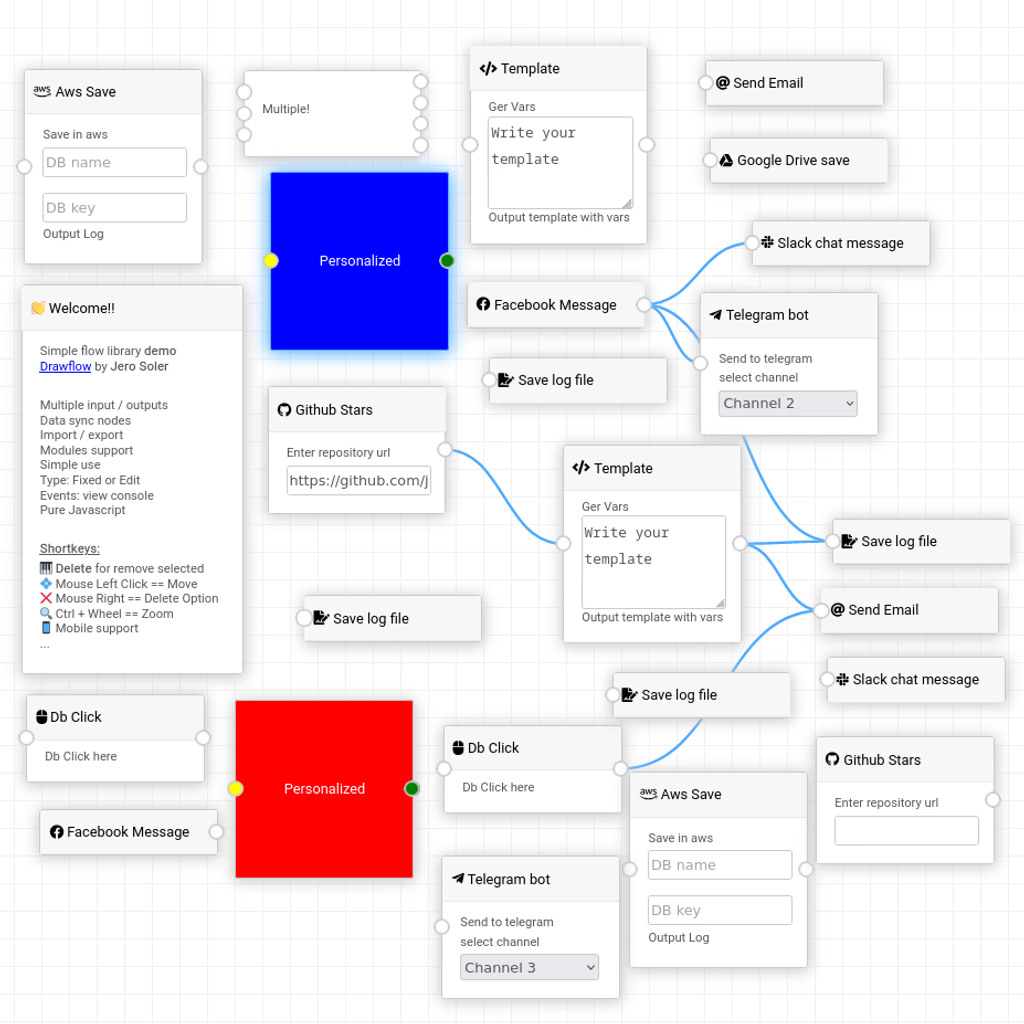
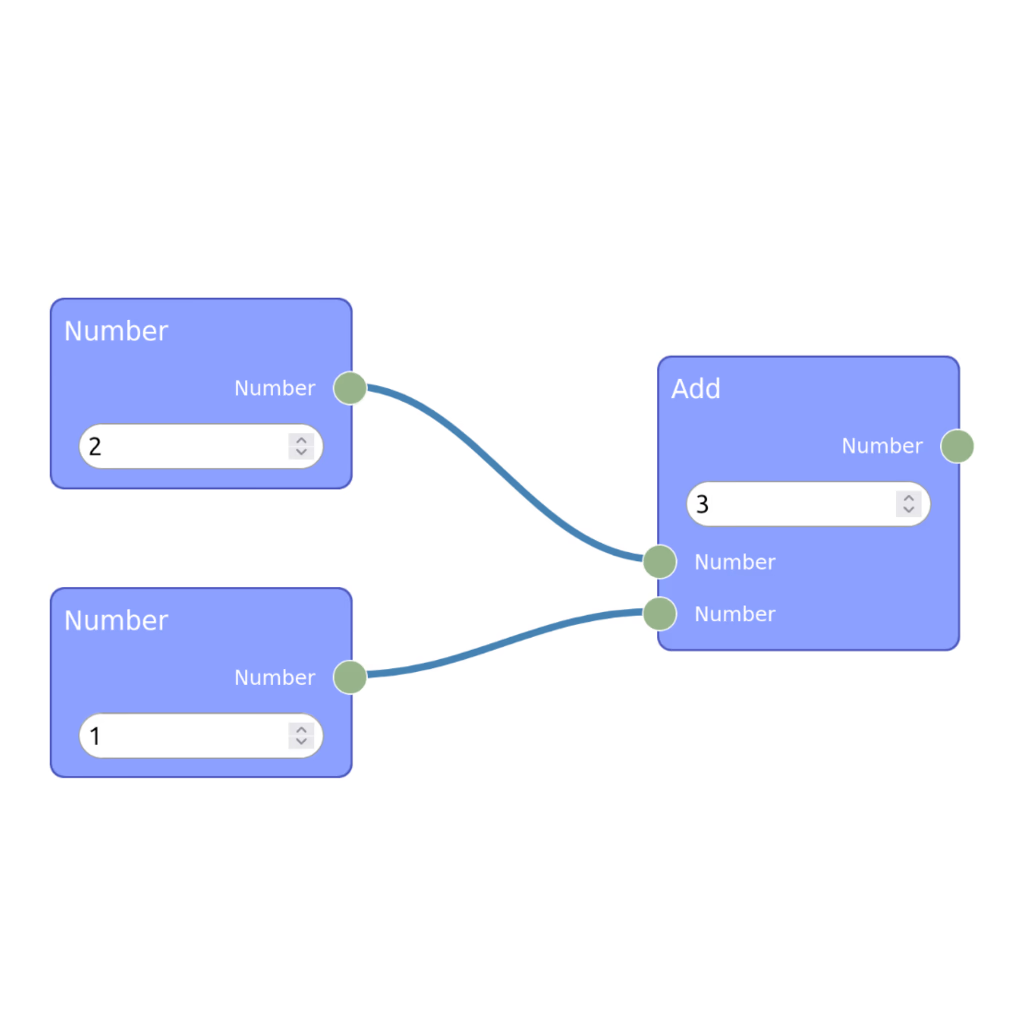
#0845: A Weird Poem About Visual Programming

The post explores the promise and pitfalls of visual programming, arguing that while it can make program flows more visible, its current implementations—especially those built on wire‑based frameworks like Rete.js—often end up with tangled connections, hard‑to‑read layouts, and poor mobile support. It

·

#0844: How Can School Be Fake? Or, How Can Mirrors Be Real If Our Eyes Aren't Real?

The post argues that today’s schools prioritize rote memorization for teachers’ paychecks, which hinders true learning, while early, engaged education—rather than late, profit‑driven schooling—equips students and leaders alike to make informed decisions and avert crises like war.

·

#0843: Learn To No End And Let The World Grow

The post opens with a fortune‑cookie proverb that “if you do the same things you've always done, you'll get the same results,” which the author applies to generations rather than individuals. He then argues that unless someone actively prevents it, nuclear war will happen and politicians’ delayed sanctions will not stop it; this illustrates how repeating past mistakes leads to disaster. The writer stresses that real education—self‑made learning beyond school grades—is essential for creativity, medical care, and avoiding poverty, and that only through intellectual independence can one break the cycle of repeated errors. He concludes by listing many philosophers and books as resources to inspire that self‑education, affirming that becoming a great being comes from mastering knowledge and wisdom.

·

#0842: A Tiny Music Programming Idea

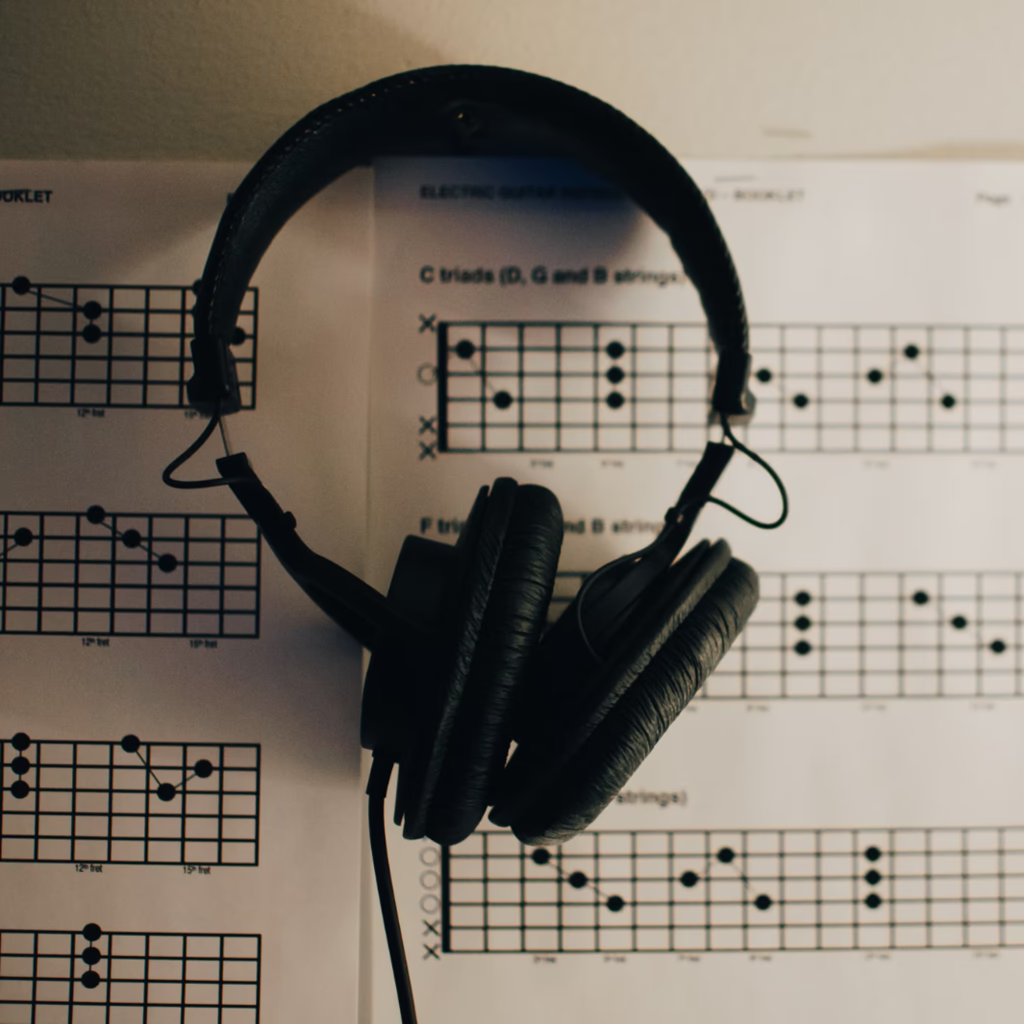
I noticed the delay/echo effect in songs after hearing Giorgio Moroder’s performance, tried to replicate it with 16th‑note patterns and LMMS but felt something was missing; then discovered the open‑source program MusE for drum sounds, and while exploring its composition features I also wrote a tiny code snippet using Tone.js that applies Ping‑Pong delay to three notes (demo link), noting that visual programming frameworks like Rete could integrate with Tidal notation—concluding that there’s still plenty to learn about computer music and electronic history.

·

#0841: The School Game; Or, Move Education Far And Away And From Any And All Influence Of Politics

The post argues that politics has ruined education: high tuition, low teacher pay and arbitrary curricula create a collapsed system that breeds cults, nationalism and war. It calls for removing politicians’ control of schools, re‑investing in teachers and students, and building a real, profound educational system—ideally supported by peer‑reviewed materials or game‑based learning—that will produce educated voters who can govern wisely.

·

#0840: Towards Lasting World Peace; Or, Real And Meaningful Education For A Wiser Generation

This poem reflects on the present state of the world, where uneducated leaders spread propaganda and a future seems inevitable but uncertain. It laments poverty’s squeezing effect and the way “liars and ghouls” use people as tools for war, endless demands, or fabricated achievements, while human rights seem neglected. The speaker urges that a generation must leave its darkness behind, learn, read, and bring light to its mind so it can change its fate. By being well‑read and tackling big challenges, the youth can repair what has gone wrong, invite others to grow, break the cycle, and finally make the “ghouls” farewell—so that people become the true fabric of tomorrow.

·

#0839: A Super Tiny Poem About Building Your First Visual Programming Company

The post surveys how visual‑programming libraries such as Rete can be turned into practical tools that let users build programs by arranging nodes, then export those designs to JSON or code; the generated code is meant for a variety of targets—from local execution and Electron GUIs to task queues and auto‑provisioned server networks—so that the resulting applications are both high‑quality and invisible as machine‑generated. Users can create their own node types, package them into reusable groups, publish them on a free marketplace, and let a small company handle quality review and payments; this ecosystem is positioned as a low‑bar entry point for programmers, a way to prototype custom software for enterprises, and ultimately a learning platform that lets people build a startup by mastering visual programming.

·

#0838: How To Become Smarter; Or, Why You Got Tricked Into Thinking You Are Not Smart

The post argues that schoolteachers are mainly motivated by pay rather than student learning, so they stick to scripted lessons and tests that favor memorization over true understanding. It claims that this system forces students into rigid grades tied to obedience, not intelligence, and that the curriculum (especially in math) relies on rote formulas like tau instead of a historical, conceptual grasp. The writer urges learners to pursue self‑education—listening to books, studying programming, 3D modeling, and other practical skills—to truly master concepts and become “great beings” beyond the school’s superficial marks.

·

#0837: What Is Wrong With The World; Or, Grow Do Not Follow

The post argues that true understanding comes from immersing oneself in books and continuous thought, rather than living in repetitive loops or relying on “pretenders” who offer shallow, self‑made wisdom. It stresses that personal peace is essential for reading, and that travel and adventure help one absorb others’ insights; the author claims that most world problems—poverty, confusion, wars—arise from a broken education system that values grades over real learning and from leaders whose knowledge is superficial. By cultivating deep reading habits in youth, the writer believes we can break these cycles, empower ourselves with genuine wisdom, and ultimately restore a future where nations are guided by informed, thoughtful people instead of empty rhetoric.

·

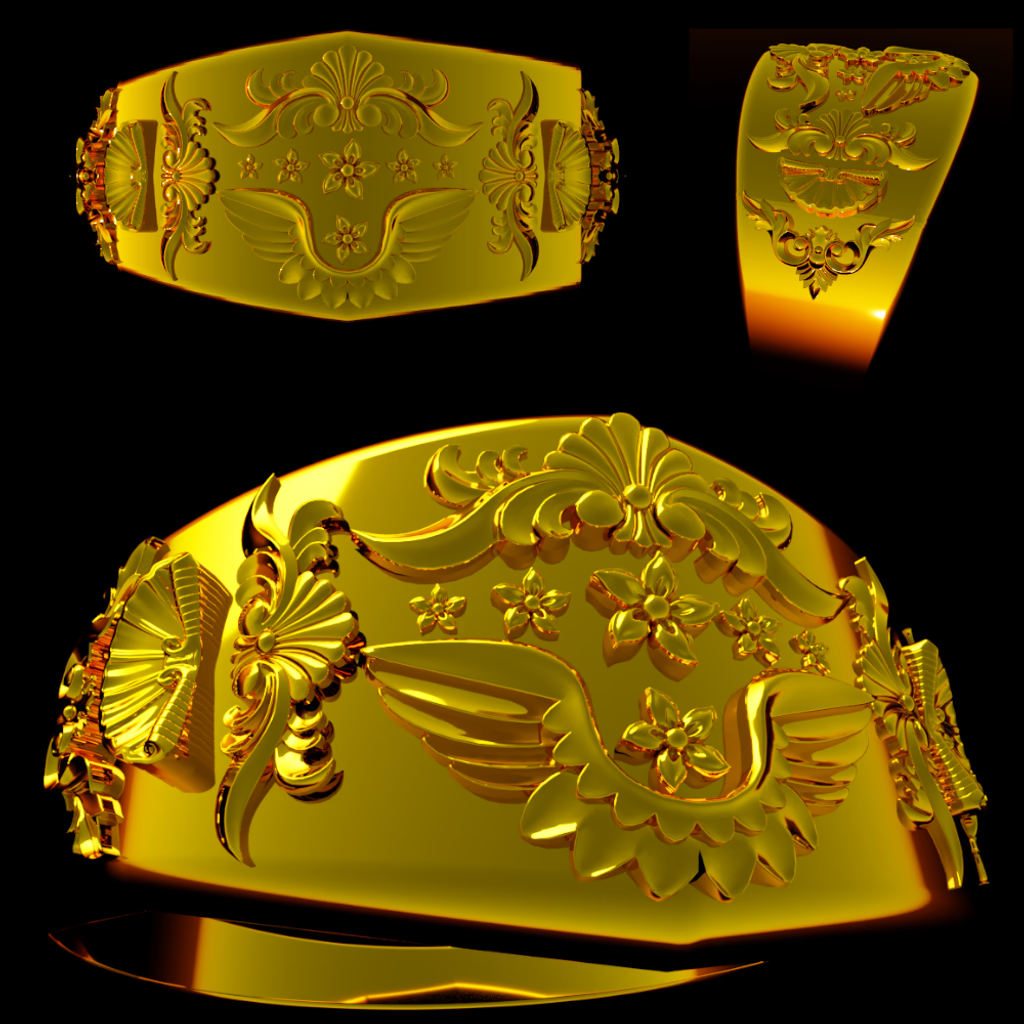
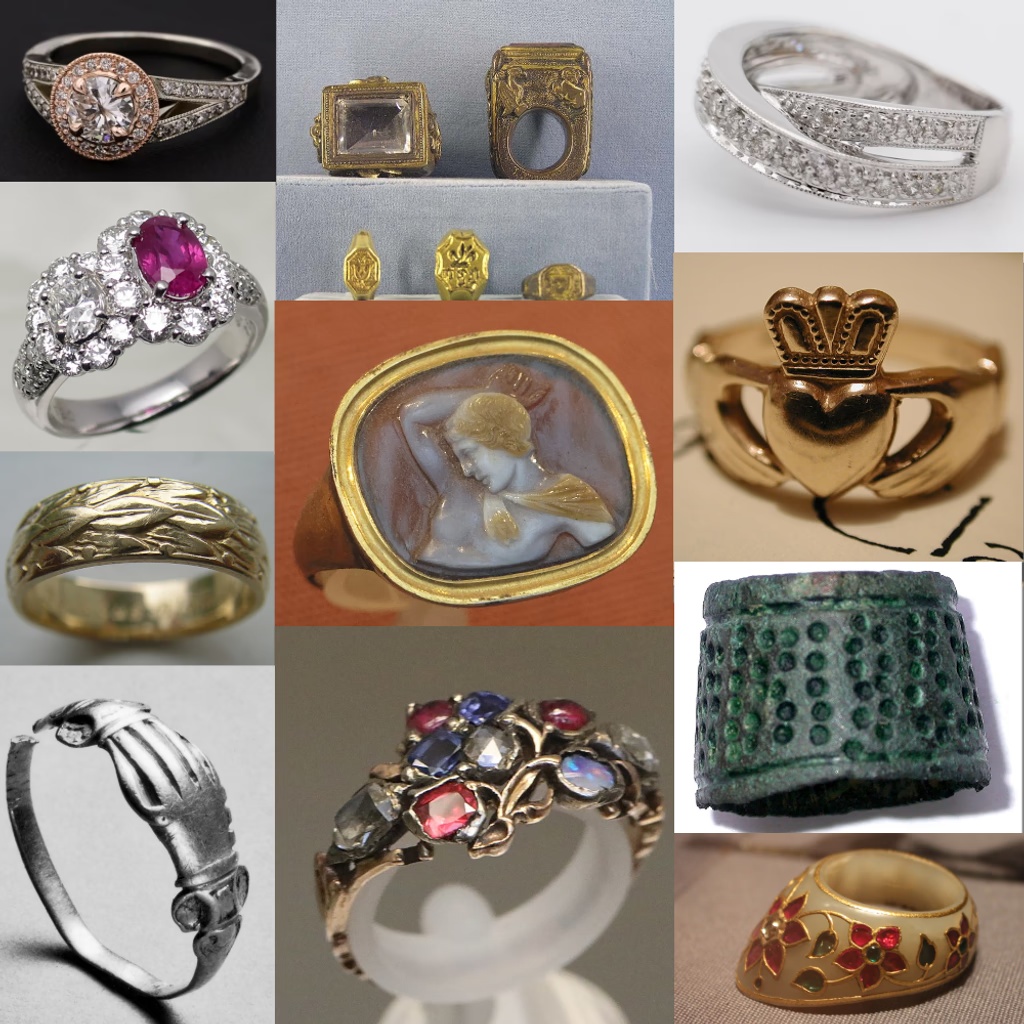
#0836: On Designing Enchanted Rings

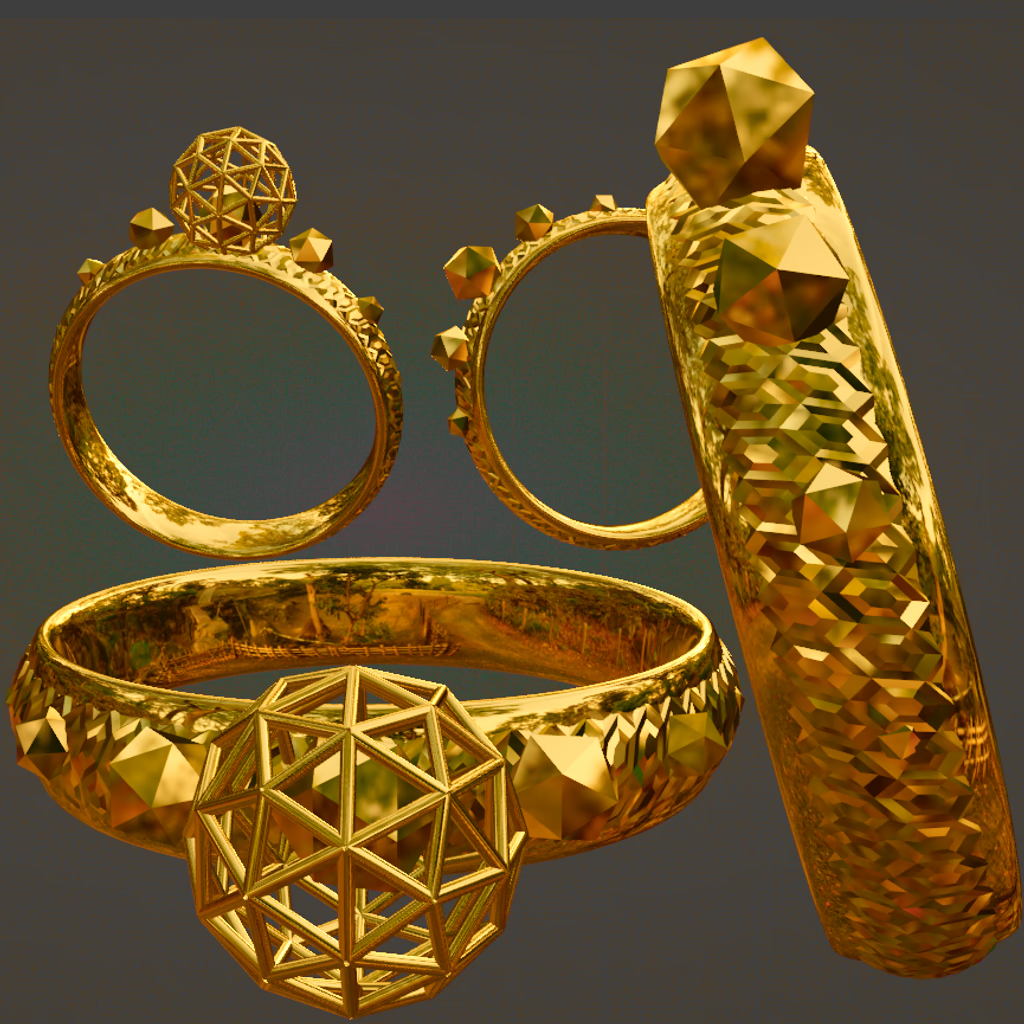
The post discusses how to design and create “enchanted” rings in Blender, emphasizing unconventional shapes and materials like copper, brass, silver, and gold, while suggesting the use of Geometry Nodes and solidify modifiers for thickness. It covers various creative sources—from 3D generators and photogrammetry to ancient artifacts, Dark Souls and Elden Ring items, and the Lesser Key of Solomon’s symbols—for inspiration, and encourages experimenting with multiple ring generators and adding stones, noting that such rings need not be worn daily but serve as fantasy or show‑off pieces. The author also hints at practical steps like ordering metal blanks to build a print‑on‑demand jewelry store, while reminding readers to keep the final look slightly worn rather than brand new.

·

#0835: Oh Noes Unit Circle; Or, How I Got Attacked By The Fence Post Problem

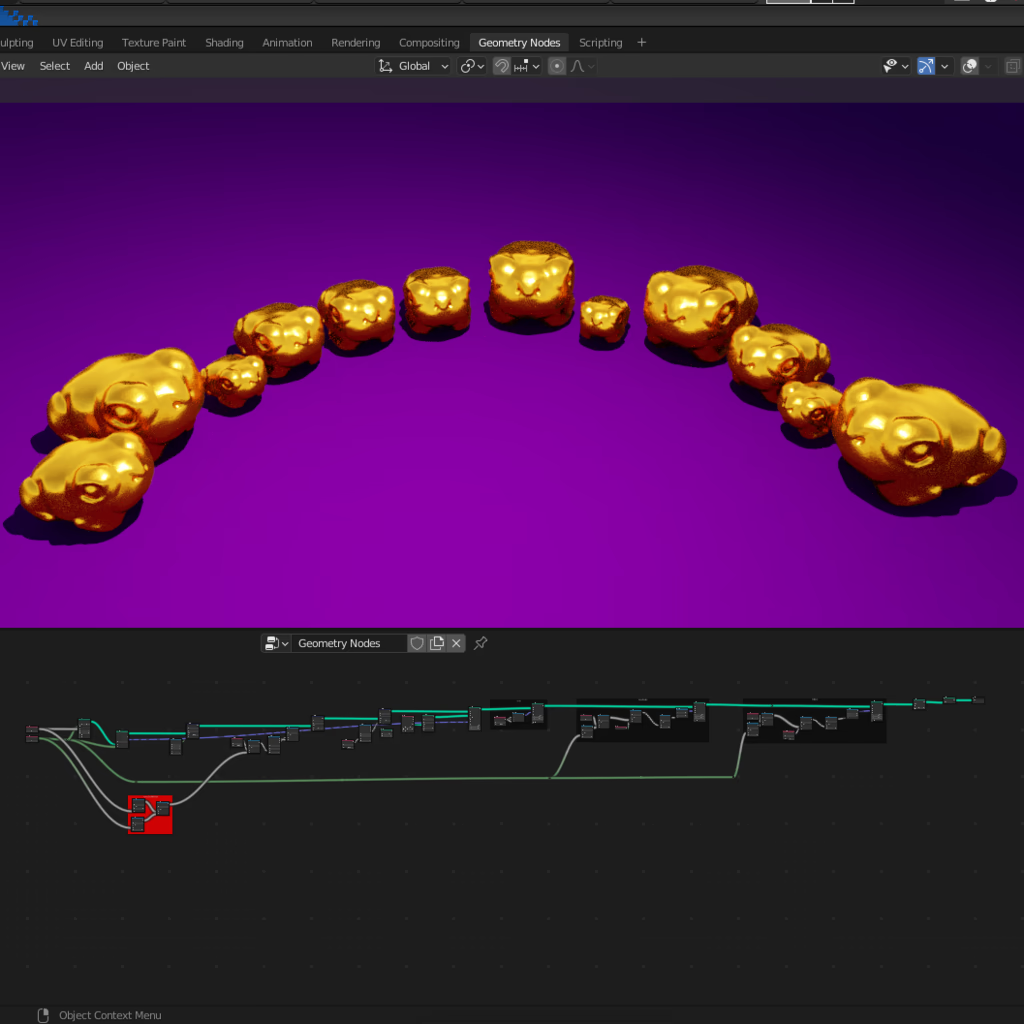
I’m a programmer who’s been experimenting with the unit circle and recently built a decorative ring of “Peruvian Froggies,” spacing big ones close together and leaving more room for the little ones; at the same time I’ve battled a slew of software hiccups—from mis‑named audio recordings, ffmpeg slowdowns on Fedora 36, Krita crashes under Noveau, to Blender texture failures—and ended up switching to NVIDIA drivers and Debian. In my first‑draft post I outline how I used Geometry Nodes to lay out ten points along a 180° arc (10 mm radius), employing the Accumulate node like a reducer, then crafted a custom coordinate system based on radians, tau, pi, and division by the number of parts; after a 10 % floating‑point error I discovered that simply subtracting one in the math node fixed the precision problem. The whole exercise, wrapped up with a fish‑and‑pita dinner and a poem about magical rings, demonstrates my learning curve from “rubber duck” debugging to mastering ring decorations via arcs.

·

#0834: The Easy Peasy World Citizenship

Life moves fast, so the author urges us to pause and look around—especially through travel—to truly experience the world. He argues that parents should take their children on journeys across continents, from Uluru to Brooklyn Bridge, because such adventures broaden horizons and cultivate self‑education. By exploring cultures, learning design or programming, and engaging in independent study, we gain wisdom faster than formal lectures. The post recommends hiking the Appalachian Trail in our 20s to relieve work stress, then launching small businesses with newfound talents. Ultimately, travel and self‑learning create a “citizen of the world,” enabling us to appreciate humanity’s achievements and continue where past authors left off.

·

#0833: The Enchanted Ring Of The Little Froggies; Or, Hopping Around Ancient And Modern Jewelry Ideas

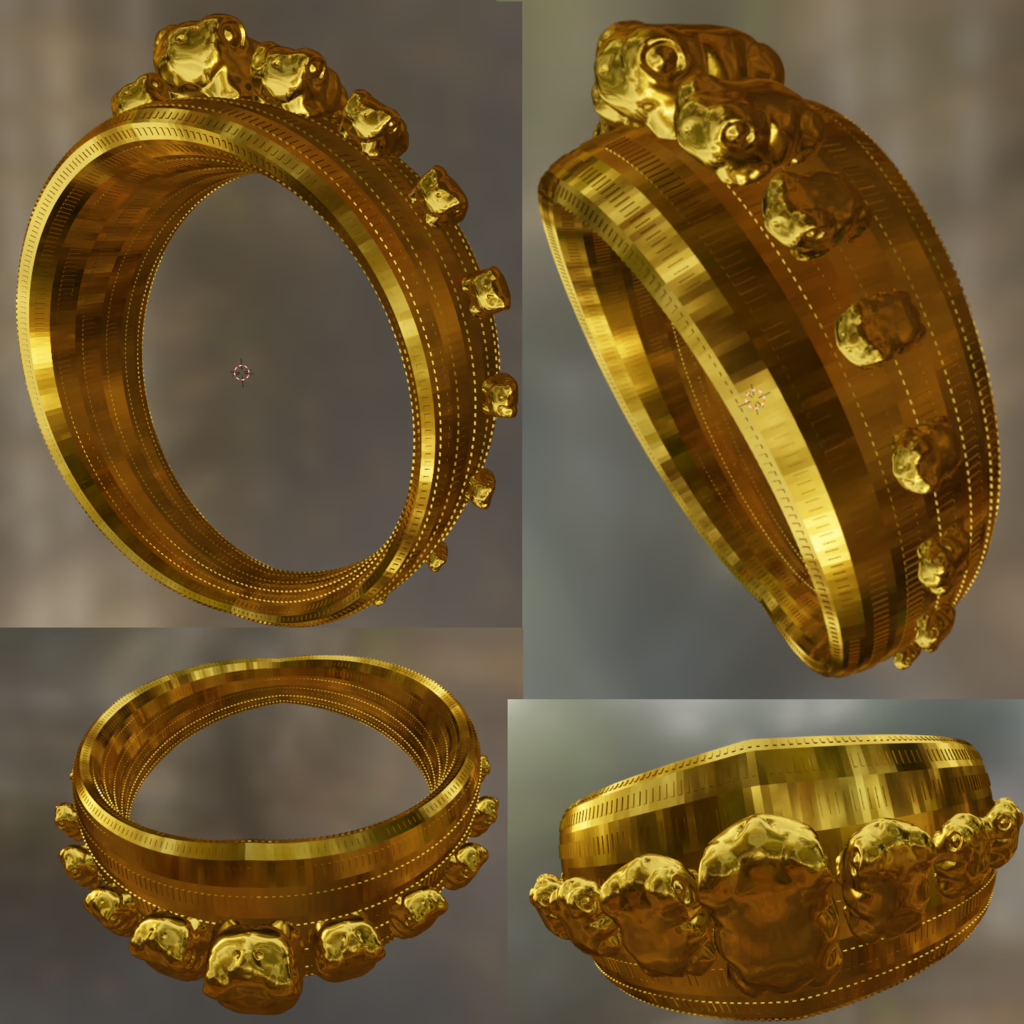
The author celebrates the power of 3‑D sculpture in creating unique, personalized jewelry—particularly through 3‑D printing or casting—emphasizing that handcrafted shapes can be shipped ready to wear and refined with polish rather than set stones; they encourage experimenting with abstract geometric forms (rings, pendants, bracelets) and inventive motifs such as “frog” rings for personal storytelling, while also suggesting that the same 3‑D models can inspire paintings, graphic novels, or even coin‑pendant series, all rooted in ancient styles yet modernized, so that each new piece echoes its historical lineage and offers a fresh, affordable collection.

·

#0832: Bling: Thinking In Geometry Nodes

Blender’s Geometry Nodes let you procedurally build a decorated ring by turning a basic curve into points, applying math‑based scaling, and using modifier nodes to place and size the decorations.

·

#0831: The Far Future; And The Whole, Greater Than Its Parts

The post argues that only by building a culture of wisdom, long‑term vision, and solid education can we solve climate, health, war, and poverty problems.

·

#0830: Unlocking The Future Of The World; Or, Stalemate Prevention

The author reflects on how a lack of proper education, lead contamination, and political stagnation have left humanity in a stalemate that will only be resolved by proactive thinking and learning before problems arise; he argues that schools’ fragmented subjects hinder true math understanding, leading to a cycle where students become slaves to war and poverty, while the real solution lies in unified, forward‑looking education that prevents issues such as lead poisoning and ecological loss from occurring.

·

#0829: Rinkydink Doublethink

The post argues that the world was meant to be a safe, happy place but has been marred by countless cultural errors—most notably war, military service, and mass‑destruction weapons—that gradually fracture minds. The author claims these mistakes range from trivial (grade systems and kindergarten star stickers) to systemic (politics as a game of recognition). He suggests that the solution lies in creating “visual programming based software” capable of automatically managing neighborhoods, cities, states, and eventually nations; such tools would ensure proper food distribution and universal basic income, thereby revitalizing local economies. By writing this program and stepping above politicians’ games, the next generation can lift itself out of the meshwork of mistakes that currently define politics, schooling, and military recruitment. In short: to restore a truly happy world, we must adopt new technology-driven systems that replace current cultural errors with wisdom and effective management.

·

#0828: The Little Froggie From Peru

I began by sculpting a small Peruvian “froggie” based on a Moche artifact, then explored how to convert it into a low‑poly wireframe for 3D printing. By hollowing the model with Solidify and using Boolean cuts I could flatten its base, split it along an intersecting plane, add thickness, and attach a hinge and lock—turning it into a tiny trinket box that can be assembled by hand. The post also notes how thin‑wire jewelry saves material and cost, and reflects on the cultural context of the original Moche frog, suggesting the reconstructed piece could serve as jewelry, game token, or downloadable STL for others to use.

·

#0827: Fancy Little Pendants

The post explains how to design simple 3‑D printed pendants using Blender: start with sculpting mode, re‑mesh or use dynamic topology, then attach a tail loop (or another built‑in loop) to a chain—either by adding a Boolean modifier or by modeling the loop directly. It provides links to tutorials, stresses that printing takes care of the interior automatically, and suggests using the finished model on an online print service for both a gold jewelry piece and a portfolio entry.

·

#0826: SCHOOL.MP3; Or, The Tiniest Of Schools

The post describes a free, multilingual audio‑school project that aims to disseminate knowledge and history through short, engaging episodes—each delivered in various voices from young narrators—to reach listeners worldwide, even via simple devices like AM/FM radios or small pendant‑style memory cards. It promises easy updates and translations, uses a list of common misconceptions as its format, and focuses on science facts (e.g., gold’s stellar origins, mitochondria’s bacterial genome) to illustrate human achievements and past mistakes. By offering repeated lessons in an accessible, poetic style, the project hopes to educate listeners about culture, science, and self‑improvement while encouraging unity, reducing poverty, and preventing repeat errors through continuous refinement and global distribution.

·

#0825: On Rebuilding And 3D Printing Ancient Artifacts

This post invites readers to explore ancient and medieval art styles by recreating artifacts—such as Dacian bracelets, Greek earrings, Roman cutlery, diadems, armlets, and decorative axe heads—in 3‑D modeling software like Blender for subsequent printing. By selecting objects that resonate with the soul, one can poetically time‑travel, learn about cultures (e.g., the Dacians of present‑day Romania), and hear their legends through the artifacts. The author suggests visiting museums to see originals, then building digital copies while noting details such as spiral motifs symbolizing the sun, and even experimenting with plastic letter openers. Immersing oneself in a culture this way leads to unforgettable adventures and a deeper appreciation of history.

·

#0824: The Geometric Quest For Abstract Jewelry Goodies

Blender’s Geometry Nodes are presented as an exciting, user‑friendly tool to jump into 3D modeling: they let you program geometry like any other modifier, and mastering them opens creative doors—from simple objects such as pencil cases or belts to complex animations and jewelry that would be impossible to hand‑craft. The post frames this learning journey as a puzzle of odd, yet powerful concepts in 3D geometry, encouraging beginners to start with tutorials and gradually build intuition, while noting how the same principles underpin everything from stars that forge gold to cellular mitochondria. In short, Geometry Nodes are an invitation to experiment, create, and expand your artistic adventures in the strange, rule‑bound world of 3D geometry.

·

#0823: Thoughts On Writing

The post argues that becoming a writer requires fearlessness and a platform—whether it’s a quirky website or a social network—to share freely written stories from many voices. It cites philosophers who suggest simple tools—a coin’s edge, a newspaper, or an ordinary observation—can spark narrative creation, urging writers to imagine characters as living beings who converse back. The author stresses that writing is both joyful and instructive: it should amuse readers, drive away misery, and empower them to become leaders. Finally, the post encourages experimenting with different books and rhythms until one finds a style that feels natural, promising that perseverance will transform these efforts into valuable chronicles.

·

#0822: Prototype Five: Superhero Jewelry Box

I compared my manually‑modeled designs with procedural ones and found the manual approach better for sub‑millimetre precision—especially when different parts require distinct clearances such as hinge pins versus hinges that need friction fits. I’ve built a prototype pocket/box that can be assembled from a printed skeleton, then fitted sheet metal (credit‑card‑sized aluminum or acrylic) to form the final case; this avoids printing the entire thing and lets me use UV paint for durability. The design is highly modular: Boolean flags toggle elastic band loops or compartments, while hinges are simply inner‑hinged mechanisms that push items into the box. I printed a 1 mm wall thickness skeleton (thin PLA) to save material but plan thicker frames or CNC‑cut acrylic for final builds. Finally, I note that digital models sell around $15, whereas assembled kits can