The post celebrates how true learning comes from immersing oneself in knowledge rather than passive listening, urging readers to explore science through engaging books and documentaries that are fact‑based; it highlights specific titles like *A Short History of Nearly Everything* and *Death by Black Hole*, while advocating hands‑on projects such as building simulations with P5.js or coding math concepts, which help synthesize new ideas; the author stresses the importance of asking questions and staying curious to avoid becoming a passive tool for others, and suggests grounding this learning in real experiences—like camping and photography—to combine practical adventure with intellectual exploration.
The post celebrates the joy of 3‑D printing as an almost ritualistic pastime: enthusiasts gather around their machines, eagerly watching each layer build up—like a “cute chicken” pecking away—to see whether the print goes smoothly or stalls. It describes the common hiccups (bed leveling, hot‑end issues) and the patience needed to troubleshoot them, while also noting how people often create small test prints before tackling larger projects. The writer likens watching a printer run to relaxing by a bonfire, emphasizing that the process is as satisfying—and even more fascinating—than the finished object itself.
Liars—people who fabricate stories to gain power—are portrayed as inherently evil, driven by personal ambition and a hunger for corruption. They use layered tactics to conceal motives, spread misinformation, and exploit uneducated voters with simple propaganda, thereby sowing confusion, war, and institutional decay. The author argues that such deception weakens education and politics, but also believes that well‑informed citizens can rebuild and restore order, suggesting that knowledge and wisdom are the keys to defeating liars and creating a stable political system.
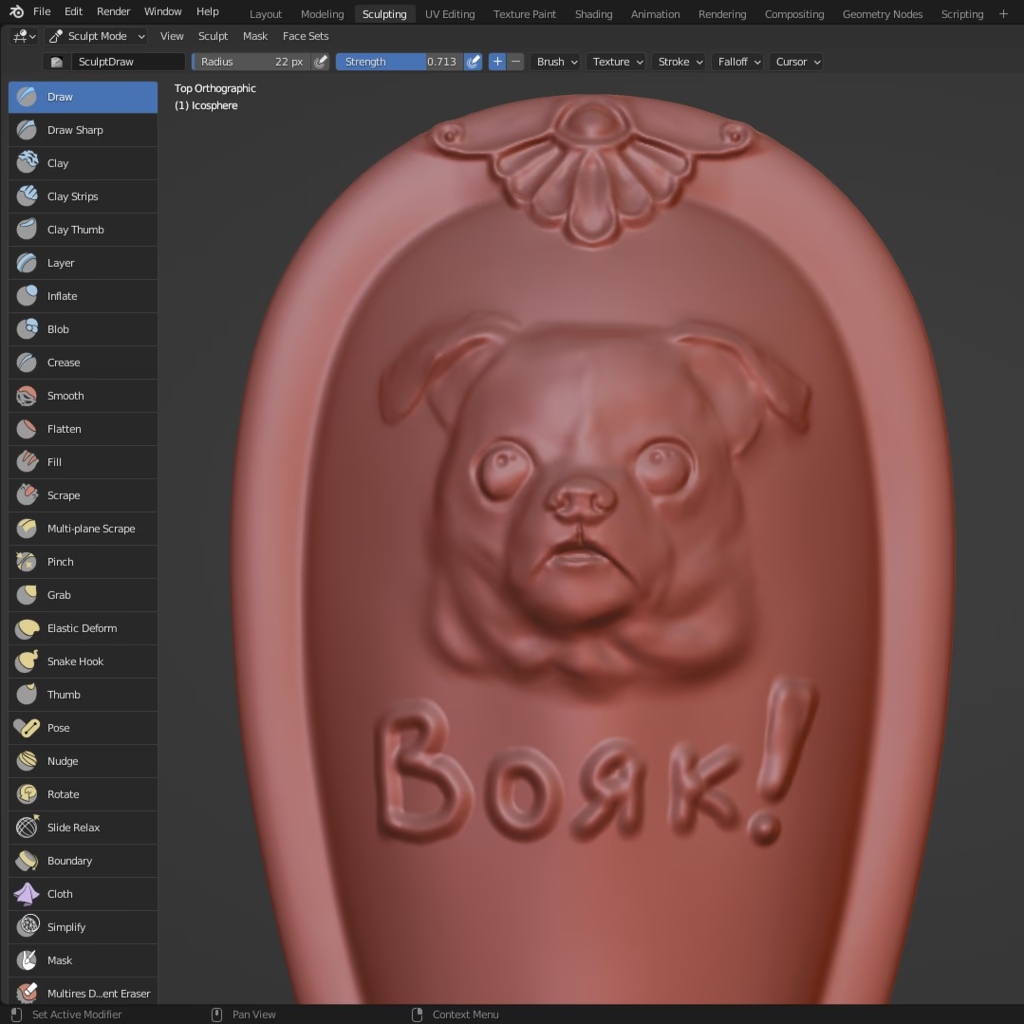
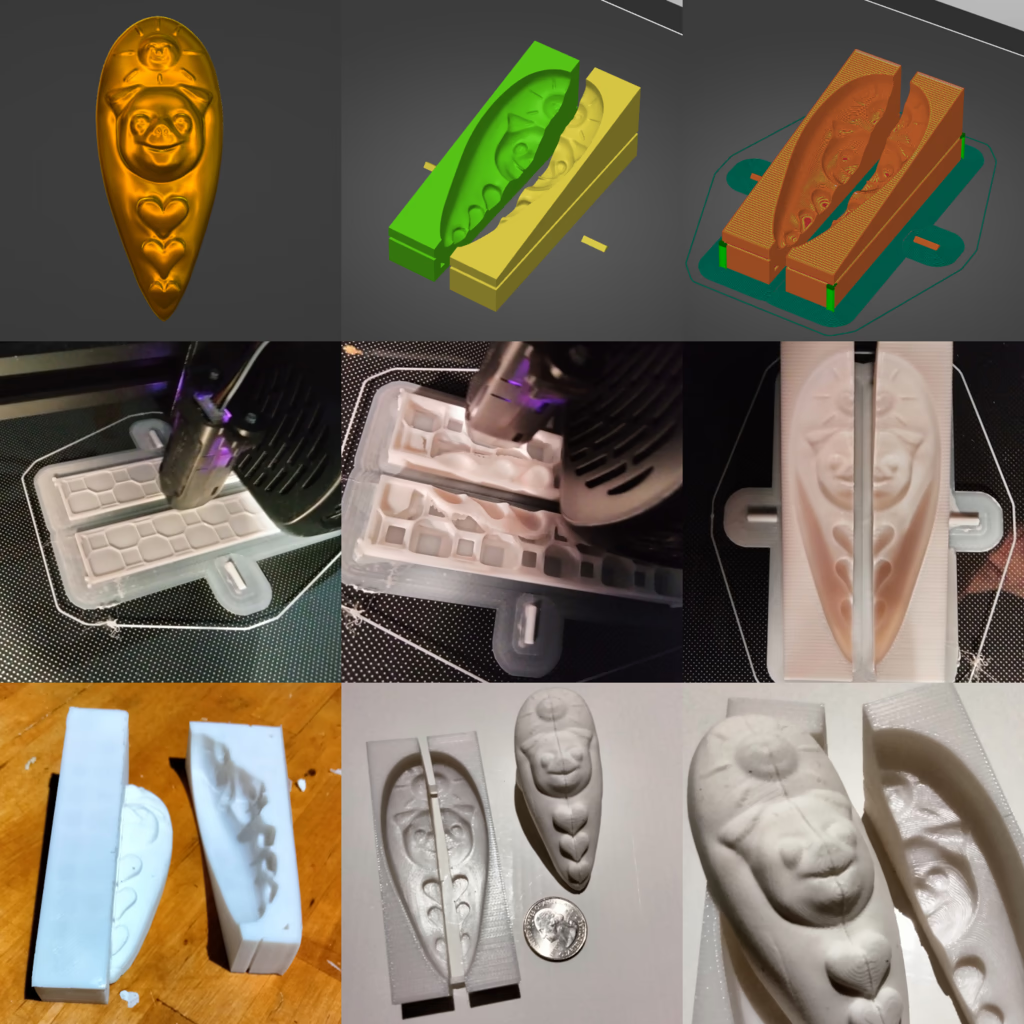
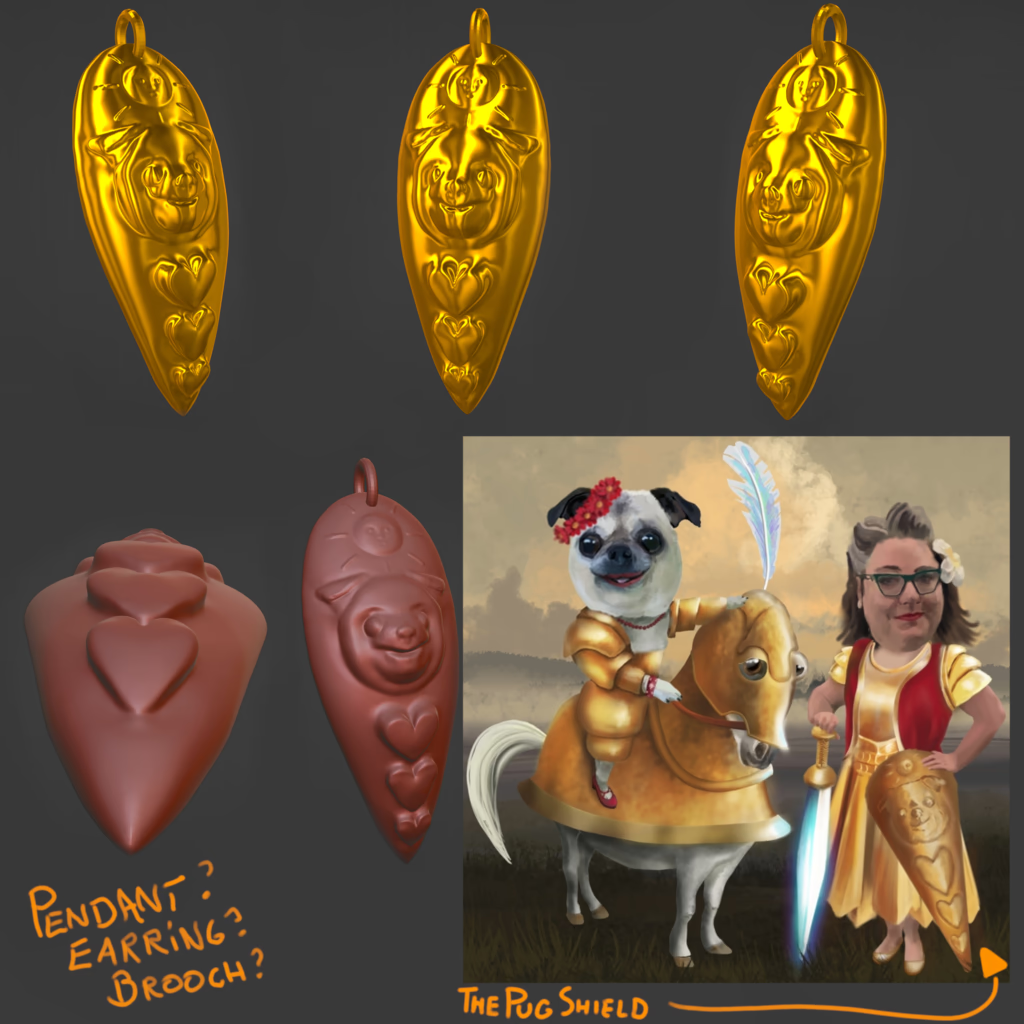
The post explains how to turn a painting into a piece of jewelry: first sketch the design as if you’re drawing the artwork itself; then use 3‑D software (e.g., Blender) to model the pendant, export the file, and send it to a foundry that casts it in gold or other metal. It also suggests experimenting with low‑cost 3‑D printing to create clay molds, which can later be fired into metal, making the process both educational and creative. By basing the design on a beloved painting—one that viewers find sweet or funny—you give your jewelry a story and an emotional anchor, turning visual art into tangible objects for sale at gallery shows.
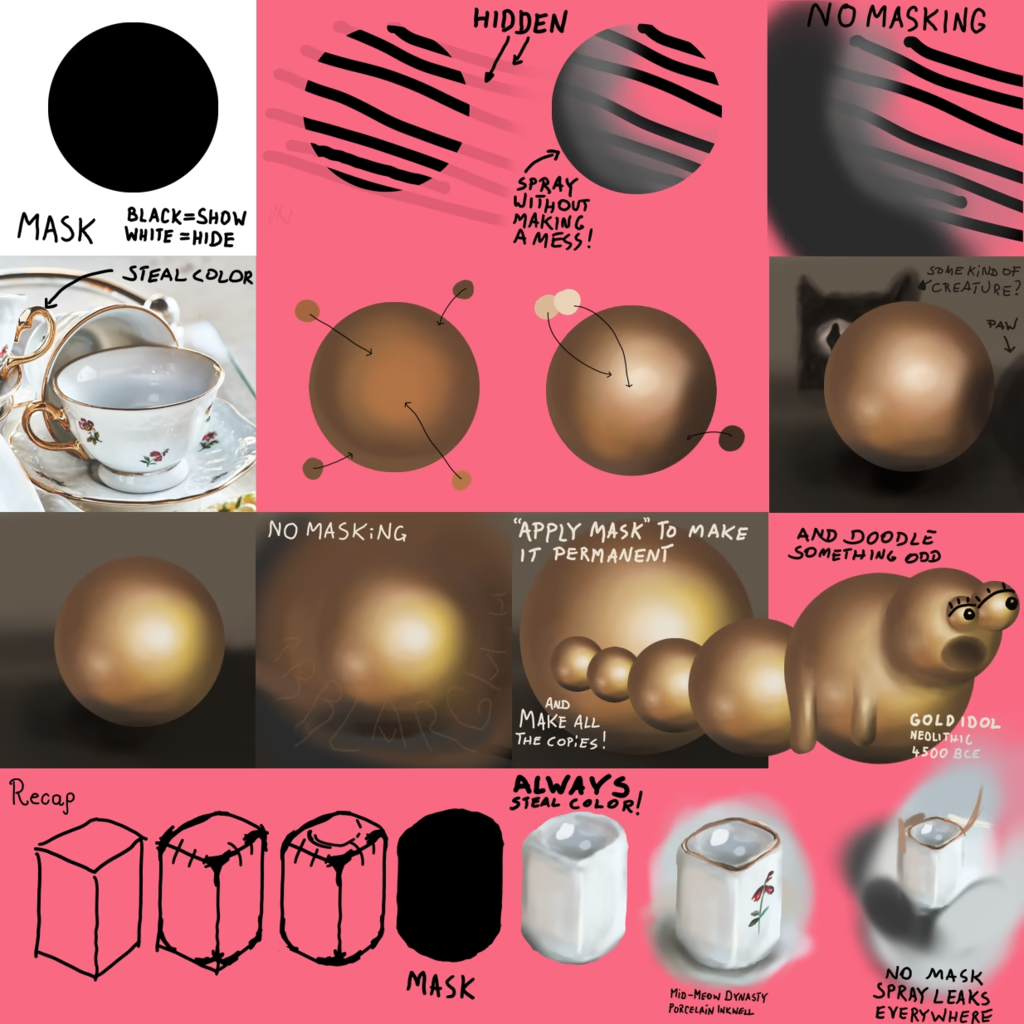
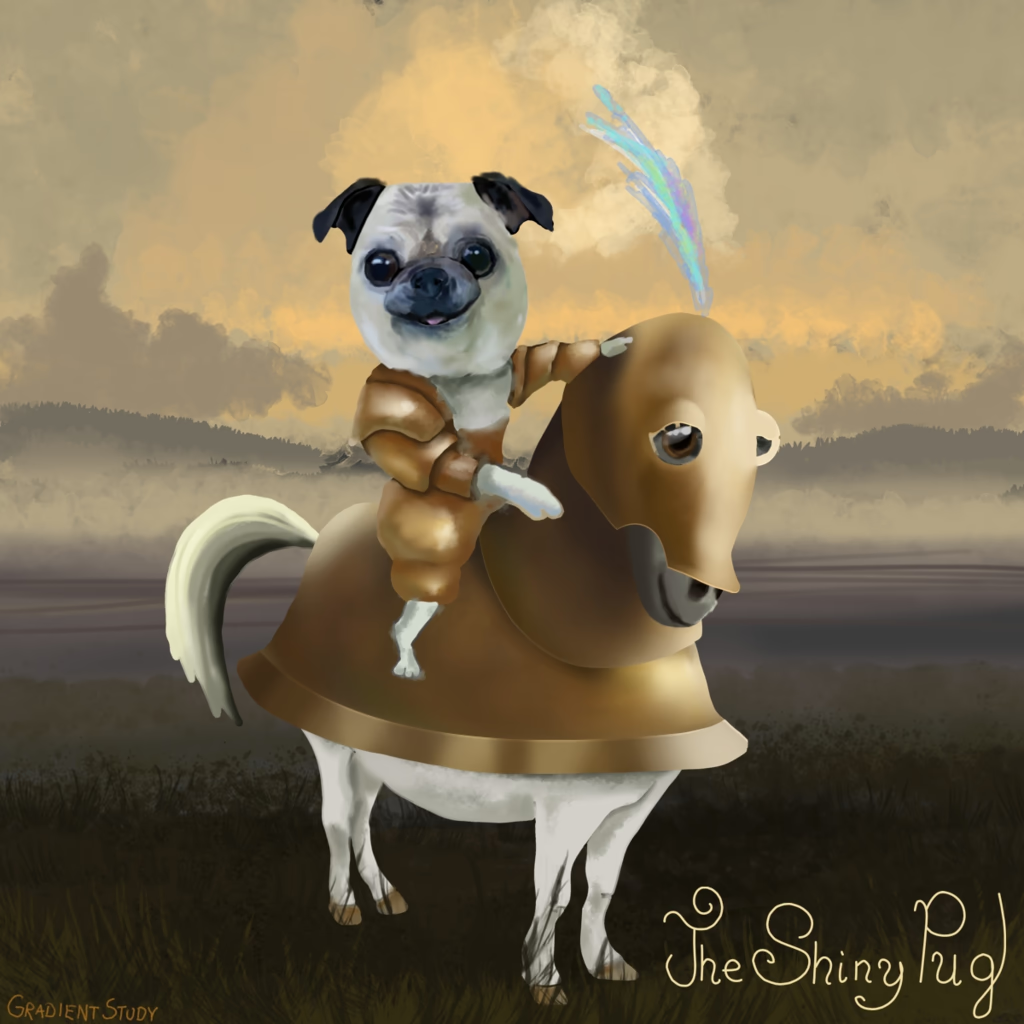
Using layer masks in digital painting—especially with tools like Krita—is essential for precise color application on complex subjects such as a knight’s helmet. Masks let you isolate parts of an object (visor, armors, decorations) so that spray brushes and other effects affect only the intended area, while feathering controls edge softness. By building each component onto its own layer or mask, you can apply gradients and shadows with gradual gray‑transparency instead of a hard binary selection, achieving realistic metallic shading without manual reselecting. Thus layer masks simplify repeated operations, enable subtle blending, and are fully supported in Krita just as they are in GIMP.
Value or darkness control is vital when creating multi‑character scenes because shadows must match and colors must be sized properly. Many artists rely on a simple three‑value system—dark, medium, light—to give depth: the foreground warrior might sit in dark, the hero in the middle in medium, and the background dragon in light; if nothing fills the gaps it becomes a dead zone of wisdom. Some sketch first a value‑stable outline then smudge characters out of it as if rising from the ground. Others layer a color mode that strips colors to their underlying values or repeat strict color selection to maintain a clear, stable system. Concept artists often start with a blurry photo as a seed for composition and value; picking a corner with pronounced light‑medium‑dark gives a sturdy head start, allowing colors in harmony to build a strong theme. The post ends by encouraging collectors to get an inexpensive camera to gather colors, values, and compositions.
The post reflects on how being an artist is essentially a learning process: practice and observation are more important than formal instruction; it encourages using simple tools like projectors or digital layers to create art quickly, and shows that the transition from realistic portraiture to magical scenes is easy once you get into the flow. The author then critiques teachers, classmates, and other artists who sometimes give only “fake” education, noting that real learning comes when you actually experiment with color, light, and texture on your own terms. Finally he argues that art trains the mind to reject inauthenticity and to seek knowledge, so that a creative ladder leads from simple sketches to hyper‑realism, ultimately uplifting both the individual and humanity as a whole.
Art thrives when free from rigid rules, just as education flourishes when curiosity guides learning rather than preset sequences; both fields become stale when boxed in by schedules and expectations—like a processed sausage aimed only at graduation. In art, letting the canvas bloom like a seed nurtures genuine creation, while forced patterns render works alien and artists stagnant. Thus, whether painting or studying, allowing joy and spontaneity to guide progress elevates the artist’s growth and enriches life.
The post celebrates the accessibility and transformative power of creating art, encouraging readers to start simply with their heart and basic shapes—such as drawing or photographing a familiar subject like a fat cat—and then layering or projecting these forms to explore negative space and composition. It frames art as both an escape and a learning experience that can make one “art‑smart” by the time they reach their fortieth project, while also offering philosophical insight with a nod to Descartes’ famous dictum. Overall, it presents art as a personal educational journey that brightens life, inspiring readers to keep adding moments of creativity day after day until they become “Great Beings.”
In this post the author explains how to color a computer‑drawn illustration while keeping line art intact: use a very thin brush or the contiguous selection tool with its “grow” option so that fills extend just beyond the lines and avoid holes; then paint over the selected area, keep the line layer above the fill, and optionally merge the two layers for a clean result. The technique combines quick selection‑based filling with careful brushing to produce smooth gradients without gaps or unwanted overlap, making it ideal for both outlined and fully painted artwork.
The post outlines a step‑by‑step process for creating a finished illustration that blends photo‑manipulation with hand‑drawn and painted elements. It begins by building a scene from a photograph, then sketching precise line art that stands on its own but also supports the overall composition. After establishing clean lines, the artist adds flat colors or gentle shadows—sometimes using gradients—to give depth. The next phase is painting: starting with a black‑and‑white value study and glazing over it, or applying color directly from the manipulation. Color mixing relies on local colour principles, adjusting hues to match surrounding tones before adding subtle highlights. Finally, the artist infuses “magic” by working within the atmosphere of the scene—glowing eyes, opal skin, etc.—to finish a polished illustration that feels complete and alive.
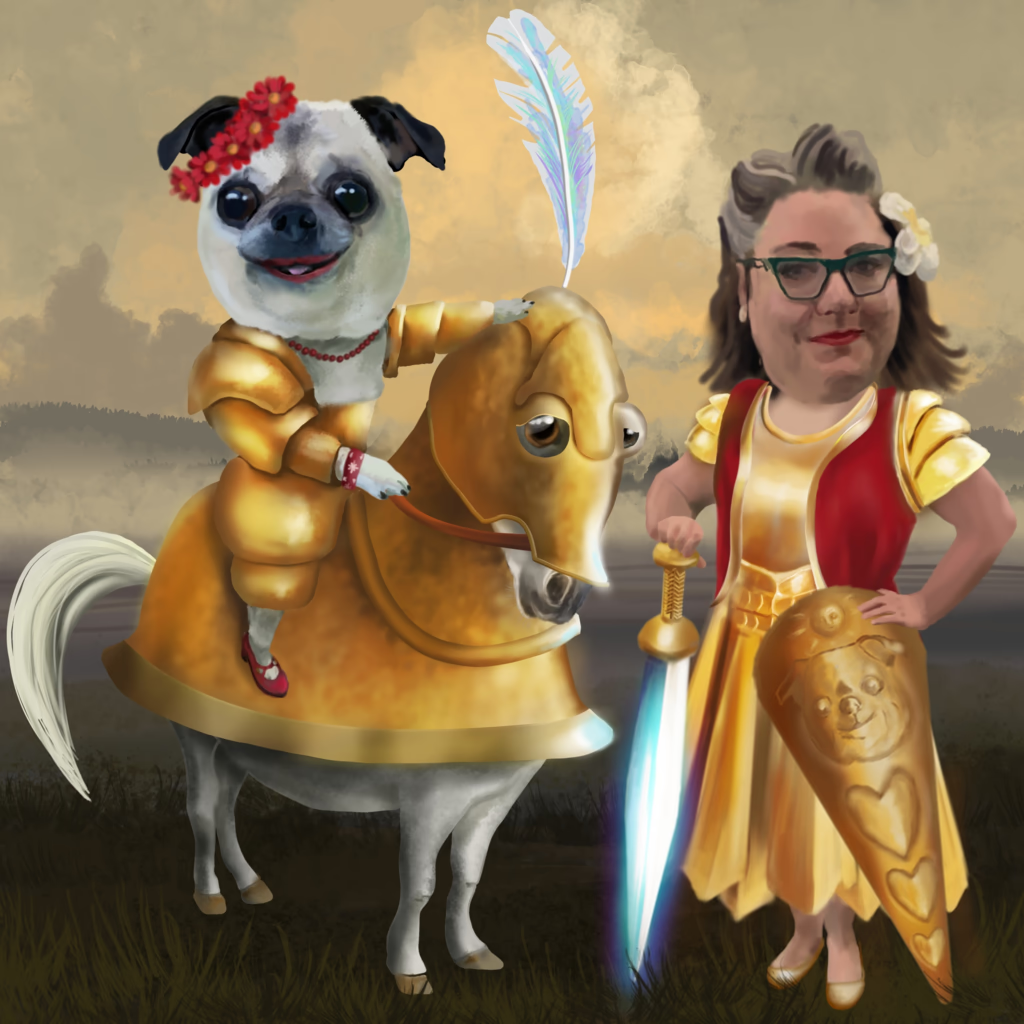
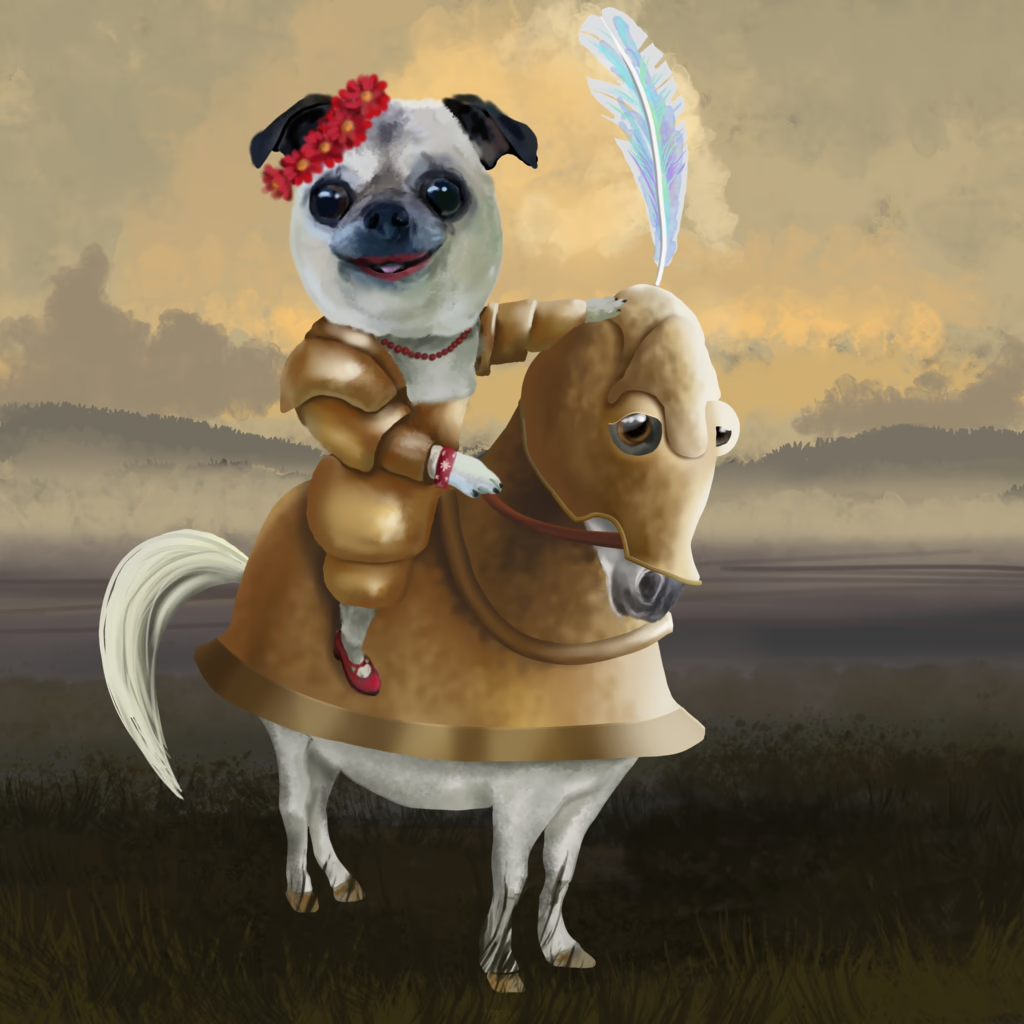
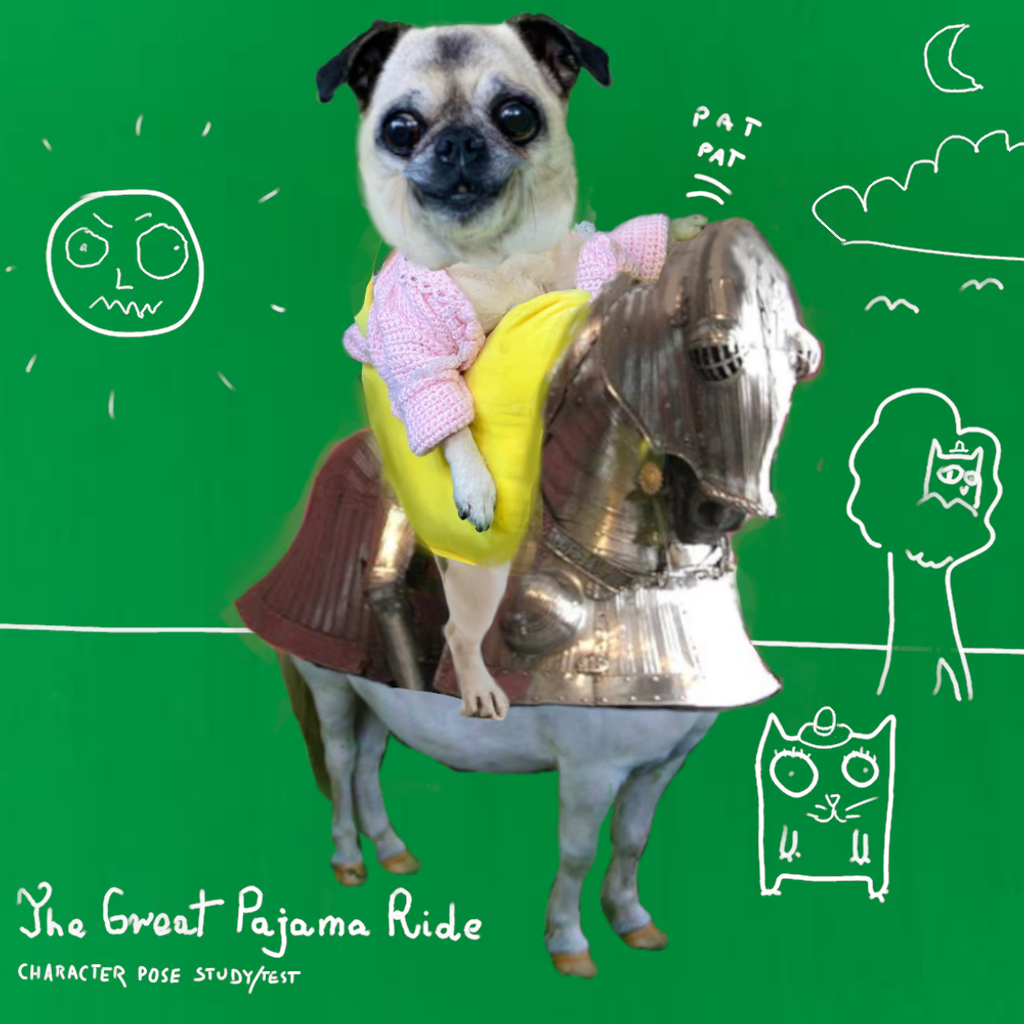
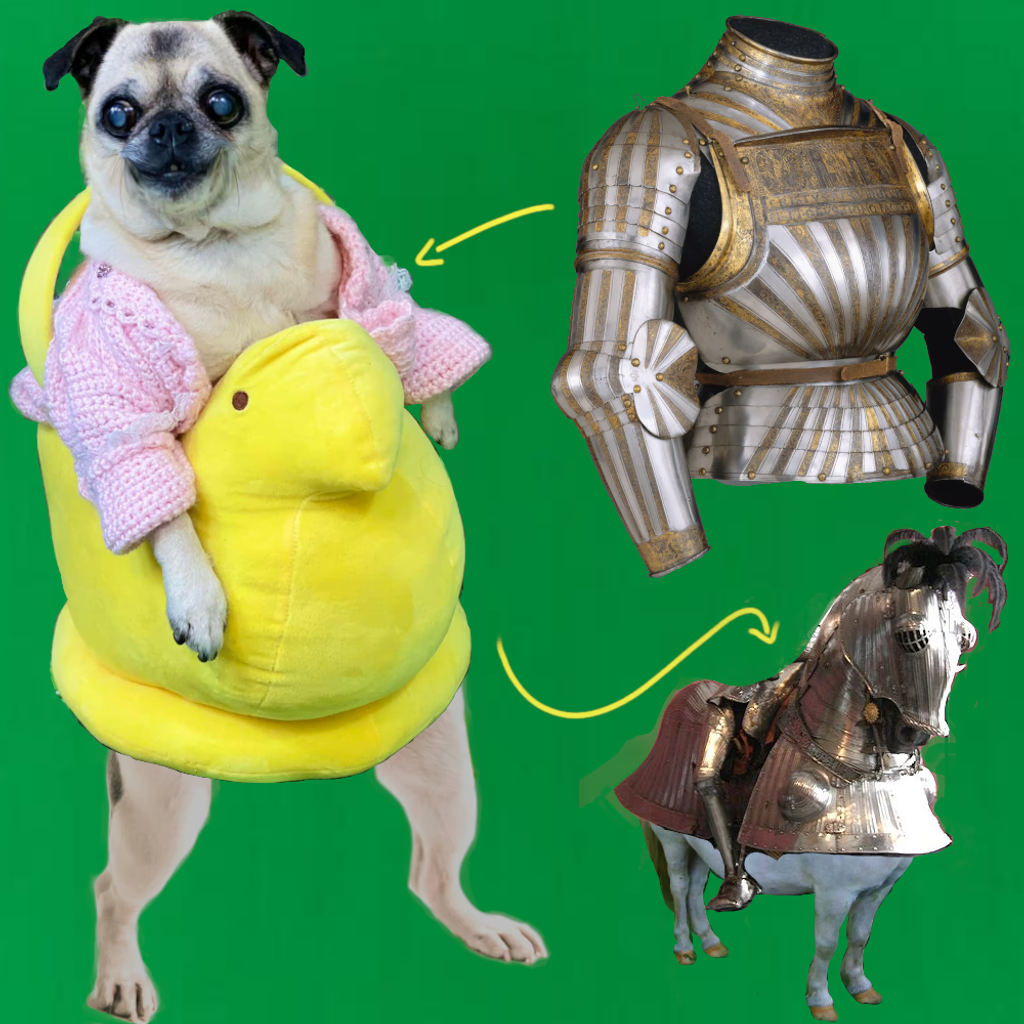
The post celebrates an imaginative “Queen of Queens” who commands the world of pets—squirrels, dogs, and cats alike—by encouraging them to wear tiny hats as part of a golden age of pet fashion. She is portrayed as both a charming scientist and artist, riding a little horse in golden armor while delighting in cozy wool sweaters at home. Her cheerful presence lights up rooms from afar, and she loves to listen to her favorite books, especially those by Bill Bryson, all while maintaining her role as the keeper of doggie things.
The author explains a technique for creating drawings by first sketching a simplified model over a source image—marking distances and relative measurements—and then recreating that minimal sketch on an empty canvas using only the photo, a drawing surface, and traditional brushes. This method can be applied to faces or bodies (with key points such as knees, joints, shoulders) and transferred onto a blank canvas; the writer prefers artists to use their judgment on a slightly warped reference rather than relying solely on line models, believing that a faithful likeness is only one small detail among broader elements like armor or scenery. They note the importance of capturing key features—such as eyes—before adding other details, and enjoy creating large scenes with 3D modeling to guide composition, appreciating how digital tools help map out complex worlds for painting.
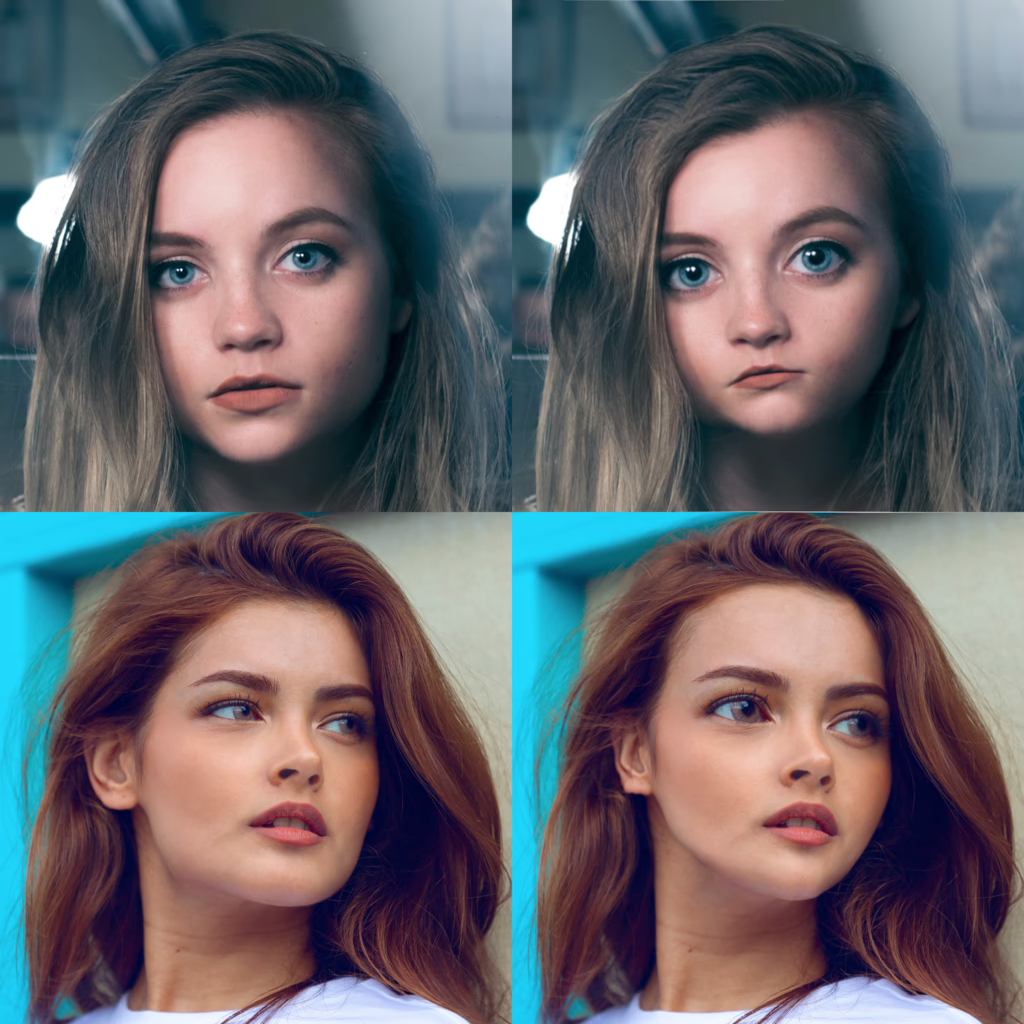
Step‑by‑step GIMP tips for gently warping faces into youthful, balanced proportions—paired with a nostalgic recounting of the author’s first photo‑manipulation projects and a call to share this art with classmates.
The post describes how artists who use photographs as references often face early criticism—labelled “copying” or “paint‑over”—from traditionalists who consider such practice unoriginal; it explains that these attacks, usually launched by self‑confident “liars,” can be overcome by stepping outside their circle and mastering the tools (e.g., GIMP’s Warp Transform) to create truly beautiful works; the writer encourages artists to keep learning, reinventing rather than merely copying, and to rise above the noise so that art becomes a free, living forest rather than an echo chamber.
Digital painting in Krita can begin with hyperrealism, using a pen-and-tablet setup that supports tilt so the virtual chisel tip rotates naturally; layer management lets you isolate elements like eyes or shadows for precise control; the built‑in Image Reference Tool projects an image (e.g., a selfie) over your canvas at adjustable opacity, allowing you to trace shapes with an airbrush while simultaneously sampling exact colors from the reference layer; by ensuring high‑resolution photos—visible details such as individual eyelashes—you can accurately learn both color and form in a quick, pleasant workflow.
Accurate photo reference is essential for realistic portraiture because subtle details such as iris lines, eyelid color and horizon processing shape our perception of faces, and mastering these nuances yields a “super realism” that beautifies human features without distortion.
The post explains a fast digital painting workflow that begins with creating a black‑and‑white version of an image to establish its value (brightness) study, then adding a color layer in “Color” mode so that the computer replaces each pixel’s value with the underlying grayscale values while keeping the chosen hue. By first laying out shadows, midtones, lights and highlights on the monochrome base, the painter can later apply any desired color—whether it’s flesh tones or other hues—without worrying about saturation because the tonal information comes from the lower layers. This technique mirrors traditional value‑studies used by Old Masters but streamlines the process for modern graphic programs.
The post whimsically describes a Groundhog who controls the weather, predicting that it will change only after he receives his tax return; the narrator humorously details the Groundhog’s needs—money, diamonds, and even trout—to keep the cycle going, suggesting that as long as the creature has enough resources, it will continue to bring winter’s snow until the spring arrives.
Poverty and war shape the way we see ourselves, while our birthplace determines our religion, intelligence, and sense of safety—yet these are not who we are but what culture impresses upon us. The road humanity walks is paved by those who accept contradictions; it isn’t perfect, but it beats a world of imagined borders and endless wars. Science is ignored, liars win politics, and poverty’s grip on the mind produces divisions based on skin color, faith, or invented lineages—divisions that can be healed only by learning, art, and courage. By reading books and seeking wisdom we become great beings; our responsibility is to end poverty, build a culture of education, and prevent wars for decades to come.
The post explains that recognizing faces in real life relies on many angles, whereas a single photo gives only one view that can be further distorted by lenses, software, lighting, focus, color, and expression; to overcome this, the author suggests using photogrammetry with neutral lighting and free tools such as Meshroom, Blender, and Prusa Slicer to build a 3‑D model of a portrait, which then allows you to see the subject in three dimensions and understand its main angle—so even if your painting starts from one photo, you should gather several minutes of video and dozens of photos taken at slightly different angles and lighting. The author notes that seeing multiple shots can sometimes make people look like twins, a common problem in art when reproducing the wrong “twin.” Finally, he argues that stylised paintings are as valuable as hyper‑realistic ones; capturing a stylised eye while keeping the subject’s appearance takes time but is part of learning and bridges the journey from hyper‑realism to beautiful stylisation.
The poem celebrates the endless directions of art, describing each painting as a gateway to a new story told in its own style—whether night‑lit, misty mountains, or sunny faces—and noting how photographs can serve as foundations for these works. It reflects on the many languages of artistic expression that evolve over time, with artists learning through repeated attempts and building upon earlier styles, while sharing their journeys helps others follow the creative path.
The post reflects on the artist’s evolving practice: starting from a freehand sketch that landed a blue nose close enough to a cucumber shape, the writer notes that twenty portraits seem like a “magic number” for honing technique. They claim sculpting was surprisingly easy and error‑free, yet freehand still falls short of capturing real people, faces and places—so practice through mastering masterpieces is essential. The next phase involves painting metal, glittery makeup or shiny dresses, especially armor that reflects light and feels majestic; gold’s hue emerges from a mix of six colors with reflective quality. Painting portraits extends beyond the face: filling all space to tell stories of superpowers, mystery, glory, and making the owner smile through colorful style. The writer concludes perfect portraits are just the start of mastery, urging painters to keep refining and painting rather than relying on photos.
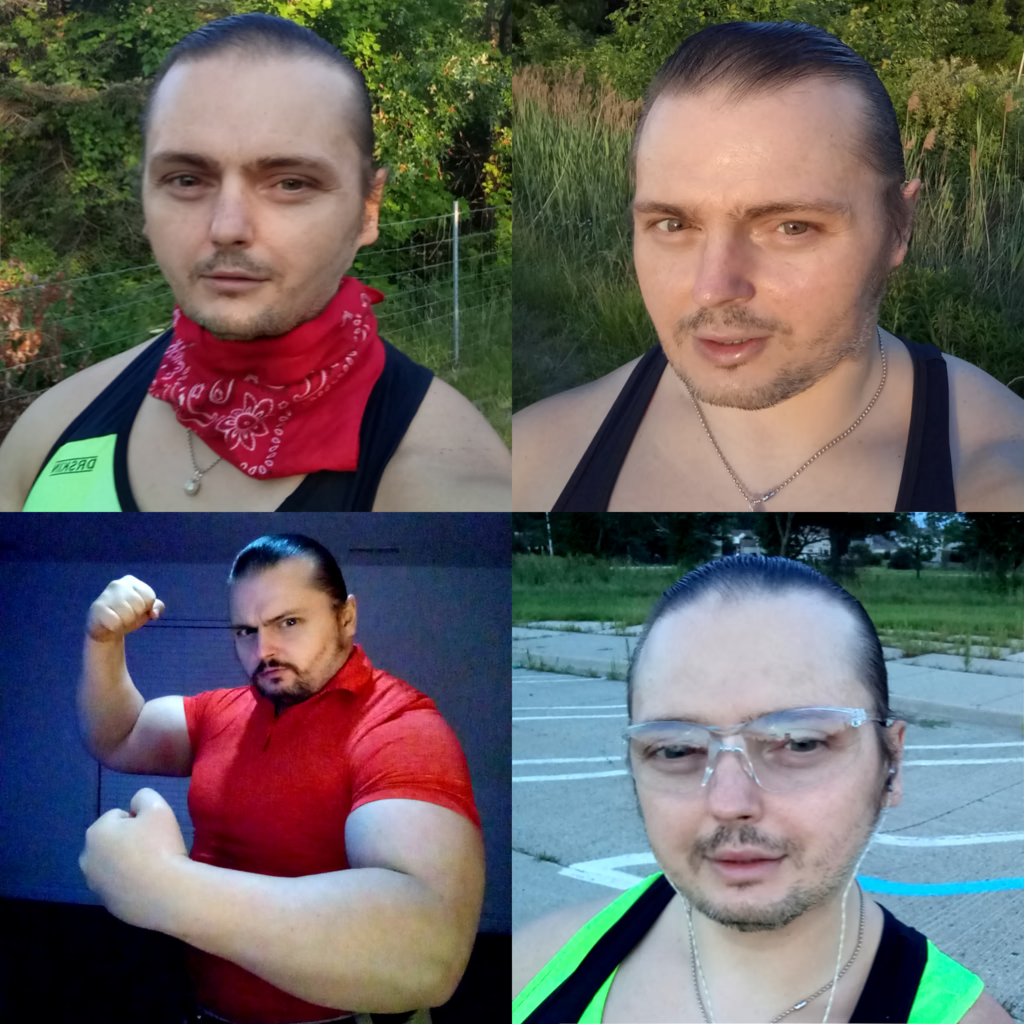
After a workout I found myself inspired by the glowing eyes of digital fantasy art and tried to apply that effect to a portrait of my own face. The initial result—blue‑glowing skin—looked striking, but after reflecting on how the subject would feel it became too dramatic and unprofessional; removing most of the glow brought back recognizability while keeping the idea of a “powerful guardian.” I learned that adding glow isn’t just about brightening—it’s about layering subtle color swipes over a dark background to create a natural light, and that less is more. Using reference photos keeps faces from becoming distorted, and when painting at night you can give a magical feel with careful color choice: blue gives a cold, alien tone while red feels warm and friendly. The post concludes that if a client asks for a nighttime portrait, it’s an opportunity to produce a fairy‑like image—provided the subject knows what they’re getting—and that the artist must respect the person being painted before adding such glowing effects.