The post describes crafting a dance‑ready track by layering ready drum and bass samples, then weaving in a melody drawn from Morse code and Russian audio clips, all while stressing the playful, improvisational nature of music creation.
Archive
Page 14 of 101
The post describes crafting a dance‑ready track by layering ready drum and bass samples, then weaving in a melody drawn from Morse code and Russian audio clips, all while stressing the playful, improvisational nature of music creation.
#0324
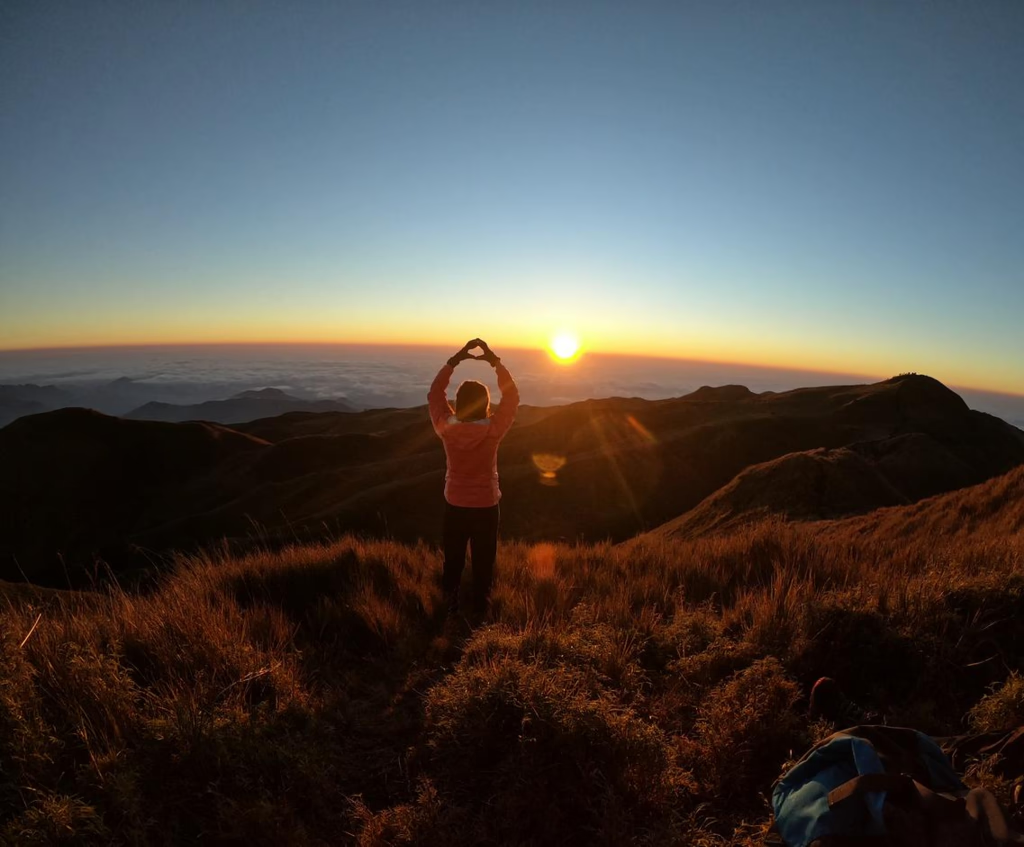
The post presents the reader as a living miracle, a micro‑cosmos made of stars whose inner universe is an ever‑expanding constellation of thoughts and observations that shape his Earthly life and global citizenship. It urges him to rise above national borders by cultivating knowledge through books—written or recorded—and to leave a lasting legacy of wisdom for future generations, especially the young who first encounter those early works. The author stresses that each person’s story is a triumph of insight, a source of enlightenment that will be read and re‑heard for centuries, and invites us to connect with our readers so they may help us rise as well.
#0323
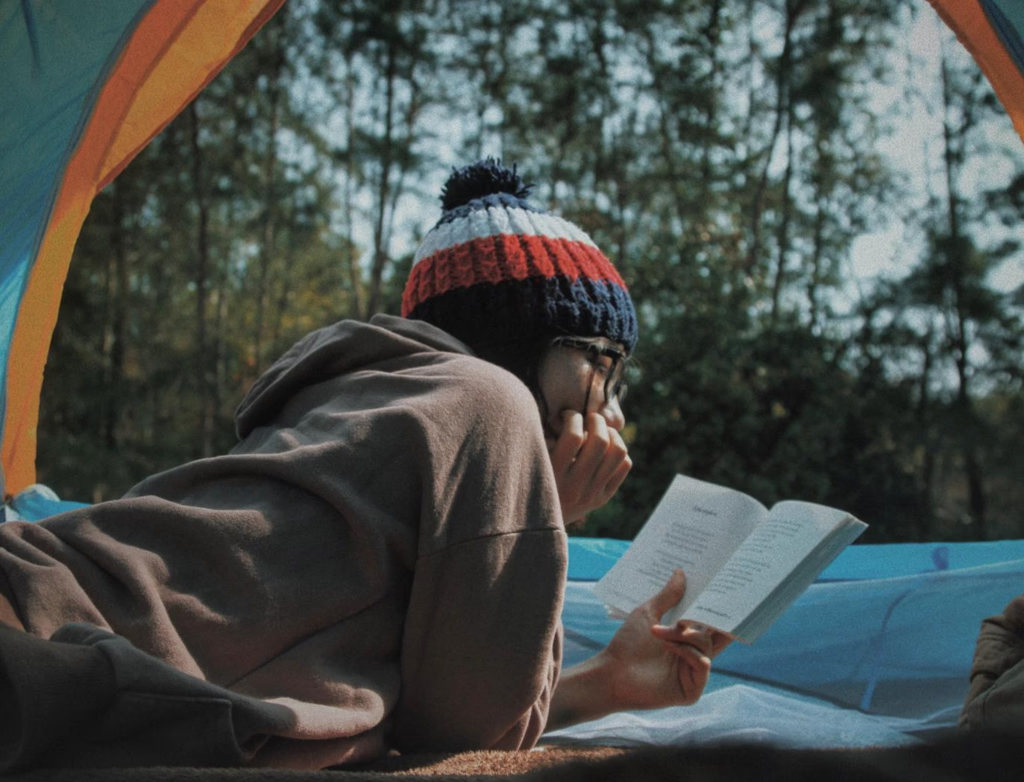
The post argues that true learning requires making direct connections between what we already know and where we want to go, rather than relying solely on memorization. It claims that the current school system forces students into rote practice to avoid failure, which only creates an appearance of competence and benefits teachers more than learners. By self‑studying and building a solid base of knowledge, one can return to formal education with confidence, making exams trivial and enabling a career built on real wisdom rather than superficial diplomas. The author stresses that authentic learning is essential for personal satisfaction and professional demand, and encourages readers to take care of themselves by pursuing genuine knowledge before seeking titles or jobs.
#0322
Humans are not ordinary beings but unique creators shaped by chaos and stardust; our lives unfold through continuous learning and self‑reflection. We breathe life into thoughts like song, caring for body and mind as citizens of the world while striving for excellence in knowledge, wisdom, and greatness. Books become mirrors that accelerate growth, letting us inherit hard‑won wisdom and contribute to humanity’s collective knowledge. Thus each life becomes a unique adventure—a miracle that inspires others and enriches the world.

#0321
The post celebrates the way a beautiful piano tune can stir our hearts and souls, calling us back to nature’s rhythms—especially an “Aquamarine Ocean” that feels timeless and part of us. It likens composing music to a chess game: begin with a key you love and then explore moves toward harmony, while recognizing that perfection is less important than the imperfect, continual progress that mirrors life itself. The writer urges readers to slow down from busy schedules, reconnect with earth’s sounds, care for their minds, and pursue creative endeavors—whether through music, dancing, or travel—so that each moment becomes a canvas of ongoing creation rather than a final product.

#0320
In this post the author explains how to build a minimalist song in an easy, fun way. They suggest using a sound‑generator tool that provides categories from old computer games—pick up/coin, laser/shoot, explosion, power‑up, hit/hurt, jump and blip/select—and applying effects like reverb and echo to modernize the mix. The process starts with a 130 BPM drum kick assembled by layering several generated sounds (laser, explosion, etc.) into a chord, then adding claps on every other beat for contrast. Hats are introduced on and between beats to give energy, while variations in the kick keep the groove alive. Finally the author adds a simple melody—whistle‑style sustained tones—to complete the track.
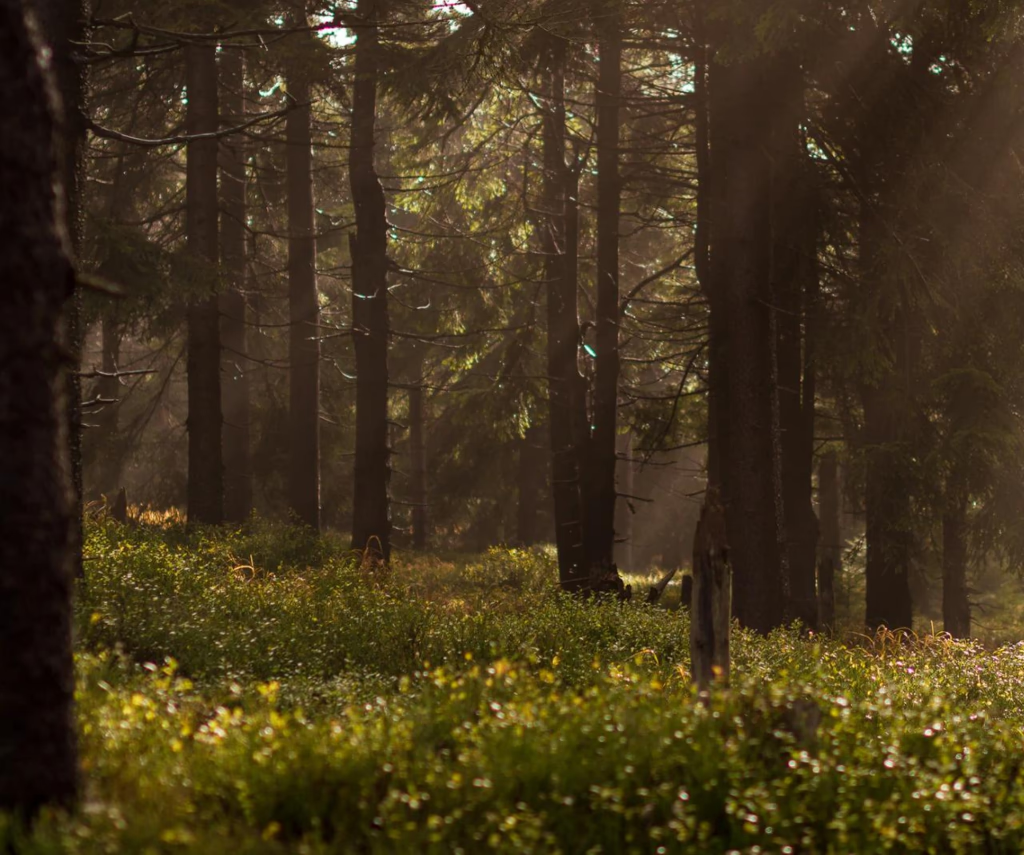
Woodland Adventures is a goofy journey that begins with the author’s first visit to the Nurnberg Trailhead and quickly turns into a series of misadventures—after a 90‑degree turn they lose their way in a grassy field full of snakes, mistake a dune for a tree and wander in circles blocked by spider webs, only to find themselves back on the trail when a confused fellow hiker points them out again. A later fork toward Lake Michigan leads to another detour, but after battling mosquitoes and insect repellent they eventually reach the dunes, swim in the lake, watch the sunset, enjoy sausages for dinner, and spend a month collecting fossils and building sticks before returning months later for more silly adventures. The author concludes by recommending that hikers take the right fork at the first split (the more traveled path) rather than the left one toward the lake, and to stay on the trail to avoid shortcuts.

#0318
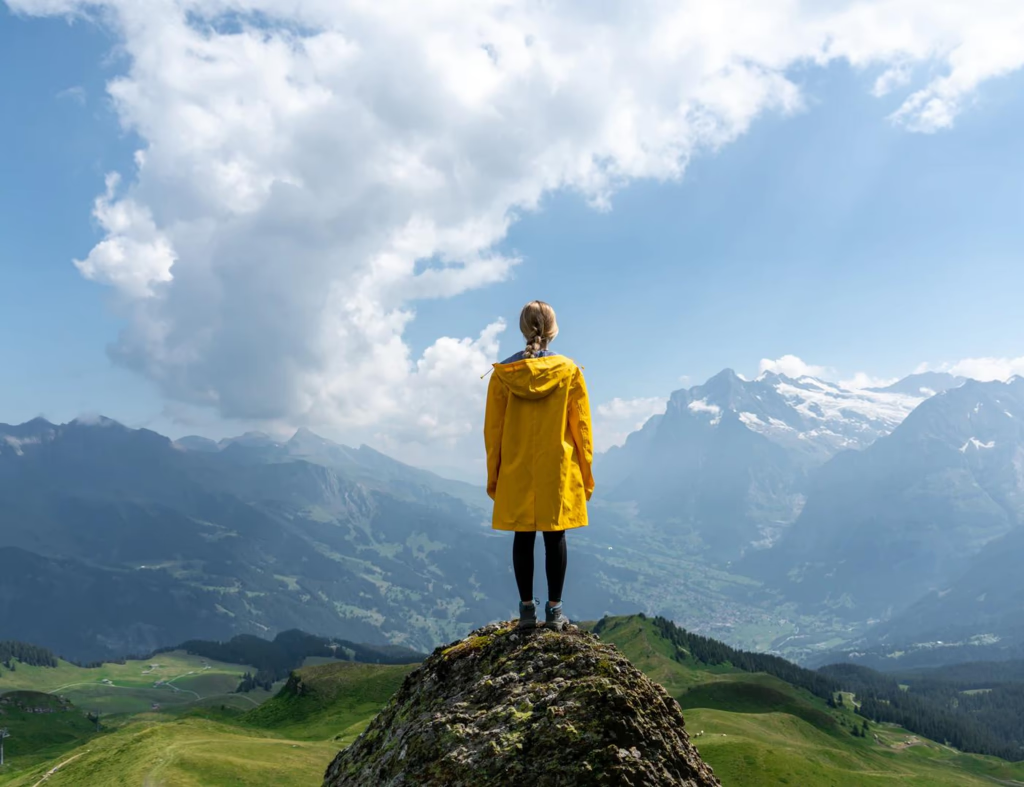
The post reflects on how the author discovered Whitman's Kosmos, noting that while the ending is beautiful, it was the middle that caught their attention; they discuss how theories of earth, body, city, poem, and politics can be understood through subtle analogies, citing Chomsky’s idea that apes’ navigation genes were copied to aid human faculties; they then ponder why math and string theory are useful—they share properties with the universe, being subtle analogies that mirror basic rules; illustrating this with an apples example, the author references Leonard Susskind’s video on consciousness, and concludes that understanding new things by analogy to known concepts fuels invention, while reading many books creates a tipping point for idea synthesis and infinite creativity.
#0317
The poem urges us to seek wisdom and preempt trouble by gathering knowledge, likening the mind’s growth to a flower that needs water, light, and countless voices—about a thousand books—to bloom fully; with each book added, our minds amplify, become unbreakable and unimaginably strong, allowing us to start anew, align in balance, and let even the slightest push become a great force.

#0316
The post argues that true learning comes from personal exploration and continuous self‑education rather than passive classroom instruction; it claims that knowledge fuels confidence, creativity, and decision‑making, while its absence breeds fear, ignorance, and error. The author emphasizes that teachers often merely repeat what they know without inspiring students, and that a book—whether read, rewound, or listened to—serves as a gateway to wisdom that can be applied to life’s challenges. By accumulating knowledge in layers like “golden flakes,” one builds the capacity to synthesize ideas, understand others, and correct problems in society such as poverty and ineffective teaching. The piece concludes with a call for everyone to become wise so the world may grow safely and in balance.
#0315
The post is an uplifting exhortation for each person—especially a child of the universe—to cultivate wisdom and personal growth through self‑reflection, independent decision‑making, and active learning; it urges one to protect their mind from outside interference, find safe spaces to dream, engage with nature, and pursue creative pursuits such as writing, music, art, and adventure, while reminding that every individual’s journey is sacred, equal, and free of undue comparison or manipulation.
#0314
The post celebrates the idea that the most effective lectures are those you create yourself—mixing documentaries, online videos, audiobooks, infographics and hands‑on projects such as a Raspberry Pi kit with breadboards and sensors—and then taking them out on nature trails where you can sleep through an audio lecture yet still absorb it when you wake. It urges that learning be as adventurous as the content: build solar‑powered gear, wire a weatherproof wireless network, program a MUD, and use creative login pages to test your UNIX skills—all while trekking to peaks to observe supernovae, glaciers and lightning bugs. In short, the author argues that real lectures last a lifetime, become gateways to exploration, and are best experienced in the wild rather than in a classroom.
#0313
The author argues that modern education is dominated by rigid subject divisions and rote memorization, turning teachers into “performers” who merely repeat formulas rather than truly teach concepts; this system leaves students feeling unconfident and misled, as they are judged on standardized tests rather than actual understanding. He claims elementary school works because it teaches basic recall, but higher levels add unnecessary layers of abstraction that only force memorization again. The essay suggests that true learning happens when students disassemble ideas, rebuild them through analogy, and apply tools to create new knowledge—like mathematicians who study notation deeply. Finally, he urges each individual to take ownership of their education, follow personal interests, and not rely on institutions or diplomas for validation.
#0312
The post reflects on life’s journey as a personal path shaped by our own choices rather than others’ expectations. It says each step must build upon the previous one, with growth and learning as continuous processes that define our “perfect” school and life. The author imagines an older self looking back at the moment of beginning, proud of a fully lived and authentic journey on his own path.

#0311
This post outlines a step‑by‑step blueprint for turning a personal passion into a thriving business: start by learning through audio books and simple tools like LMMS to create workout music, then pitch this product to investors (e.g., $10 k becoming $100 k) and use the capital for advertising; build a brand with free bandwidth, ads, merch, and videos, while accepting that failure is an inevitable part of learning—each flop is a chance to refine the idea and portfolio; finally, showcase your work in a polished design portfolio to attract schools, investors, and clients, proving that sustained practice, creative content, and honest entrepreneurship can lift you from poverty into lasting success).
The post argues that people should build their own meaning and knowledge by learning from many wise books and thinking for themselves, instead of blindly following prescribed roles or institutional advice.
Parents are encouraged to see schools as more of a babysitter than a true classroom: safe but pressured, they often push students toward memorization, mislabeling them with disorders or drugs when grades falter. Drawing on Sir Ken Robinson’s ideas, the post asks whether we really want our children to become great beings or just employees, and calls for authentic learning beyond “fake graduations” and meaningless grades—audio‑book study, practical practice, and real self‑education in nature—to make them wise, confident, and ready to thrive.
#0307
The post celebrates creativity and learning by listing a variety of tools that help people turn complex subjects into approachable projects—such as rhyming dictionaries for poetry, art projectors for painting, three‑dimensional pantographs for sculpture, and piano rolls or sequencers for music composition—and notes how visualizations and introductory materials make even abstract mathematics or elliptic‑curve cryptography feel less intimidating. It stresses that sharing knowledge is a wonderful feeling and that learning starts with something personally interesting, allowing self‑paced progress; in the end we’re all dreamers and geniuses full of countless ideas.

#0306
The post reflects on the long, precious nature of life, urging us to treat each day as a gift and seek continuous growth through listening to inspiring audiobooks rather than getting stuck in routine work or rote schooling. It argues that school can feel like a game if we view it merely as memorizing facts, but true learning comes from real education and the wisdom of great thinkers such as Bukowski, Thoreau, and Socrates. By studying their experiences and quotes—like Bukowski’s morning‑routine riddle or Thoreau’s deliberate woods‑life—the writer encourages us to examine life carefully, avoid long‑term regrets, and choose purposeful paths (e.g., writing first, then medicine) that blend passion with practical skill.
#0305
In the post the writer urges readers to watch their classmates in the back row, spot those who may be brilliant yet disillusioned, and help them before they “fracture.” He explains that liars spread patterns without proof or blame and that only real education can prevent such liars and criminals from re‑occurring in future generations. The author cites examples of ATM thefts born of cartoons and desperation, and argues that wise politics—specifically a Universal Basic Income—will give people money to live in knowledge, authenticity, and dignity. He concludes that prevention coupled with real education will guide people toward wisdom and greatness, and that children must be nurtured into great beings until the liars retire.
#0303
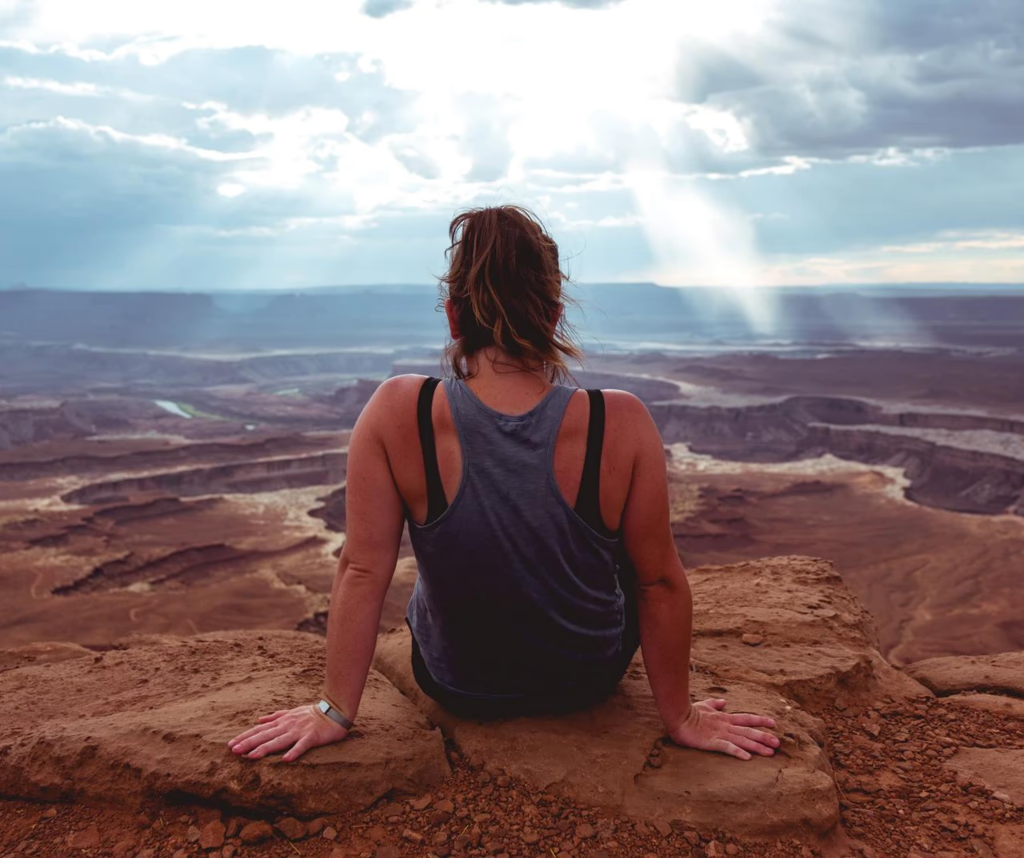
Life’s misfortunes can be met with dignity by turning them into wisdom. The author argues that true strength comes not from diplomas alone but from the inner cultivation of wisdom, which grows through books and their narration. Reading—or listening to well‑narrated works—enhances decision making and provides quick strength when the soul is hurt. To internalize this knowledge one needs a healthy mind, balanced life, and a conducive environment: nature, warm nights, pine smell, bonfires. The author stresses that true learning builds a scaffold only when we love ourselves; once wisdom takes root it spreads and offers solutions to new problems by analogy. With such wisdom we can share good ideas, help others synthesize their own, creating families of shared experience, and ultimately become unbreakable.
#0302
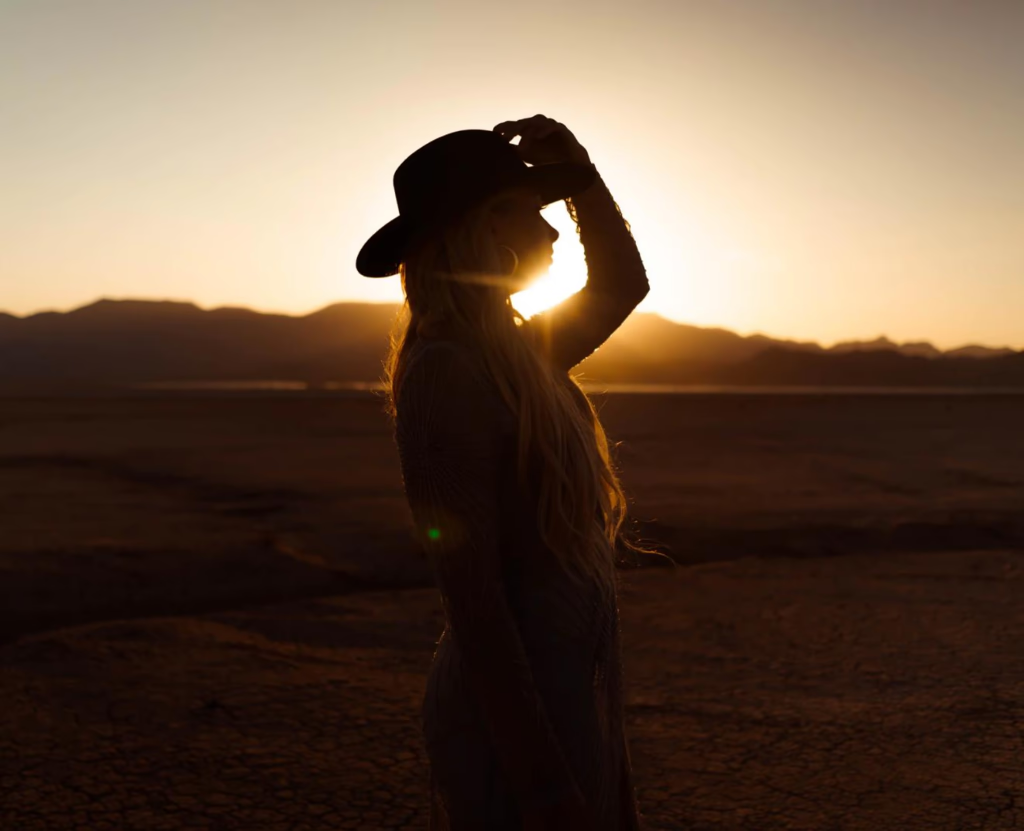
Life is described as an art to be created by personal leadership rather than merely following institutions; even perfect schools and governments cannot replace the need for individual growth. The author contrasts being a doctor with becoming a “great being” who heals generations, asserting that wisdom precedes goals and that knowledge plus wisdom shape character. He argues careers alone don’t cure fear or loneliness—only inner learning does—and that studying through books, nature walks, and artistic practice is the best way to acquire this wisdom.