·

#0245: All Saints' Eve

In the post, the narrator recounts several whimsical adventures—an engineer in Nordhouse who mismeasures water in pounds, a map‑reading excursion in the South Pacific where a student in an evergreen tent claims to be working for natives, and a Ludington scene of a girl feeding seagulls that ends with the bird flying out. The main anecdote follows a memorable early morning at a campsite on the Orchid Loop: the narrator sits by a fire, listens to birds and bears, and watches a group of middle‑aged ladies enjoy camping; one woman’s playful “Puull my finga” in a deep southern accent punctuates the day. The narrator ends with a cheerful “Happy Halloween.”

·

#0244: Idea's Edge: Secrets Of Paintings and Songs

In the poem, the narrator speaks of uncovering hidden secrets in the sand while living in a dune‑built castle, gathering firewood and eating simple meals, all while chasing the “edge” of ideas at his own pace; he contrasts music composition with painting, noting how each art form unfolds in layers—paintings rain while music ticks—and reflects on matching one’s rhythm to personal interest. After completing his work he returns to the starting point, puts out his flame, watches someone else light a new fire, and continues tracing notes in the sand, now awaiting time itself to reveal the next clue.

·

#0243: Playing With Computers

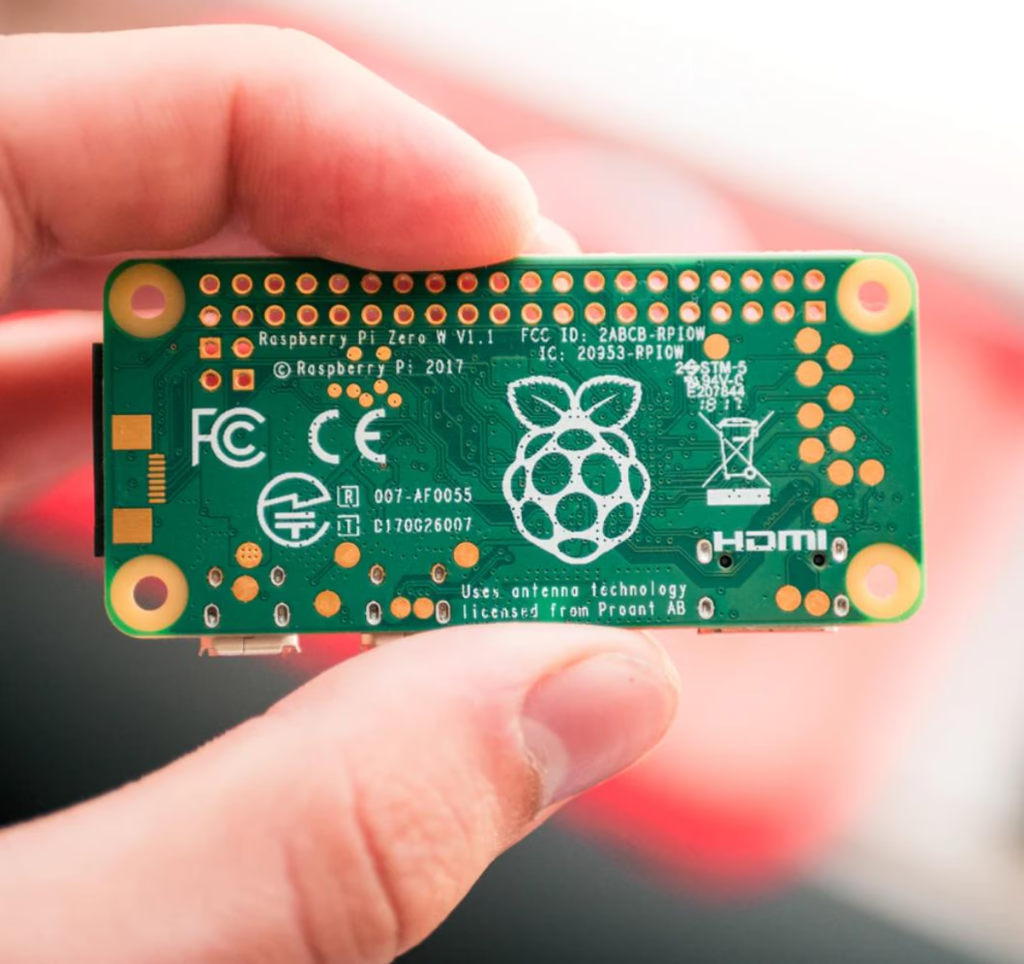
The post begins by encouraging readers to learn anything they enjoy, then guides them through a practical project: building simple inventions with a Raspberry Pi Zero W kit—soldering a GPIO header, connecting an RGB LED HAT or a single LED, and using basic command‑line commands (cd, ls, etc.) to control the device. It explains how to add peripherals like a camera (via raspistill) and an LCD screen to turn the Pi into a tablet, while noting that many tutorials and pocket references are available online. The author highlights further possibilities such as making time‑lapse photos or even assembling a drone, all to illustrate that inexpensive single‑board computers can power creative inventions from LED toys to complex machines—prompting readers to keep dreaming, inventing, and bringing ideas to life.

·

#0242: On The Vastness Of Heart

The post celebrates lifelong learning as an evolving, layered process that blends varied disciplines—art, dream‑making, mechanics, urban exploration, photography, and island living—each contributing unique insights to a growing “vastness of heart.” It argues that true education comes from hands‑on experience, personal reflection, and continuous integration of past lessons with new ones, rather than rote memorization or formal schooling alone. By weaving together the practical knowledge of mechanics, the aesthetic sensitivity of artists, and the expansive curiosity of explorers, the author invites readers to build their lives “layer by layer,” embracing

·

#0241: To Michiganders That Don't Always Like The Snow

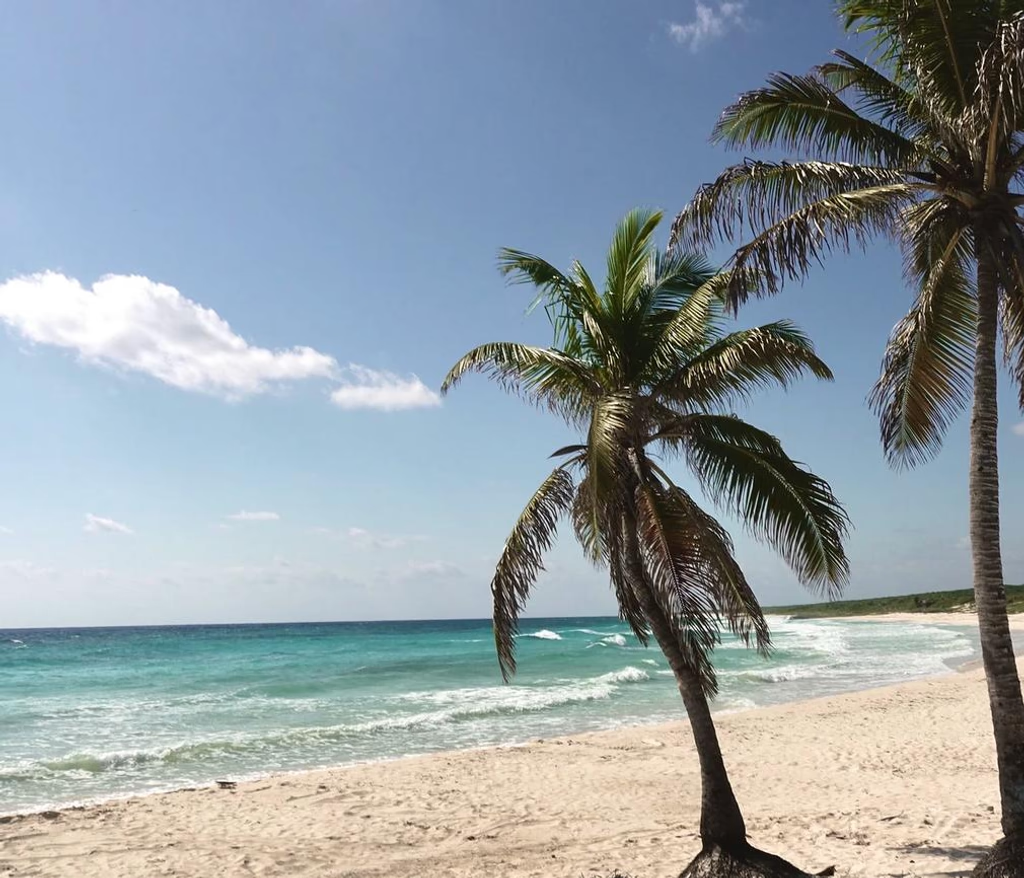
The post invites the reader to leave a frowning mood behind the snow and embark on a road trip southward along Route 275, passing through Ohio, Kentucky and Tennessee before arriving in Georgia where the journey pauses for rest. After waking early, the traveler continues south into Florida, follows US Highway 1, and ultimately reaches Little Duck Key. There, one is encouraged to park beneath a palm tree, apply sunscreen, and enjoy the ocean.

·

#0240: The Century Of The School

A vision of a future where education becomes the engine that lifts humanity out of its cognitive biases and unites diverse peoples—Yawanawa, Romani, Maasai, Samoyeds, Rotumans, Hawaiians—into one family. In this world, computers are trusted tools that free us from “easily corruptible” politicians, while a new educational system spreads knowledge, wisdom, compassion, empathy, and unity across all corners of Earth. With that knowledge, we can restore the planet’s thin oxygen layer, protect oceans and lands, and become true caretakers of our shared world. The post calls for storytellers, lovers of science, and multi‑language narrators to build a “solar‑powered school on a chip” or free‑satellite internet, so that every nation follows the path of learning and collective action, ultimately saving Earth and all its inhabitants.

·

#0239: Find The Edge Of Your Universe

The post reflects on how stepping into a new “edge” – a sacred space where we learn a fresh language and expand our vocabulary – becomes an anchor that sharpens thought and guides progress; this place lets us quietly absorb the utterances of Great Beings, measure our growth from a solid point, and confront the regrets of others (like the Elder You) who appear at every plateau in lonely solitude.

·

#0238: 3,890 Tigers

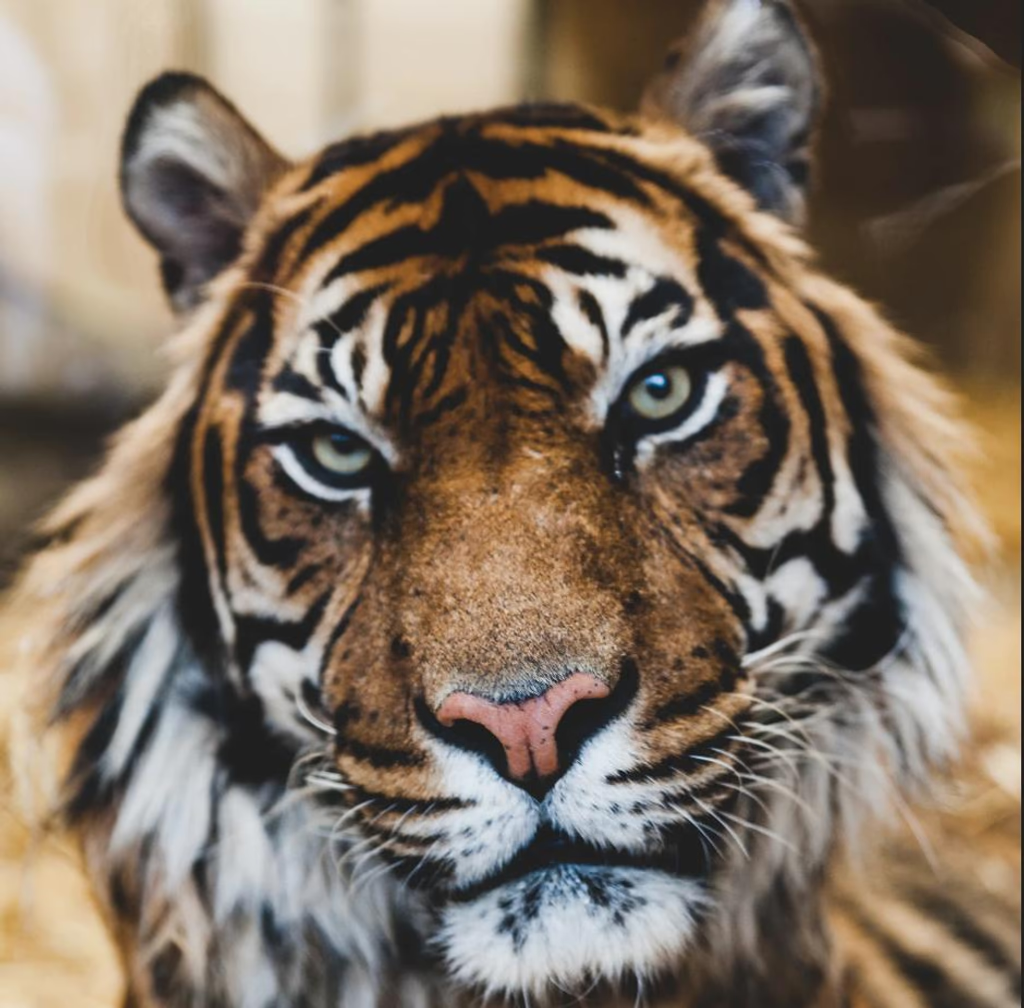
Happiness is presented as the secret human super‑power that fuels learning, adventure, invention, and creativity, lifting us to a cosmic level where we can contribute alongside stars and quasars; it multiplies our might endlessly and cannot be faked, but must be authentic. The post urges us to break free of blind cultural followings—“black holes” of leaders—and instead bind together through art, music, poetry, doodles, graffiti, hugs, shouts, and howls, while rocking the head in all directions; once we snap out of this gravitational pull we begin a journey upward marked by healing, leadership, love of life, joy of being, wisdom, greatness, enlightenment, courage, valor, honor, heroism, adventure, character strength, fortitude, foresight, insight, and creativity—all arriving simultaneously as the indivisible marvels of human existence. It stresses avoiding the taking‑for‑granted mindset and self‑indoctrination, learning by books and love for humanity’s celebrated works, and achieving a united, educated humanity that can rise, become wiser, and ultimately find happiness amid the universe’s grandeur.

·

#0237: Dance, Music, and Programming

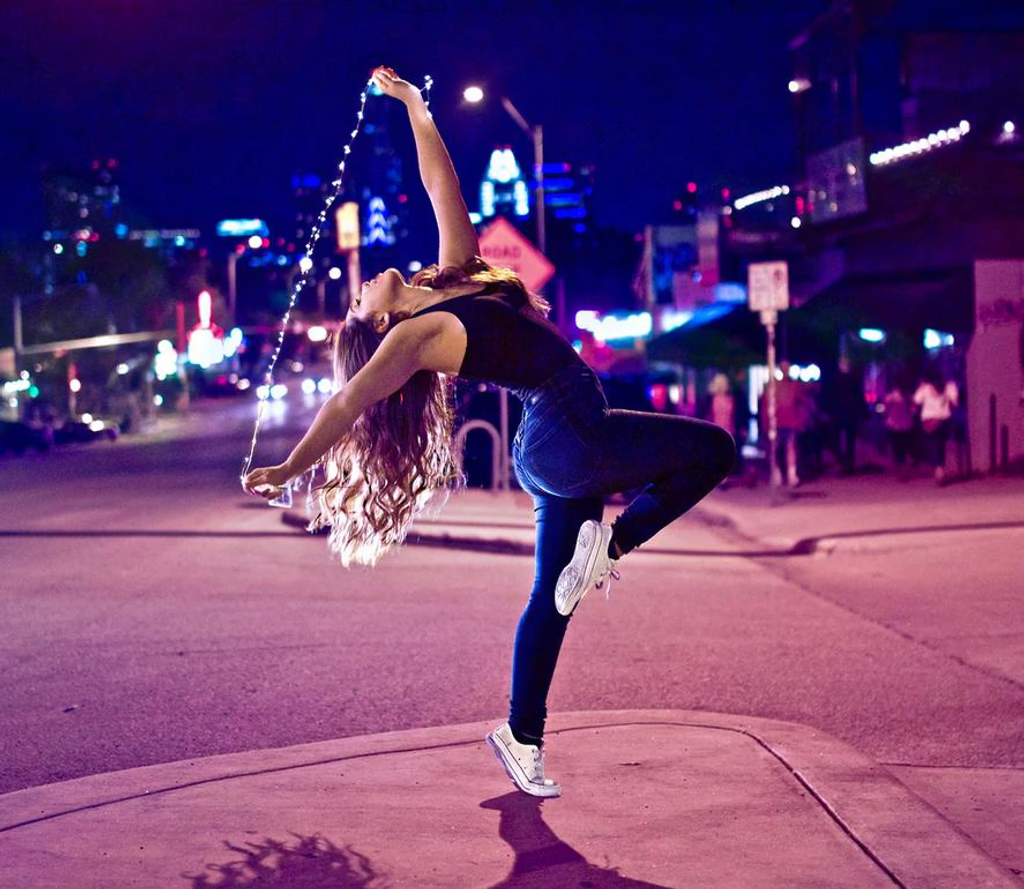
The post explains how mastering the Melbourne Shuffle can be achieved by linking musical structure to movement, then extends this idea to programming as a method for automating both music creation and dance.

·

#0236: Seeing In Parallel: The Colors Of Night

The author describes how science and play blend in his projects, beginning with three inventions—a CD‑based car MP3 player from 1998, a high‑altitude balloon carrying a miniature ship that beams video to a ground trailer for real‑time motion feedback, and a lock‑picking board game built around acrylic padlocks and deadbolts—and then moves on to recent experiments in CPU‑intensive post‑processing of infrared photos (colorizing night shots) and exploring ZeroMQ as a messaging tool to coordinate large camera arrays for slow‑motion, super‑resolution imaging; he concludes that such hands‑on experimentation and self‑education are far more powerful than textbook study.

·

#0235: Get Out Of My Laboratory, Or Invention Is A Teacher

The post explains how great thinkers learn by exploring fundamental phenomena—gravitational, electromagnetic, pendulums—and then following their curiosities. It uses infrared photography with a Raspberry Pi Zero as a concrete example: buying inexpensive IR lamps and cameras, experimenting with ISO, shutter speed, brightness, and contrast, then stacking images to reduce noise. The author suggests building a small lab with a Pi 4, adding monitors, and expanding to networked Pis, Noir cameras, and time‑lapse setups. From there the reader can branch into programming (Node.js, Bash), 3D printing cases for the Pis, servo motor practice, and even constructing a Raspberry‑powered telescope that doubles as a “space laser.” The key idea is taking baby steps—experimenting, documenting results, publishing tutorials—and letting each new project add to a growing body of knowledge and wisdom.

·

#0234: Not To Mention Business Invention

An enthusiastic inventor suggests that creativity often builds on others’ work, encouraging people to start simple projects—like a custom phone‑ring service that announces callers—or more elaborate ones such as a social network that turns weekly posts into memoir chapters or a tilt‑shift photography studio using drones for wedding and news shots. The post also mentions 3D art installations in dentist offices, macro and photomicrography to capture tiny details on large canvases, and time‑lapse videos for speeches or documentaries. Finally, it reminds that inventions need not be lucrative; they just must fascinate the maker’s soul.

·

#0233: The Next Eighty Years

The post outlines an ambitious four‑book project aimed at reshaping education, governance, rights, and everyday knowledge through technology and collective storytelling. Book One proposes a “choose‑your‑own‑adventure” learning format that will be released as paper, audio, video, and lecture series to replace rote memorization with self‑chosen subjects. Book Two envisions a computer‑managed, augmented‑reality democracy that aggregates educated citizens’ wisdom for city, state, and global decision‑making via an interactive fiction platform. Book Three presents essays on personal growth, unity, and the elimination of borders, linking education to poverty alleviation and prison reform, while advocating universal basic income. Finally, Book Four offers inspirational essays tailored to ages five through twenty‑something, designed for lifelong reflection. The author calls for translations into all languages and open contributions so that these works can unite humanity in a single, cooperative family ready to confront the century’s challenges.

·

#0232: A Touch of Magic: Keep a Backpack

The post offers a simple routine for staying organized, rested, and ready for adventure: keep a fully stocked backpack by the front door as a reminder of freedom and hard work; prioritize sleep and let your body decide waking times; take time to regroup over a week or two, noticing gradual improvement in health and calmness; and when you’re ready to explore, pack essential gear—mosquito repellent, ant‑histamines, solar charger, books, knives, cooking kit, hat, sunscreen, headlamp, first aid kit, duct tape, para‑cord, tent or hammock, sleeping bag, water bottle with purification tablets, toiletries, and a padlock for the zipper—so you can enjoy the outdoors while staying prepared.

·

#0231: Chopping Wood, Moose, and Beaver, Gol Dang It!

The post declares life to be art and invites us to paint our days with adventure and energy—first by acknowledging the fatigue that keeps us in circles, then urging us to step out into the world with a backpack, tent, Rambo knife, and simple supplies while keeping an eye on greetings and roles we assume (like “firefighter”), and finally reminding us that each day is a new gift, age is merely a privilege, and the only real work is the work of living, learning, and inspiring.

·

#0230: Take A Year Off, To Read

Schools and teachers, universities, and politicians had a chance to deliver real education, yet politics often eclipses it, creating a hollow feeling. The post points out the doubled fossil‑fuel emissions over 25 years, noting that past leaders like Al Gore were unaware of this scale. Now, intellectuals, poets, and artists must take responsibility for their own learning: listening to audiobooks, watching documentaries, keeping journals, and reviewing books, while also engaging with nature through hiking or camping trips such as the Appalachian Trail or Camino de Santiago. By letting sunrise dictate study time and sunset bring sleep, one can quickly regain what standardized education lost; thus, taking a year off before college or university could allow focused book‑time that proves its worth.

·

#0229: Of Watercolors of Yesteryear and Blooming Flowers of Tomorrow

The post uses a garden metaphor to describe humanity’s development, with people as individual flowers that grow best when they share and build on each other’s ideas. It argues that while free and mandatory schooling has raised overall knowledge, the rigid, one‑size‑fits‑all approach of traditional schools often confines learners in small walls, stifling creativity. In contrast, it champions “real education” as a personal journey—self‑chosen books, lectures, projects, and incremental steps—that nurtures passion and allows each flower to follow its own unique path toward wisdom; the example of learning watercolor art illustrates how a few deliberate experiments can lead to mastery through continued practice, proving that steady, enjoyable progress is the key to lasting achievement.

·

#0228: De Hominis Dignitate

The post celebrates the power of individual curiosity and creative thinking as the glue that holds society together, arguing that true learning springs from personal ideas rather than formal schooling. It traces how early “self‑taught” minds shaped education into a shared experiment that, though imperfect, keeps global knowledge high enough to communicate progress. The author envisions a new generation of schools—free of grades and rooted in each learner’s path—that unites humanity, nurtures the planet, and prepares future captains of Earth. In this vision, the Universal Declaration of Human Rights becomes the opening chapter of a new textbook whose lessons inspire clear thinking, leadership, and the relentless pursuit of the harder right over the easier wrong.

·

#0227: Ariadne

Each person carries an inner “labyrinth” – a winding, branching road of curiosity that, if followed at its own pace, will lead to true wisdom. The post argues that modern standardized curricula are merely patchwork political fantasies that fail to honor this personal journey, reducing learning to memorization for easy testing rather than synthesis and discovery. By embracing one’s unique path and taking responsibility for self‑education, we can return to school with a richer understanding and ultimately build a new generation of schools that honor individual exploration, creativity, and the true growth of knowledge.

·

#0226: Back Row

Back‑row students are urged to watch for trouble, analyze how teachers and principals keep grades balanced, read diverse books for integrated knowledge, and eventually build virtual schools to fix the education system.

·

#0225: Education vs Knowledge

The post argues that humanity’s progress depends on the continuous transmission of knowledge through books and self‑driven learning; it criticizes modern schools as failing to inspire true education, instead offering fragmented facts and tests that leave students “pretending” to learn. The author stresses that real knowledge—acquired from literature, philosophy, science, and history—fosters unity, reduces wars, and nurtures creativity; without it the world will regress into nationalism, terrorism and disintegration of families. The text calls for free access to public‑domain books so every child can study in peace, narrate what they read, and share that art with others. It urges readers to become their own teachers, to keep knowledge alive across generations, and to build a kinder, more compassionate world by reading, listening and sharing the best non‑fiction works. In short, the post is a rallying cry for self‑education, literature as a bridge between peoples, and an end to the “cold” formal schooling that no longer delivers true wisdom.

·

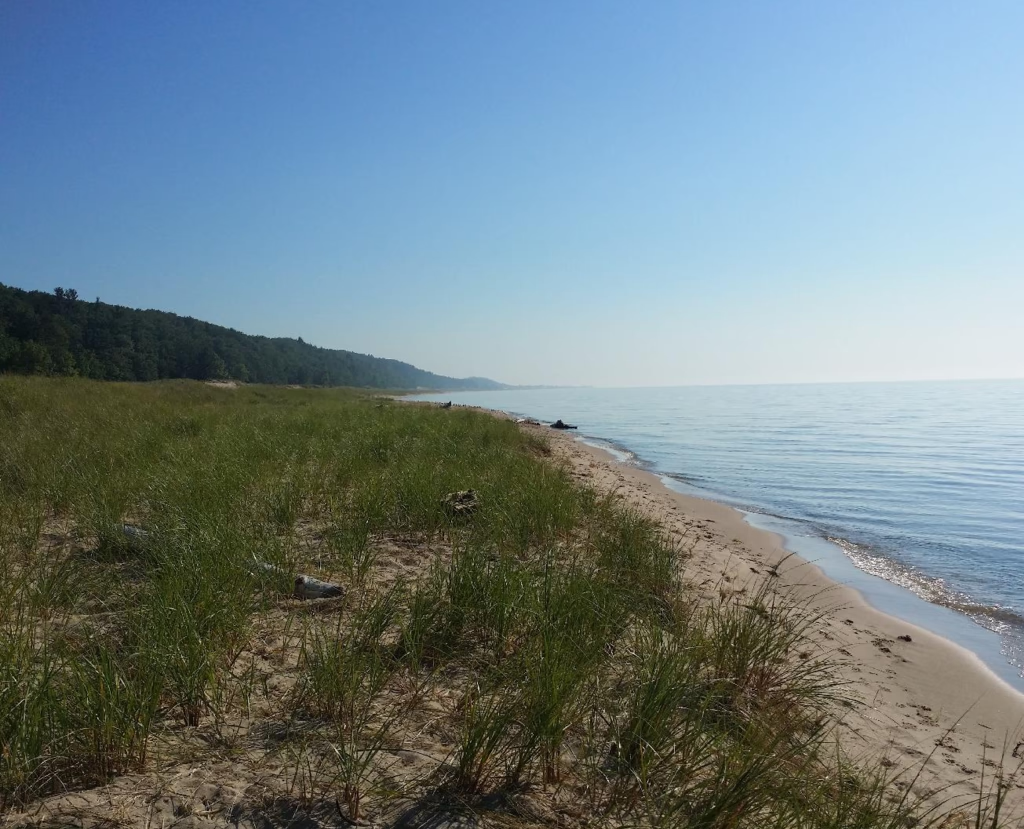
#0224: The Dark Nights At Nordhouse Dunes

In the post, the writer describes solitary nights spent connecting with the universe—listening to crickets, frogs, leaves, waves, and stargazing—while feeling close to literary greats like Thoreau, Melville, Whitman, and Defoe. He recalls finding an antique store where he bought a copy of *Robinson Crusoe* and Dan Millman’s *Peaceful Warrior*, both of which he read enthusiastically. Each year he revisits this place, encountering strangers who view him in various roles: “Wizard of the Woods,” “Artsy Hobo” building driftwood horses, and “Raccoon Artist” sketching raccoons with acrylics. He recounts a long expedition that lasted a month of sunny days punctuated by rain, culminating in storms during which he lay in his tent listening to the song “We Are All Connected” by Symphony of Science while pondering the conductivity of his tent poles.

·

#0223: The Programmers

Students create self‑reproducing capsules that spread through space and time, seeding DNA‑based life on planets and asteroids across the cosmos.

·

#0222: Flowers Of Earth: We set off to meet the others at Betelgeuse.

The author recounts humanity’s long journey—from watching Alpha Orionis explode as we become a space‑faring species, renewing ourselves via time travel and interstellar contact—to eventually returning to our ancient roots at Methuselah Prime.