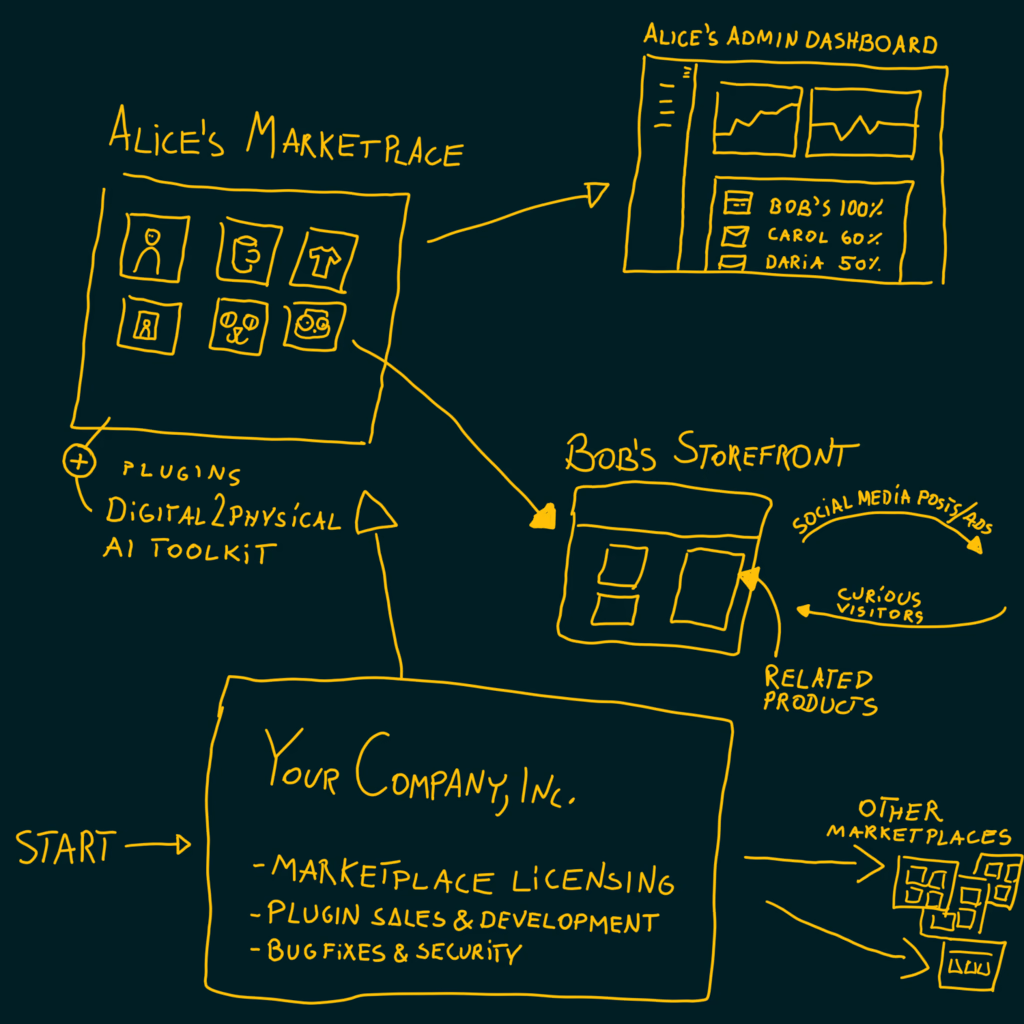
Your Company sells a multi‑store marketplace that lets users launch their own AI art shops, earning sales commissions while the platform collects a small percentage of each transaction.
The post describes how creating a simple product—such as AI‑generated stylized photos—can evolve into a full multi‑user marketplace platform: starting with a static website, adding authentication and rate limiting to secure logins, then expanding to a store for individual sellers, and finally offering a turnkey “marketplace design” that lets business users build their own digital product shops with plugins for photos, music, fonts, etc.; the idea is to climb from single‑file sales to hosting multiple stores under one domain, providing logs, diagnostics, and minimal code so developers can quickly launch and manage their own multi‑store sites, ultimately aiming to sell a complete dot‑com marketplace framework.
Ineffective education is blamed on uneducated, self‑made leaders whose lies spark wars, but the author argues only authentic, self‑directed learning can break this cycle.
The post explains how HTTP’s statelessness allows session‑based authentication via cookies, shows how attackers manipulate IDs to gain privileges, and proposes building a honeypot site to learn and counter those techniques.
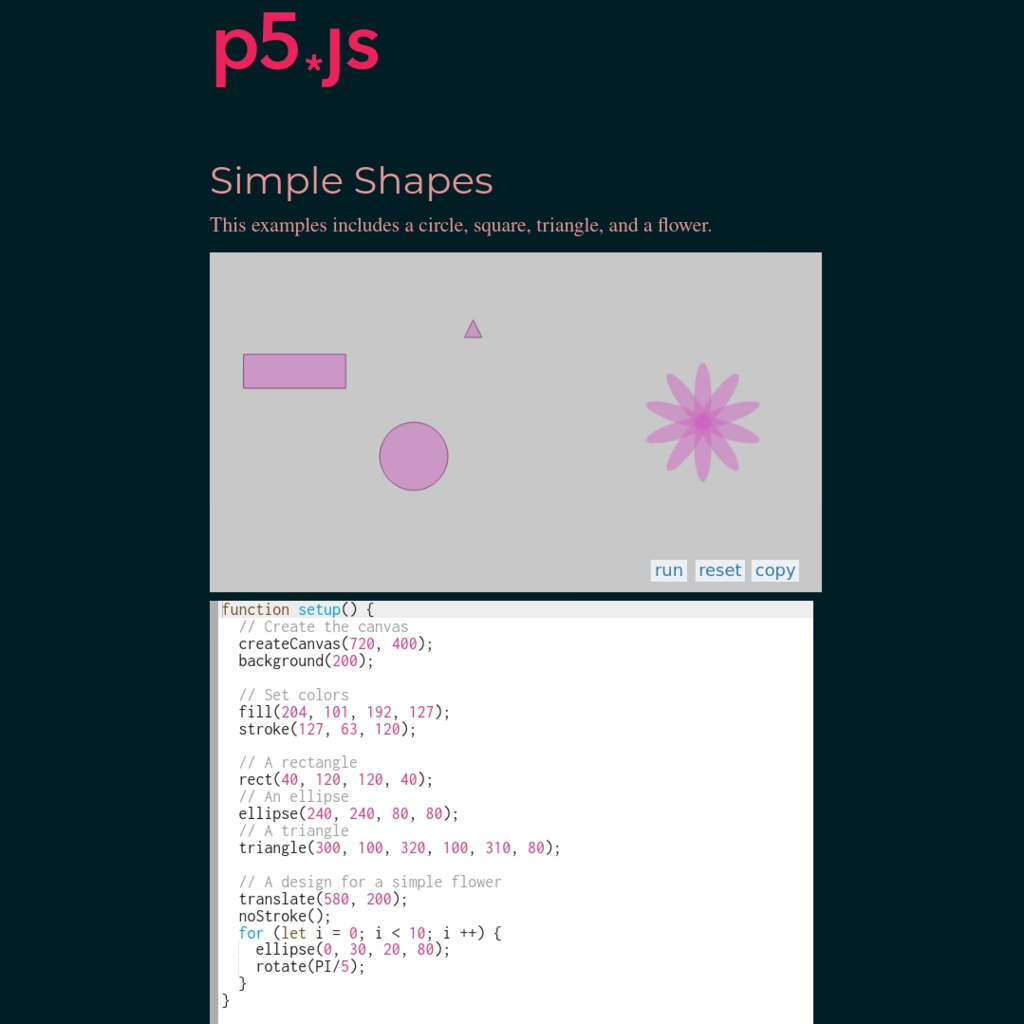
The post begins with an idea to launch an online photo shop that evolves into a marketplace where other users can also sell their AI‑generated images, turning it from a simple store into a full web application that incorporates security, deployment and AI integration. It argues that building such a platform is the best way to learn programming because it forces you to ask the right questions in the correct context, rather than memorizing isolated facts. The author criticizes traditional school teaching as fragmented and ineffective, insisting on self‑paced, integrated learning so every step feels rewarding and useful. He cites tutorials (Svelte basics, p5.js, Node.js) for guidance and concludes that early programming practice gives students the power to recognize and improve weak education systems.
In Michigan’s Free Soil, the tiny Nordhouse Dunes offers a picturesque paradise for wildlife lovers: seagulls, raccoons, owls, coyotes, bears, and even deer you can pet. The dunes boast abundant beaches, fresh water, and plenty of sunshine to enjoy with tent or hammock, while daily campfires provide a chance to grill hot‑dogs. Visitors are encouraged to bring shoes, food, and water for an adventurous stay in this endless lakefront that seems to stretch forever.
In this post the author argues that mastering programming means over‑engineering every part of your stack, especially security: implement your own authentication and session handling instead of simply pulling in libraries like passport.js, express‑session or koa‑session with helmet. By hacking into your own code—building honeypots, dashboards and firewalls—you gain hands‑on experience that lets you control the attack surface and react quickly to threats. The piece concludes by suggesting that once comfortable, you can extend this mindset to building lightweight yet powerful platforms such as headless CMSs or AI deployment stacks that scale automatically.
The author argues that programmers are misunderstood and suggests companies fix this by offering respectful paid internships or salaries for learning and volunteering; he criticizes typical interview questions—like data‑compression puzzles and textbook OOP definitions—that produce buggy, over‑budget software and notes that interviews focus on pay rather than project fit. The article also discusses office layout, the need for personal space and quiet time, and the importance of mentoring, paying well, and giving opportunities to attend hackathons and conferences so that young developers can learn frameworks like SvelteKit and become bright contributors.
I started the post by noting how quickly gym clothes wear out, prompting me to constantly hunt for new shirts that fit my growing frame—especially those with a snug cut that keeps up with my workout routine. My lack of formal shopping knowledge has led to several mishaps: I once gave a cashier extra money for an over‑payment, later had to correct the mistake; in another incident I returned items only to be told I hadn’t
To generate startup ideas, start from a blank project and let the first problem you encounter become an opportunity; for instance, build an AI‑powered tool that auto‑creates boilerplate (folder, README, domain, repo) for new companies, offering a free local version and a paid server‑hosted premium with multi‑user support. Use the simple idea to illustrate how small problems can spin into full businesses—free code invites community contributions while the paid tier covers server costs and scales with each customer or license sale; investors can be attracted by clear milestones and modest equity (around 10 %) once a working prototype proves its value.
Artificial Intelligence equips students with “superpowers” that can lift them out of poverty by enabling small businesses and individual creators to produce highly useful services—generative text, graphics, music, and even automated lectures—without the need for massive resources or corporate backing; this technology turns a simple website into an artistic platform where users can compose music, rewrite classic tales like *Alice in Wonderland*, modernize epics such as Beowulf, and scale their operations by hiring help once an AI‑driven knowledge base is established; thus, mastering programming with AI has become as fundamental to success today as reading, writing, or arithmetic.
The post argues that contemporary education has become fragmented and ineffective, with teachers treating memorization the same as comprehension and subject divisions failing to add up into a coherent body of knowledge. This disjointed system leaves students without an integrated understanding, while parents enjoy free babysitting and politicians make empty promises. The author contends that true learning must be a gradual, precise integration of ideas—just like life adapts perfectly to its environment—rather than merely encouraging harder study or isolated achievements. To illustrate this point, the writer presents a thought experiment in computer programming: starting from language basics, through database workflows and API design, culminating in building custom platforms that can launch online products. By mastering these interconnected skills, students graduate with side projects that can pay the bills and are ready to co‑found companies at scale. The essay concludes that real education is about this seamless integration of learning, empowering individuals to turn ideas into powerful code‑driven enterprises.
Books are not merely for reading; they should be “heard” and actively integrated into life through philosophy, adventure, and narrated library titles that enrich culture and worldview. The post argues that standardized schooling often leaves students unprepared, while true knowledge comes from seeking powerful, well‑narrated books and learning by doing—like carrying a backpack of adventures in nature to sharpen long‑form thinking. It stresses that one must stop overworking, embrace the unique curiosities of each person, and use books plus adventure as tools for healing and growth. Finally, it suggests turning this renewed mindset into practical skill by building JavaScript‑based online platforms with payment processing, launching small subscription businesses that AI can support, and starting programming learning through freely available video tutorials.
Programming is presented as a powerful tool for representing complex ideas uniformly, with examples like “Math as Code” illustrating how formal notation can eliminate ambiguity; the author argues that education should mirror this by letting students self‑direct their learning through code projects rather than fixed curricula and graded exams, thereby allowing them to explore subjects that truly interest them—whether building content‑management systems or simulating medical processes—and thus create meaningful personal histories of curiosity, achievement, and entrepreneurship. This approach, the author claims, not only yields richer individual learning experiences but also cultivates a culture where people “lift themselves out of poverty” instead of falling into student debt, and ultimately fosters a more educated populace that can prevent wars and bring about peace.
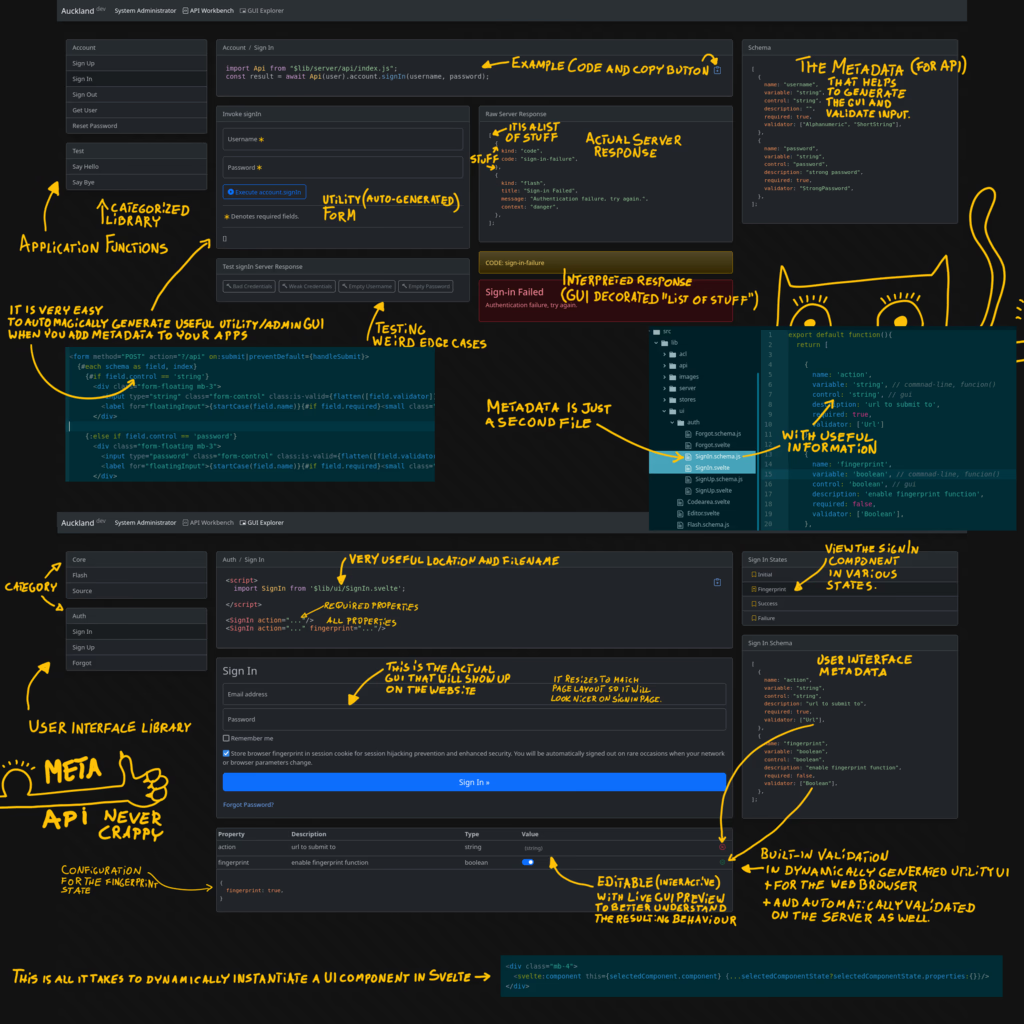
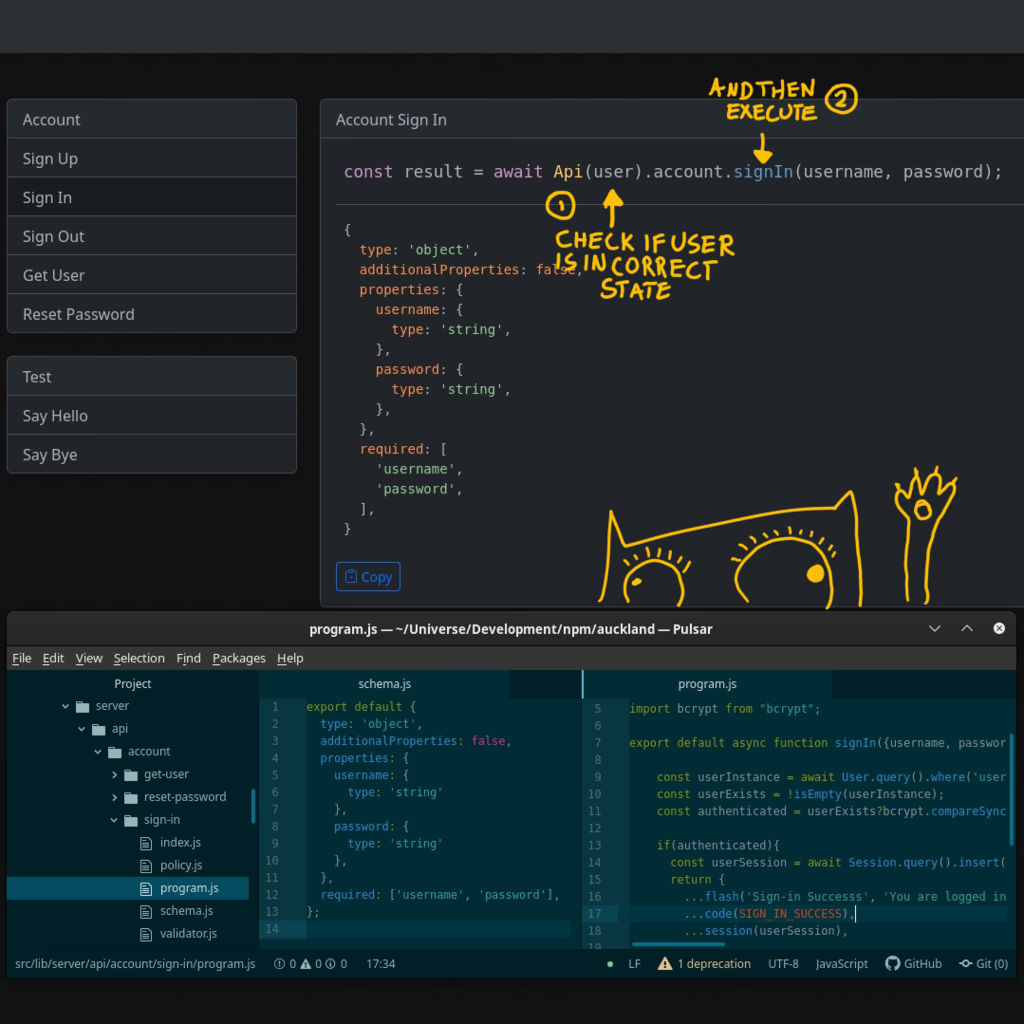
The post explains relational database fundamentals by comparing them to spreadsheets and then introduces a simple “accounts‑to‑users” model that uses LEFT JOINs to create one‑to‑many relationships for users, playlists, songs, and ratings. It shows how to structure tables so each includes an accountId for easy querying, and walks through building a JavaScript API where exported functions (like signUp, addSongToPlaylist) wrap SQL queries; these functions are aggregated into an object proxy that serves HTTP/S or WebSocket endpoints, allowing the front‑end (Svelte/Bootstrap) to call named API methods while keeping authentication logic separate. In short, it covers basic relational design, left joins, and a practical way to expose database operations via a modular JavaScript API.
The post contends that human culture (religion, media, politics and schools) evolves in layered, camouflaged ways that shape belief, and that genuine learning needs secure homes, mobility and self‑education to escape this cycle.
The post argues that teaching programming can be made as engaging as a game by using ready‑made, deployable platforms rather than starting from scratch. By beginning with a prebuilt platform that supports payment processing and AI services (for generative art or text), students can immediately experiment—like building a print‑on‑demand children's book service—without first learning loops or functions. This “high‑level game” approach lets learners see concrete results, stay motivated, and progress through successive projects, turning programming into a practical, creative business skill that fits naturally after reading, writing, and arithmetic.
The author presents an optimistic vision of personal growth rooted in “culture of greatness,” arguing that true education is self‑driven and holistic rather than confined to schools. He frames poverty as a man‑made construct that fuels war and stifles creativity, proposing universal daily allowances to lift people from deprivation. The post links this liberation to a renewed sense of dignity, courage, and wisdom, suggesting that when people are no longer in servitude they will naturally reject false leaders and embrace great ideas. He further claims that learning is most effective when it follows personal curiosity—combining practical skills like 3D modeling or web development with deep reading across classics—and that this self‑education becomes a “beautiful act of rebellion” toward greatness, ultimately changing life’s trajectory.
Programming is described as an adventure that starts with simple function calls and grows through loops, conditionals, and relational databases that structure data like spreadsheets; authentication is handled via cookies or JSON web tokens, while HTTP servers (often built with frameworks such as Koa) expose API endpoints for sign‑up/sign‑in and user‑specific actions. Testing these endpoints is encouraged with tools like cURL, and the evolving UI landscape—Bootstrap, Svelte, and others—is acknowledged, along with WebSockets that enable real‑time server updates. The post concludes by urging readers to write many small programs to grasp each concept, turning experimentation into a learning tool for mastering both back‑end and front‑end development.
The post reflects on the universal journey of growing up—an inevitable, enriching process that blends learning, adventure, and personal growth into wisdom and greatness. It emphasizes how this development shapes our legacy for future generations, urging us to leave a meaningful, joyful record (such as a narrated journal) that will inspire others long after we’re gone. By capturing our experiences in such a format, we not only affirm our own health and creativity but also pass on the goodness and hope we’ve gathered to those who follow.
The author reflects on how exciting programming can be, especially when it solves real problems like creating virtual desktops that run inside web pages and letting them work smoothly even on low‑power machines. They then describe a personal project: an iTunes‑style playlist manager that uses ffmpeg (and sox’s BPM counter) to change song tempos for workout music, allowing the tempo to increase gradually and testing new BPM values such as 165 bpm. The tool started as a bash script, evolved into a Node.js CLI with subcommands that open a browser UI for easier playlist management, and the author contemplates adding dynamic BPM adjustments (e.g., alternating between 140 and 170 bpm) or even turning it into a small business where users submit non‑copyrighted tracks or use a hardware button to speed them up. All of this showcases their enthusiasm for programming and the fun of building custom applications that blend creative ideas with practical functionality.
The post argues that a recent survey shows people are still easily indoctrinated even after leaving their original religious beliefs, and that this susceptibility is fueled by misunderstandings about poverty and finance. The author claims that credit systems and banks treat humans as objects rather than individuals, leading to collapsed education, endless poverty cycles, and the rise of falsehoods that keep society stuck. Leaders, once promoted by liars, now hold symbolic positions while pollution, climate change, deforestation, immigration, and cultural mismanagement compound the problem. The solution proposed is a new human‑centric bank that gives each person a daily allowance reset at midnight to lift them out of poverty, coupled with an education system where teachers guide students on relevant subjects at their own pace—together erasing poverty and restoring humanity’s advancement.
Web page design has been a long‑standing activity that can begin simply by creating static pages and then evolve into more dynamic work such as browser plugins that inject robots to crawl sites, auto‑generate RSS feeds, or send news posts to databases for new interfaces—all without the need for a dedicated server and with cost savings. Later programmers can extend these ideas by building templates, themes, and components, even recreating existing apps or designing ones inspired by favorite tools. With AI now capable of generating skeuomorphic textures and designs, this “forbidden design strategy” becomes powerful enough to create phone and desktop applications while keeping the creative process fun and efficient.
The author argues that modern schooling is trapped in a cycle of standardized testing and political bureaucracy, leaving teachers and students overburdened by loans and underprepared for real life; he proposes computer programming as an exemplary form of practical, self‑driven learning—students solve real problems, not just memorize abstract concepts—and by mastering programming through hands‑on projects they acquire skills that translate directly into business opportunities and financial independence, breaking the poverty cycle; in short, true education must be self‑guided, outcome‑oriented, and no longer bound to rigid curricula.