The author argues that wisdom—our defining trait as “Wise Beings”—is the key to human progress and must be actively cultivated through learning rather than rote schooling. He cites book‑burning, laws limiting education, and religious fantasy as deliberate tactics to deny people wisdom, while praising self‑education via narrated books, free classics, and nature trails. Schools are seen as corrupt but still valuable vehicles for early wisdom if properly used. The text emphasizes that listening to great works, not just passing exams, leads to creativity, insight, and prevention of corruption. In sum, the post calls for a return to ancient traditions of learning through books and the outdoors, so that wisdom’s flame can spread and secure our future.
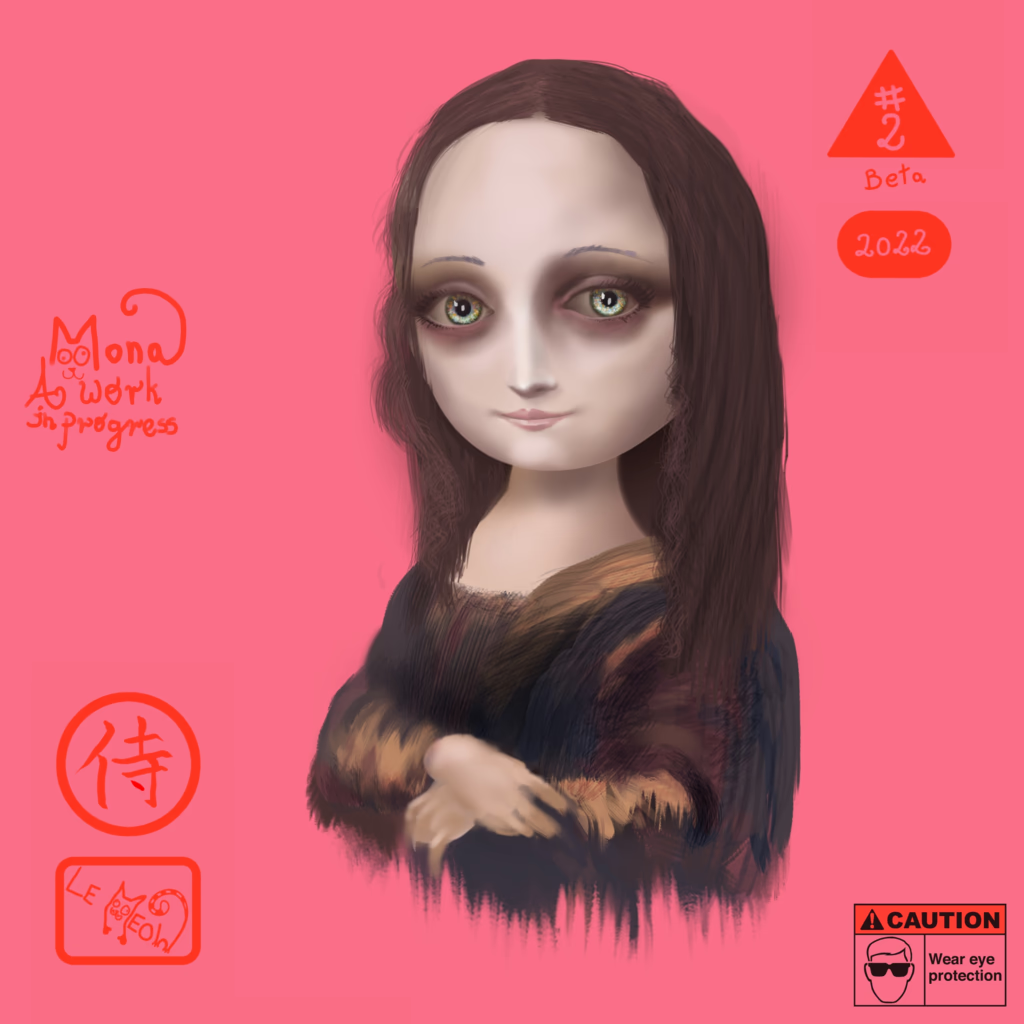
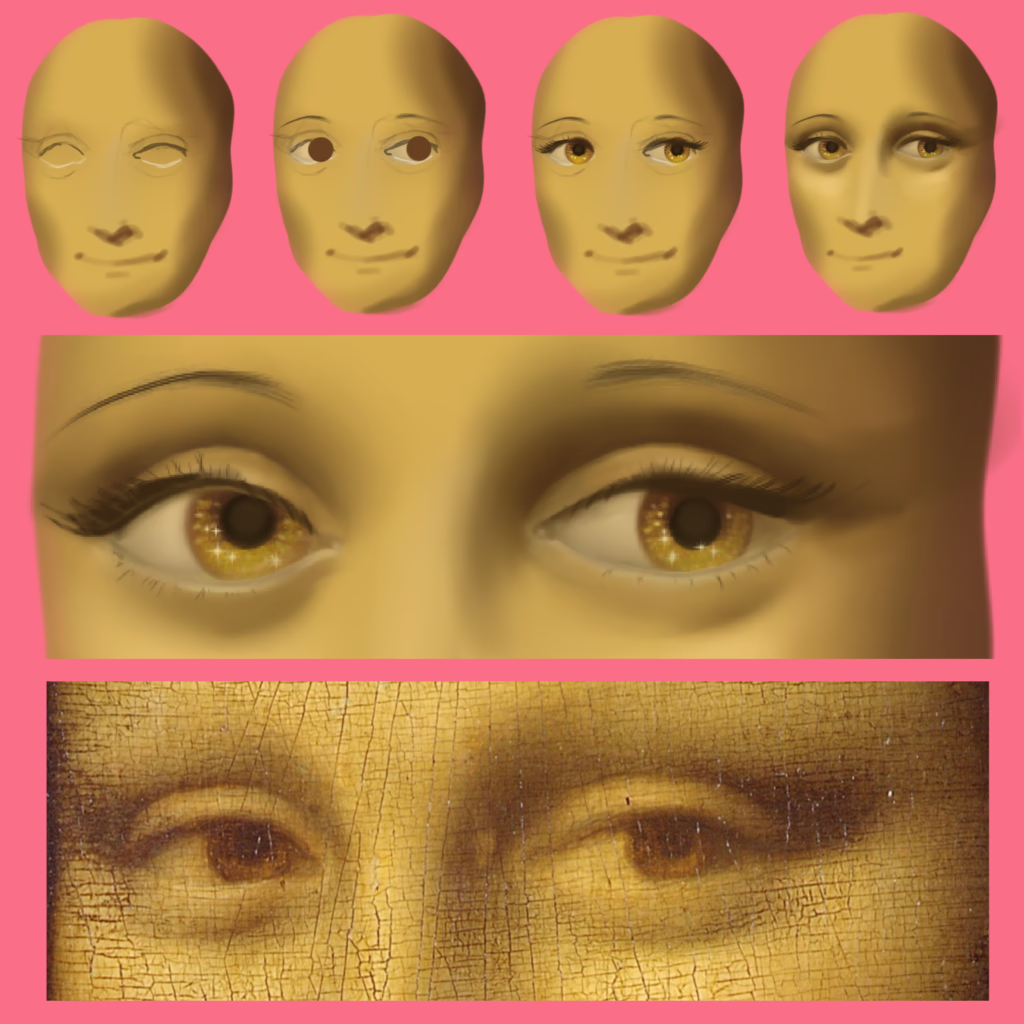
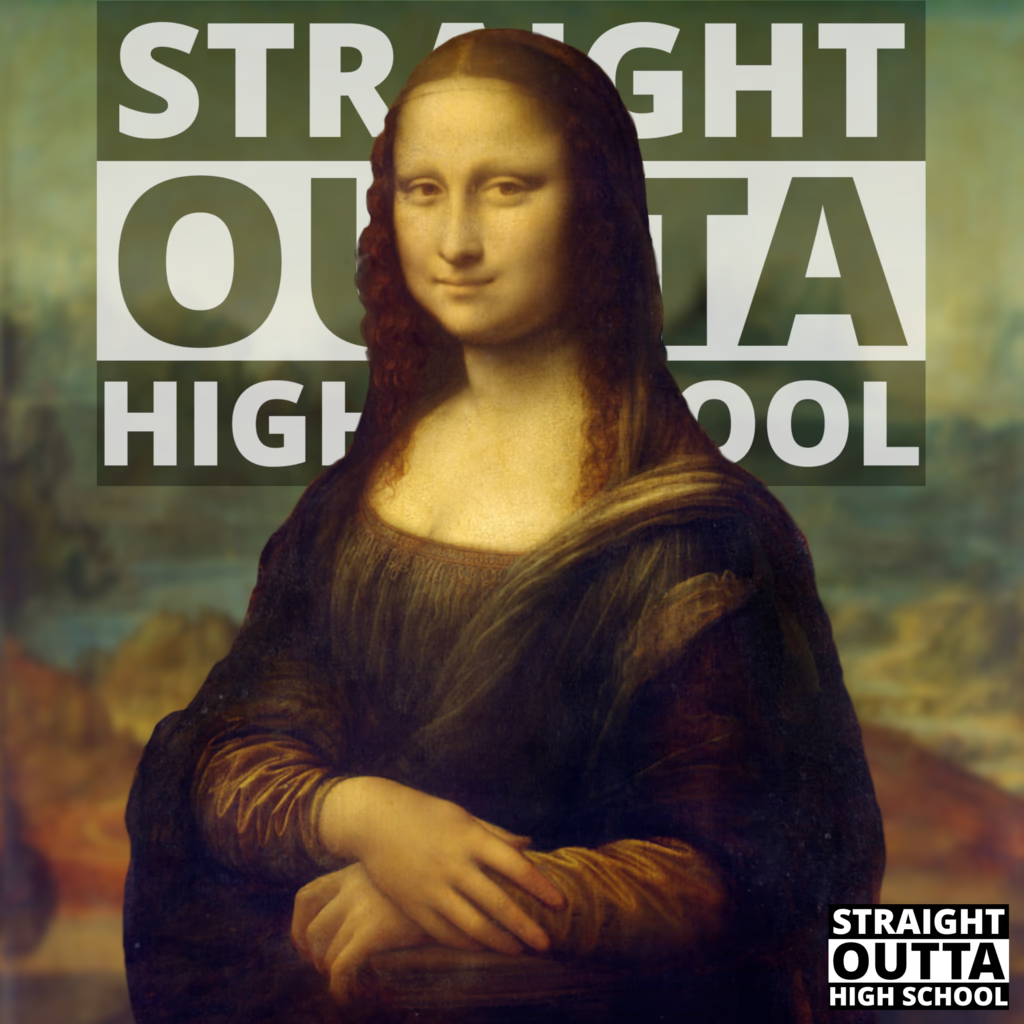
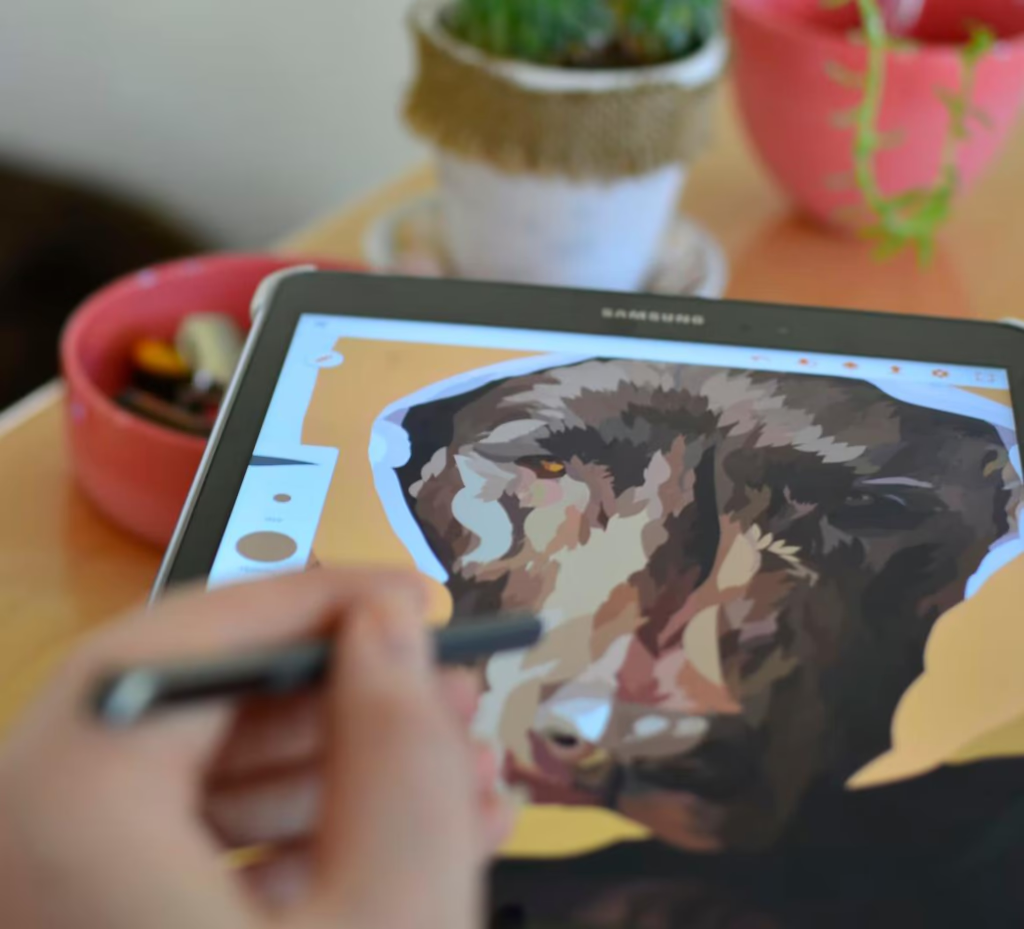
The post encourages readers to take charge of their own education by mastering tools such as a pen tablet, GIMP, Krita, Inkscape, Blender, and even an Ender, while drawing inspiration from the Mona Lisa; it stresses that school and politics can feel confusing but that true learning begins with Linux and graphic design, leading to creative growth and eventual business start‑ups; the author reminds us that progress is personal, that we must keep building our own path, continually grow beyond adults’ expectations, and ultimately bring about change in a world that feels broken.
The post celebrates how creativity unfolds through continuous exploration: artists learn by adventure, repeatedly generating new ideas that evolve from simple doodles to mastered techniques. It highlights the iterative cycle of creation—sketching, experimenting with stickers or other tools, and refining until satisfaction—and shows how art can transform ordinary objects into remarkable works, like a balloon, loom, or early computer. The author further claims that stories and everyday life are themselves works of art, growing like a giant tree, and encourages readers to begin their own creative journey, even if they have no prior experience with doodles.
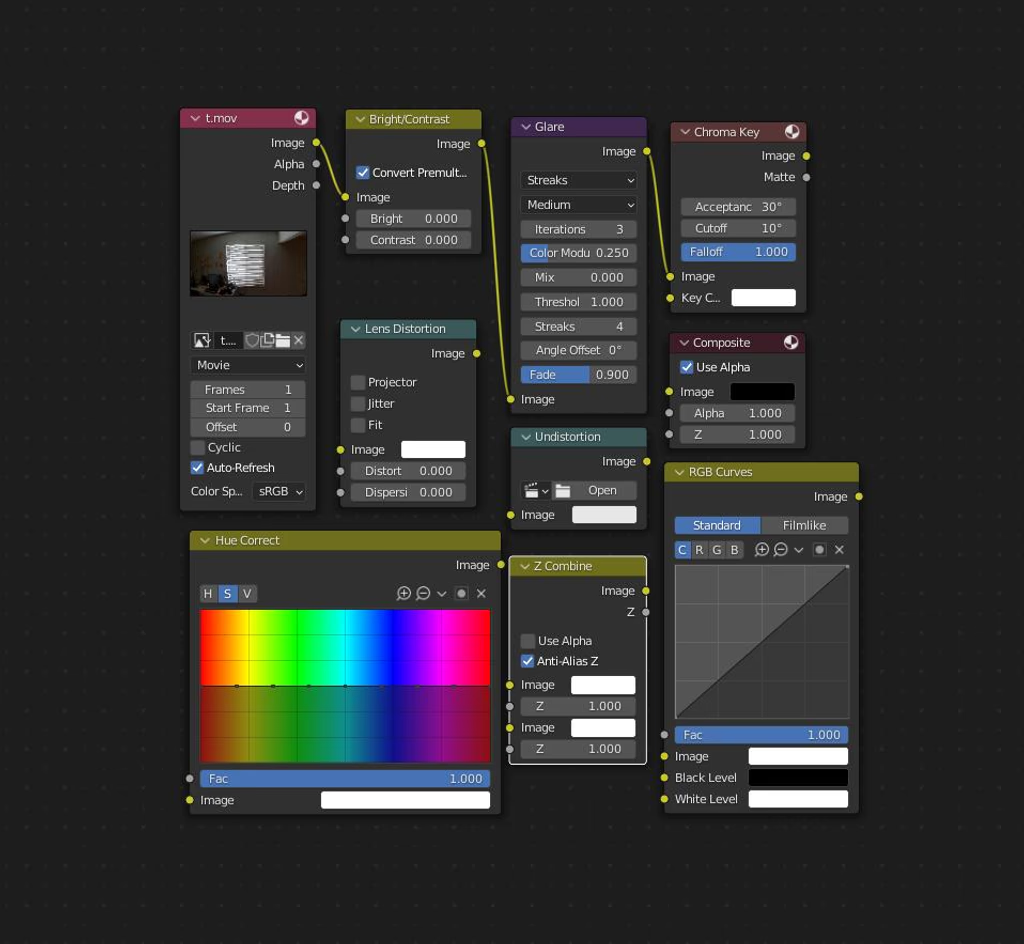
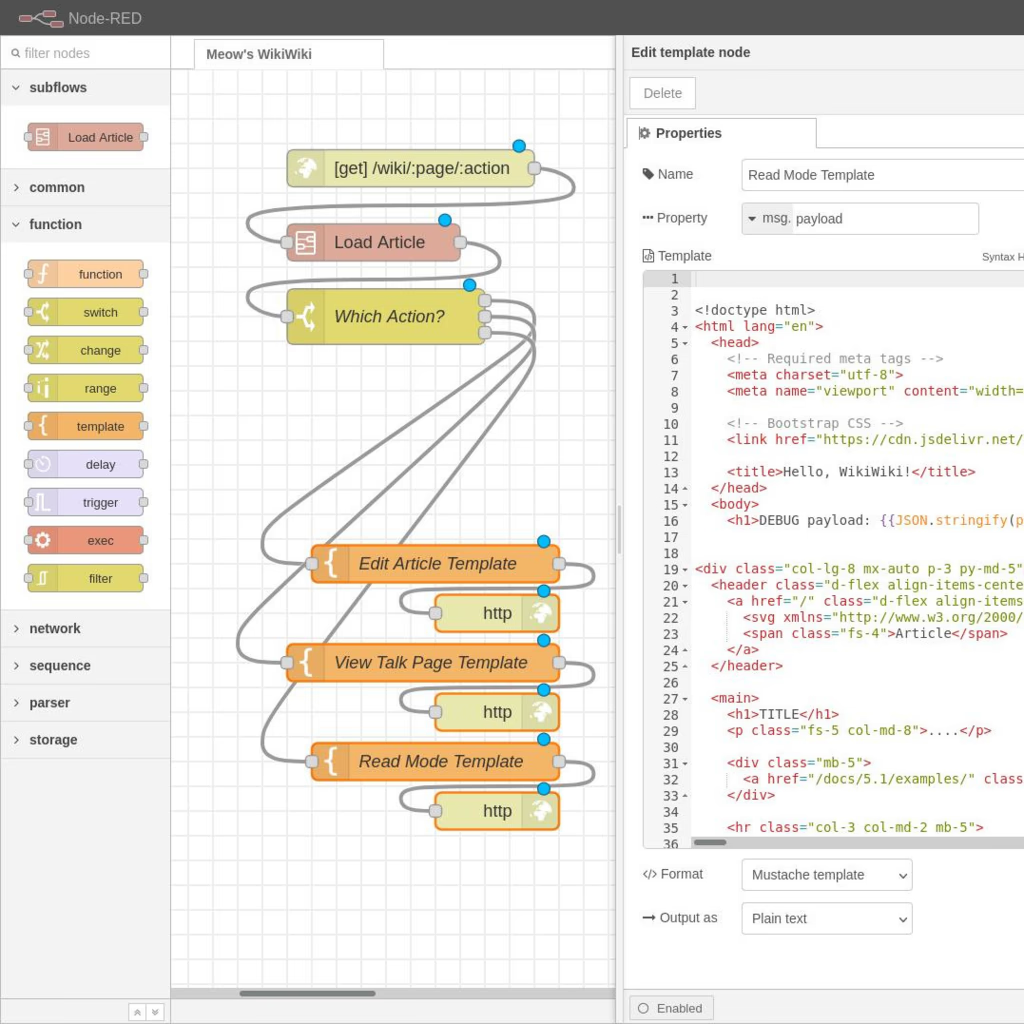
In this post, the author explains how a “pipe” is simply a connection between two programs through which an object is passed and transformed; they illustrate this with an email client that sends a login request to a server and receives back an email list, and then show how such pipes can be built in visual tools like Node‑RED or command‑line utilities such as ffmpeg, where each step (input name → transformation → output name) is chained together. The discussion covers injecting properties into objects (e.g., adding username/password fields), automating pop‑ups to collect those values, and reusing these operations in sub‑flows. They also touch on streaming data frame‑by‑frame—Blender’s video processing or ffmpeg’s pipe‑based pipelines—and conclude that keeping the model down to just programs, pipes, and objects yields powerful yet simple abstractions for both desktop and mobile visual programming.
The post is a lyrical exhortation to personal growth and self‑learning: it urges readers to step beyond inherited routes, keep acquiring knowledge, and let their own “brilliance” lift both themselves and humanity out of poverty. It repeats that each generation can bring light to the world by using its collective wisdom and creativity, and that individuals must not let anyone else cut them off from this potential.
Node‑RED is a low‑code visual programming platform that lets users design event‑driven applications by connecting nodes on a canvas, thereby simplifying code composition and hiding the underlying JavaScript logic. It blends graphics and a text editor, requires modest RAM, and supports modularity so developers can focus on layout while reusing prebuilt blocks. Installation is straightforward with npm, and tutorials (YouTube, cookbooks) help users learn both Node‑RED itself and the broader Node.js ecosystem. Though still somewhat cumbersome to set up, its intuitive node architecture and JSON export make it a promising high‑level editor for beginners and seasoned developers alike.
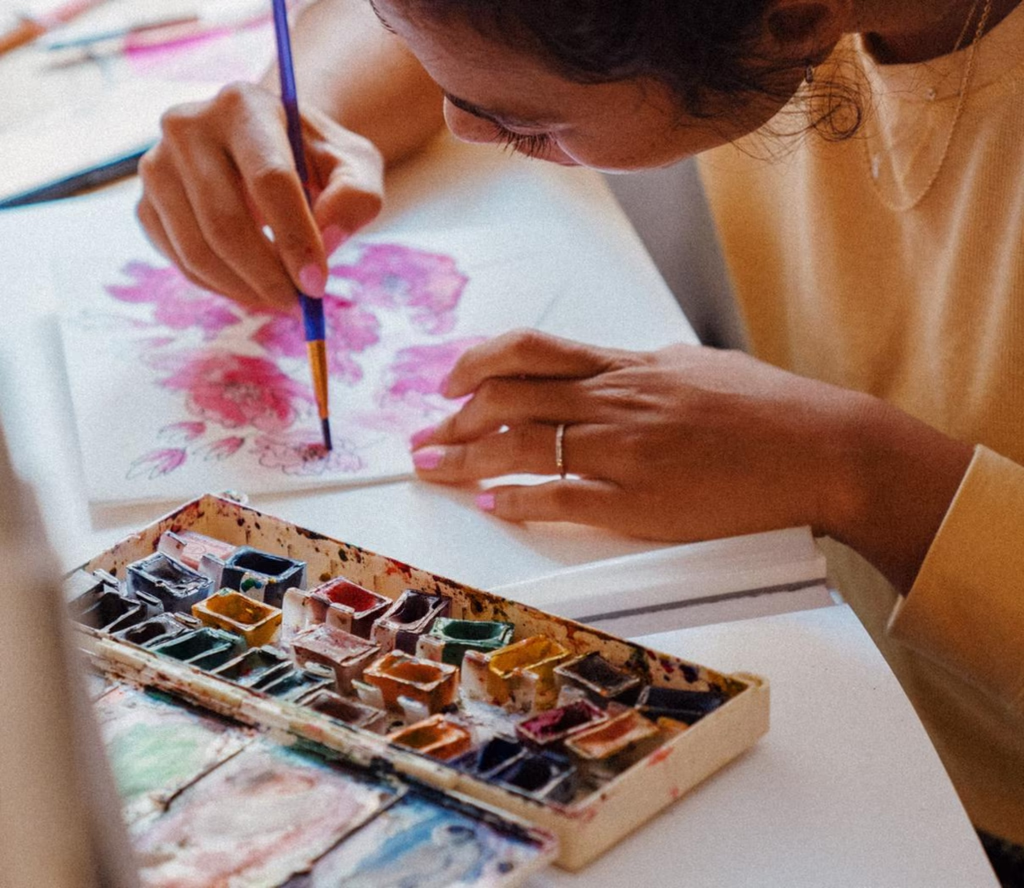
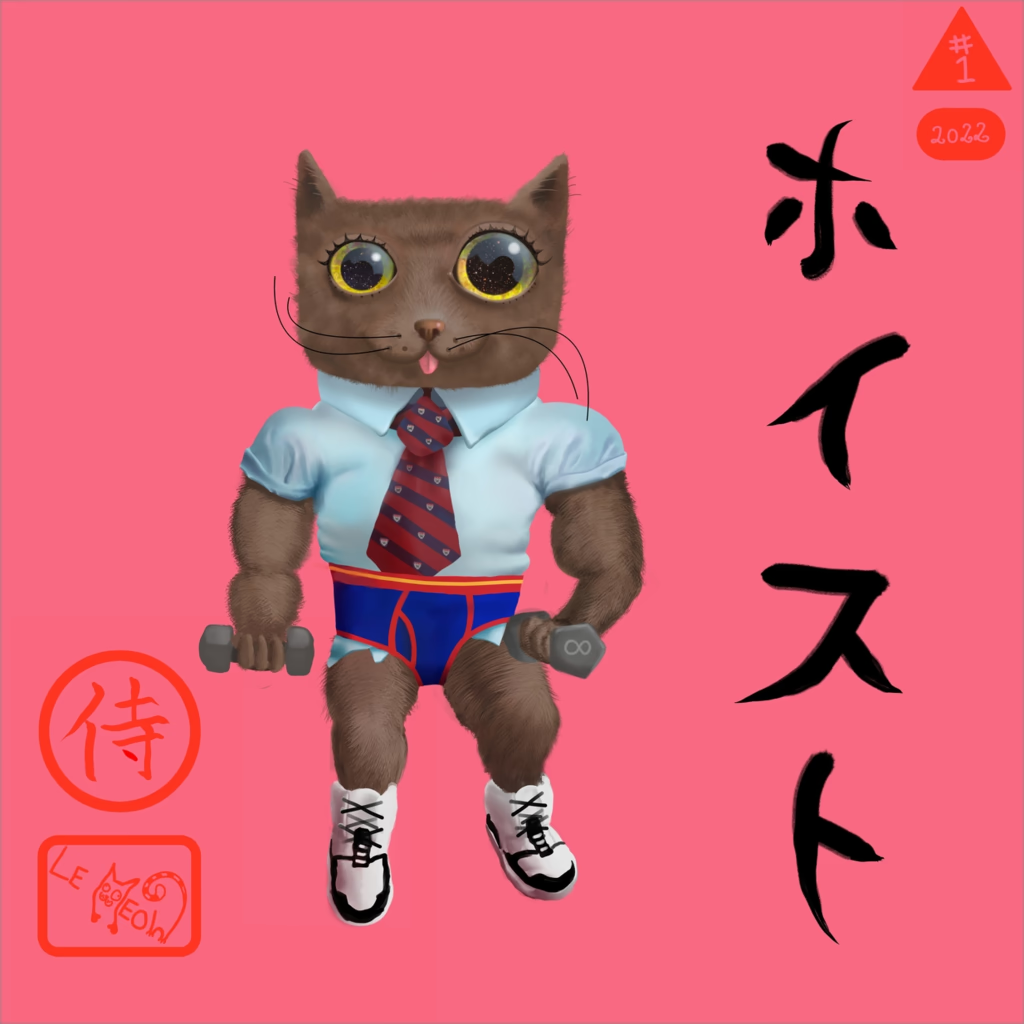
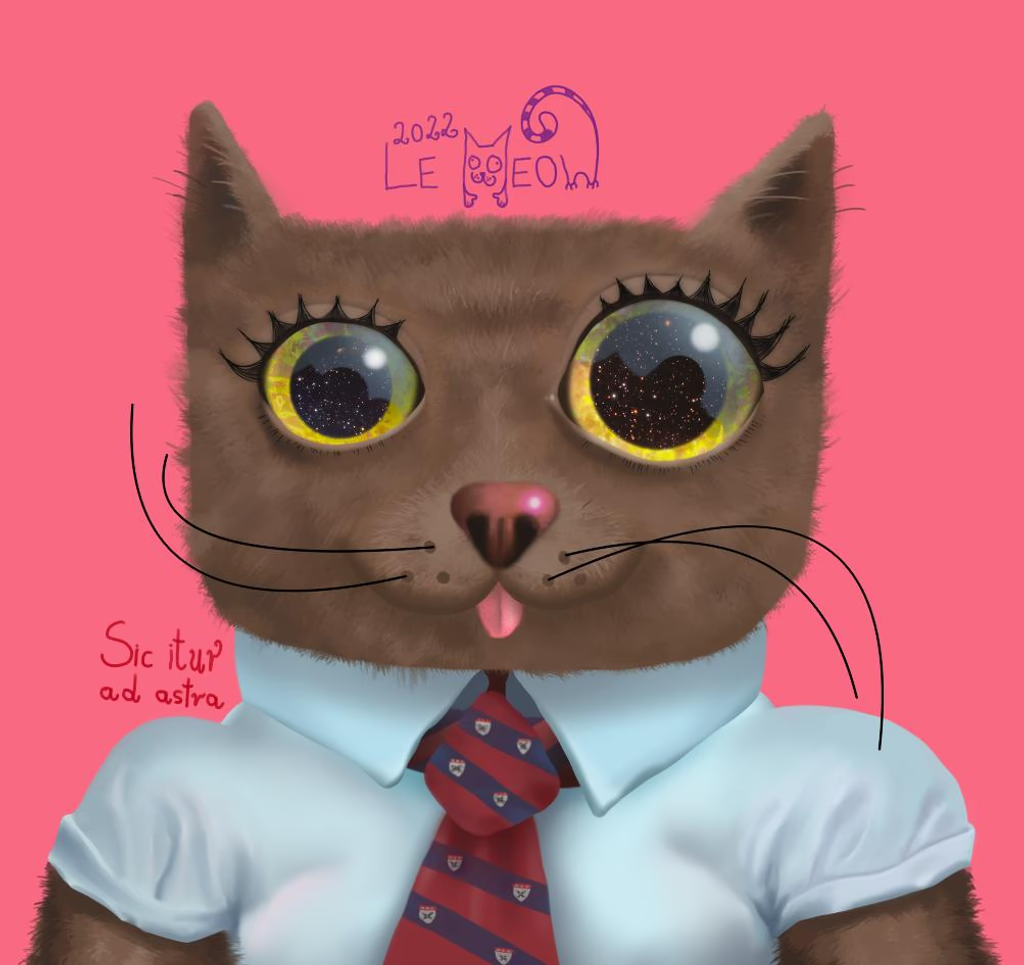
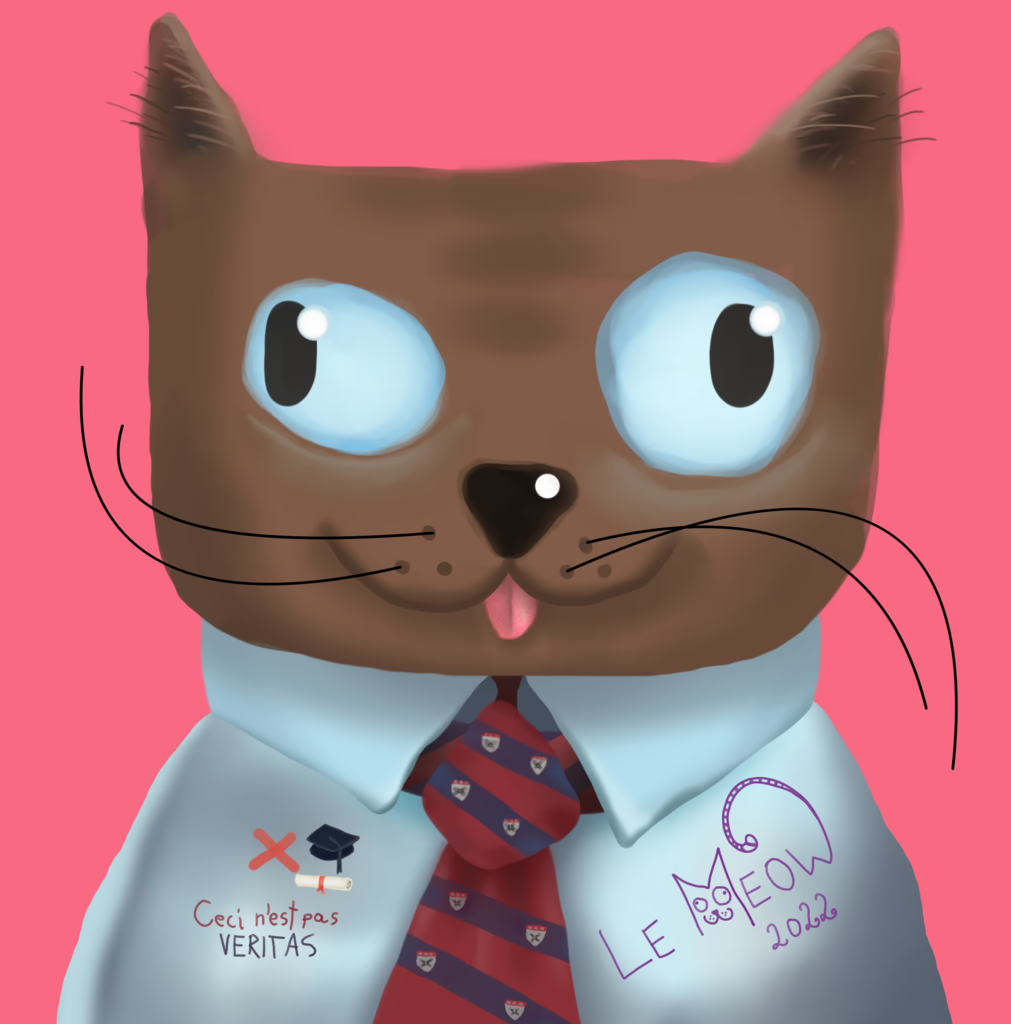
I recently completed my debut Pop Surrealist piece, “Hoist U!”, a whimsical painting that blends Superman’s leotard with oddly placed underwear and a Harvard tie to explore themes of identity and education; I used Krita on a Pen Tablet for roughly 20 hours, employing techniques like the Q‑Tip brush preset for fabric folds, transparent gray strokes for glassy eyes, and gradual fur shading, while also experimenting with background color palettes inspired by anime, and reflecting on future projects such as celebrity caricatures and Blender sculptures—all of which I plan to showcase in my first art book.
The post argues that true learning unfolds through trial and error, with each failure sharpening our understanding; it stresses the need for contextual, sequential study rather than rote facts, using programming as an example of how foundational skills can be applied to creative problems. The author points out humanity’s climate crisis as evidence of leaders’ lack of practical knowledge, and calls for self‑education that turns everyday discoveries into lasting wisdom.
Automate the production of simple, maintenance‑free digital assets—backgrounds, icons, textures, videos, audio—and bundle them into a low‑upkeep company that sells a vast library of ready‑made products to designers, developers, and creatives.
The post proposes an “emergency school” that blends self‑paced learning with real‑world income generation: students learn to design and sell digital media—such as website themes, 3D‑printed jewelry, or printed-on-demand items—using open‑source tools like GIMP, Inkscape, Krita, Blender, LMMS, Audacity, and LibreOffice. By mastering these programs they create a portfolio of products that can be marketed through advertising and storefronts, thereby earning money to offset poverty while gaining practical experience. As their skills grow the curriculum shifts from product creation to platform design and company building, encouraging students to assemble add‑ons around existing self‑hosted software and manage their own side projects without heavy investment. Throughout, peer tutoring is emphasized so that each successful student can lift another, reinforcing knowledge sharing and confidence in financial independence.
The author reflects on everyday “superpowers” – from musical improvisation and rapid language learning to memorization, night vision, endurance training and creative pattern‑recognition – showing how ordinary minds can quickly acquire, adapt, and create.
The post argues that the school system is largely ineffective at cultivating real talent; it treats learning as rote memorization rather than genuine skill development. The author claims that true “exceptional abilities” are only proven when companies look for evidence of those skills, not simply a diploma. He suggests that after high school and college one ends up with debt and jobs that pay the same but do not nurture talent. Interviews are described as largely formalities, and the process forces graduates into low-level positions to satisfy companies’ experience demands. The author urges learners to follow their curiosities—3‑D printing, programming, art, hiking, etc.—to develop a unique blend of “superpowers.” By treating learning as personal rather than standardized, he believes one can become an independent entrepreneur and truly showcase abilities, instead of being trapped in a cycle of education, debt, and meaningless employment.
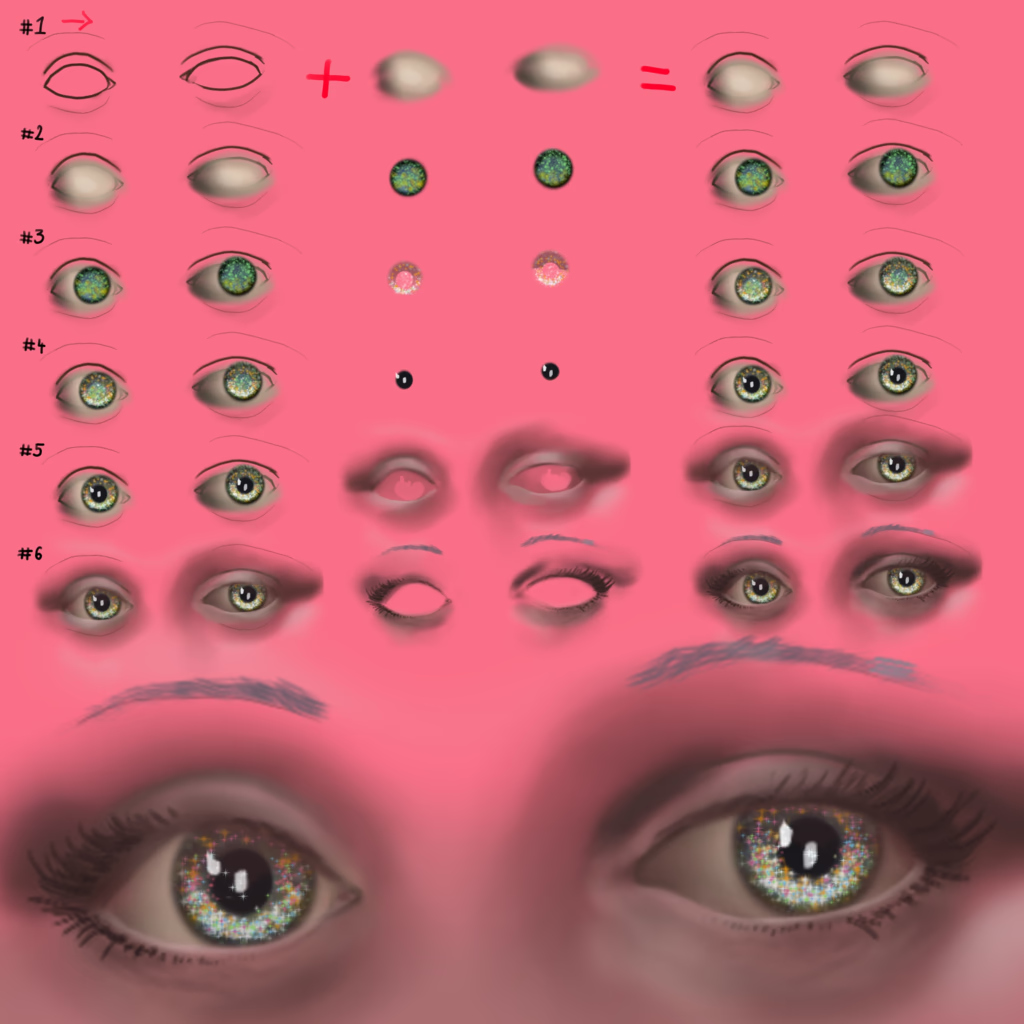
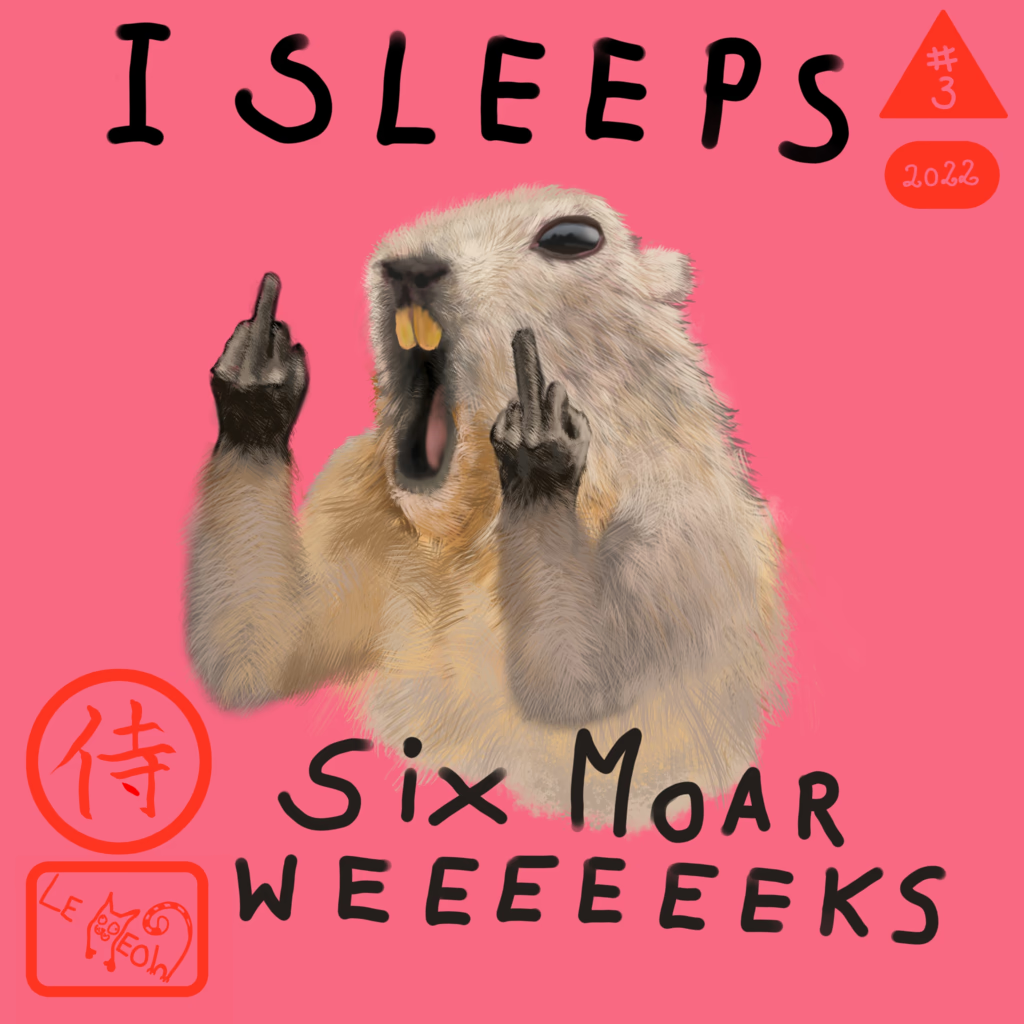
Pop Surrealism is presented as an accessible, joyful art form where anyone can become a “Pop Surrealist” by simply drawing a silly animal doodle and then adding realistic touches—coloring with attention to shadows and highlights, incorporating reference photos, and giving the eyes a realistic flair. The style blends low‑brow humor with genuine artistic practice: each finished sketch invites further expansion (e.g., adding whimsical elements like fish bowls or planets), encouraging continual creation rather than a single finished product. In this playful world of bright, smiling works, artists find both personal satisfaction and universal delight, turning everyday sketches into mythic collections that can be shared through stickers, mugs, and T‑shirts—an art experience that ends the day with a vibrant masterpiece ready to make someone smile.
The post argues that poverty and inadequate schooling are two of the world’s most stubborn problems, but it offers a concrete dual solution: an international “Poverty‑Ending Bank” that gives every person a reset‑at‑midnight $100 daily card (adjusted for inflation) to cover food and rent, and an international “Real School” built as a gamified learning platform where students choose rooms and subjects—ranging from Adventurer to Digital Painter—and guide each other’s progress with simple, open technology; together these measures aim to replace the broken systems of politics‑driven aid and standardized curricula with everyday, self‑sustaining financial security and lifelong, peer‑led education.
The post is a lively guide for budding artists that stresses the importance of creating and organizing artwork—starting with simple sketches, signing and dating each piece, and maintaining an online portfolio (e.g., Dribbble) alongside a physical art book—to showcase progress. It introduces digital painting in Krita, highlighting essential tools such as layers, the Air Brush, Q‑Tip for blending, eyedropper color picking, and layer locking for efficient workflow, while also suggesting techniques like mirroring drawings and using full‑screen mode to focus on details. The writer encourages exploring the playful “Low Brow/Pop Surrealism” style, experimenting with whimsical subjects (like cats), and ultimately embracing a passionate, mad‑about‑art mindset that turns everyday scenes into creative, animated expressions.
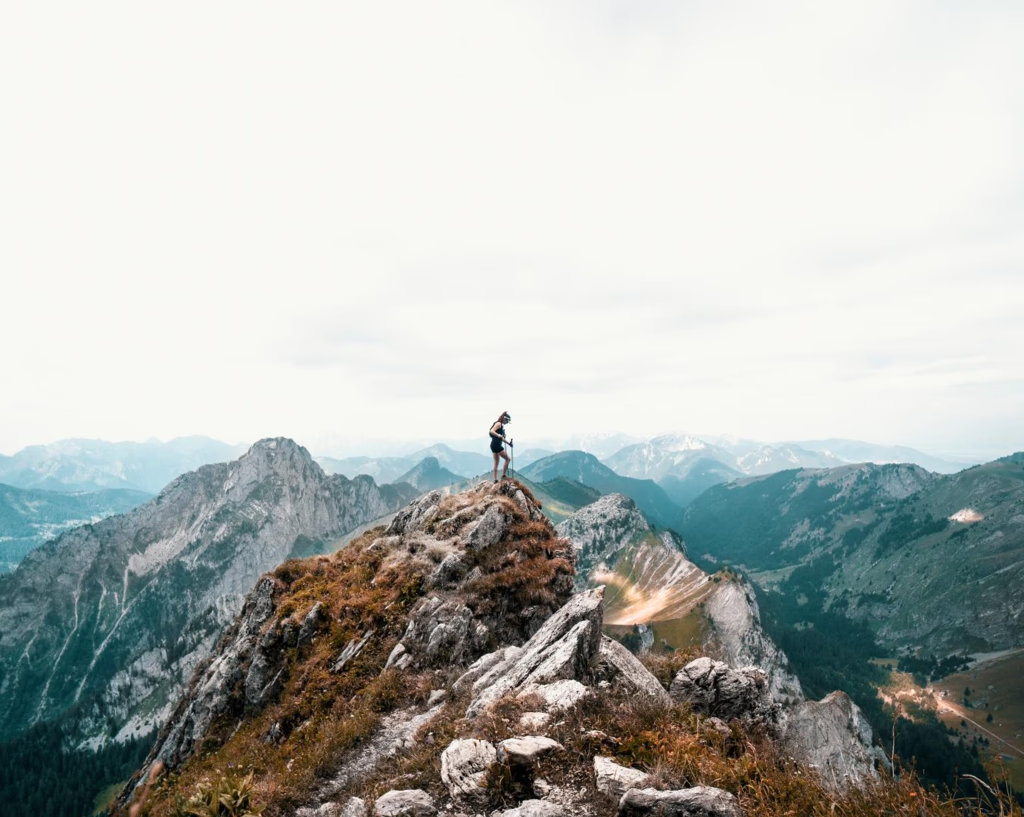
From the moment you first discover your own self, the post invites you to pursue the things that set your heart ablaze—whether it be playful “elf‑like” antics, daring adventures on trails, or bold guerrilla art that might earn fame like Banksy’s murals. It stresses that as you age, you should keep reading, exploring, and collecting tales from journeys such as the Appalachian or Pacific Crest Trails, while letting that experience seed wisdom in your middle years. In golden age you’re encouraged to revisit those books one by one, visit libraries across Europe, sail seas, taste simple joys like fried flounder on a stick, and then share that accumulated knowledge with younger generations so they too can walk their own trials without ending up stuck in cubicles. The whole message is a poetic blueprint for a life lived as art: cheerful creativity, beautiful wisdom, lasting greatness, and the continual flow of learning and sharing.
The post explains that “Ǧentī̆l Dẹ̄des” (from Middle English) means ennobling deeds or noble achievements, and that such deeds—whether they are simple acts like staying honest, not fighting, or more ambitious actions like persisting after failure—build a person’s class, wisdom, and beauty. It argues that in high school this translates into being truthful, avoiding lies, and protecting oneself; it also describes how repeated setbacks can be turned into growth, with the “Bridge of the Gods” metaphor signifying the ascent to laughter and greatness. By accumulating these deeds one becomes wise and unbreakable, and the author urges young people to pursue wisdom and class so that their own noble path will lead them to greatness.
In this reflective post, the author draws a poetic analogy between books and humans—both vessels that carry “spirit” (soul) and can be inherited through reading. He argues that books encapsulate authors’ lives and ideas, allowing us to step into their world and learn from their experiences; by rereading we deepen our wisdom and gradually reconstruct the author’s spirit. The piece also encourages writing as a natural extension of this process—by putting thoughts on paper one creates new spirits for future readers to inhabit—and stresses that such works can help later generations grasp complex problems like climate change or poverty, preventing them from repeating past mistakes. In short, reading and writing become acts of cultural inheritance, preserving and spreading human spirit across time.
In this reflective post the author celebrates spring as an inspiring season for exercise, recounting their own gradual journey from hiking and camping at Nordhouse through biking on the i‑275 trail to jogging and dancing that build endurance. They describe early challenges—thunderstorms, broken bikes, cold—but celebrate perseverance, noting that a steady start is wiser than rushing into full speed, and encourage readers to set New‑Year resolutions in spring so they can keep exercising without giving up.
Running on ice is tricky and not very pleasant; after trying it three times I realized it’s better to wait for the sun to melt the patches before heading out or instead take a leisurely walk in a snowy park or a trailhead. Dress warmly, bring soup, invite friends, and enjoy a small adventure at home or as a tourist. Remember that “hot December” exists elsewhere; if snow is too much you might vacation on the other hemisphere where warmth replaces cold. A little rhyme reminds us to keep safety first—“Ice is cursed, safety first.” In any forest or tropical setting, be safe, have fun, and share stories with plenty of photos.
The post argues that school often acts more as a babysitter than a true learning environment; real education comes when students take responsibility for their own studies, moving beyond standardized curricula and cramming into building knowledge networks through books, lectures and online videos. It claims teachers may be unaware of the gaps in their teaching, so self‑education is essential to grasp concepts deeply and think like great thinkers. The author links this personal learning failure to larger societal problems—climate change, mass incarceration, etc.—and urges students to become teachers themselves to break the cycle.
The post is a motivational treatise urging the reader to recognize themselves as a “Brilliant Genius” by mastering language and computation, drawing on Einstein‑Hawking examples of perseverance, and using modern tools—computers, visual programming, Express.js servers—to simulate physics concepts (SETI, Drake Equation, Twin Paradox) and build pixelated starships or arks that orbit singularities. It stresses that true brilliance comes from self‑confidence, not external validation, and encourages the reader to learn through practical projects such as a tiny wiki or an HTTP server on localhost:8080, while exploring visual programming in Blender and Unix pipes. The writer repeatedly reminds that teaching can be self‑directed, that language is just a tool, and that the journey of learning is its own reward—so “you are a Brilliant Genius” and you should keep building and experimenting to prove it.
In this post the author explains how they composed a track by using everyday items—plastic bottles, cans, a red mixing bowl, and metal chopsticks—as percussion instruments. They layer simple strikes into complex drum patterns while gradually adding reverb, bass boost, and equalizer effects in LMMS, referencing an LMMS tutorial video and providing links to the full and raw MP3 recordings.
The post celebrates the author’s enthusiasm for creating new objects, sounds, and a text‑based game world, depicting invention as an ongoing, empowering creative journey.