·

#1541: You Are More Than You Think, And The Problem Of Humanity

The post is a poetic exhortation to self‑growth and cosmic identity: it urges the reader to recognize that we are “creatures of the stars,” formed from ancient dust, and that our purpose is to climb “all the way up” into greatness by harnessing effort, wisdom, and creative work. It stresses that true greatness emerges not from following others’ paths but from discovering one’s own mix of knowledge and making authentic contributions—like building new “mountain peaks” in human culture—while resisting the petty attacks and false leaders who will try to crush a rising mind. In short, it calls on us to write, learn, and act with star‑borne determination so that our poems, not corpses, will be remembered among the stars.

·

#1540: Bodybuilding HOWTO: The Heavy Backpack Model

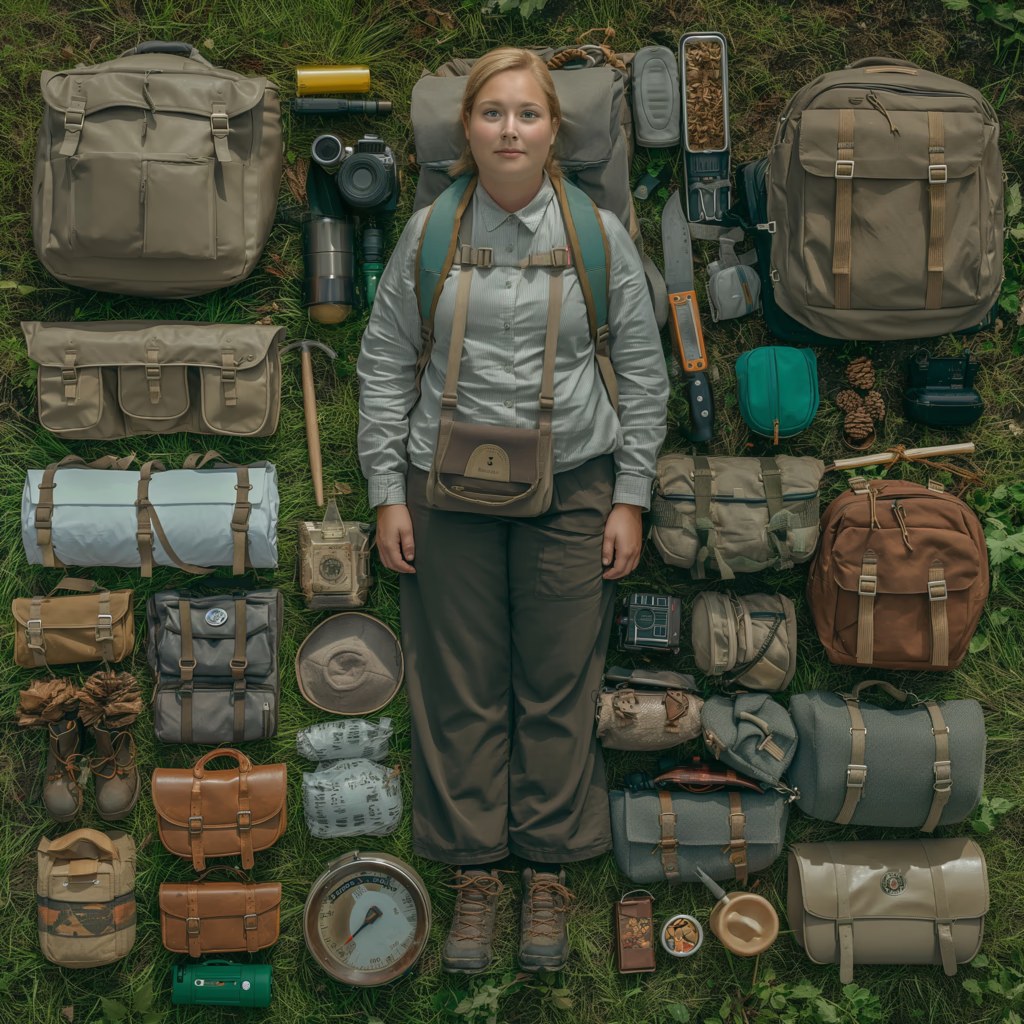
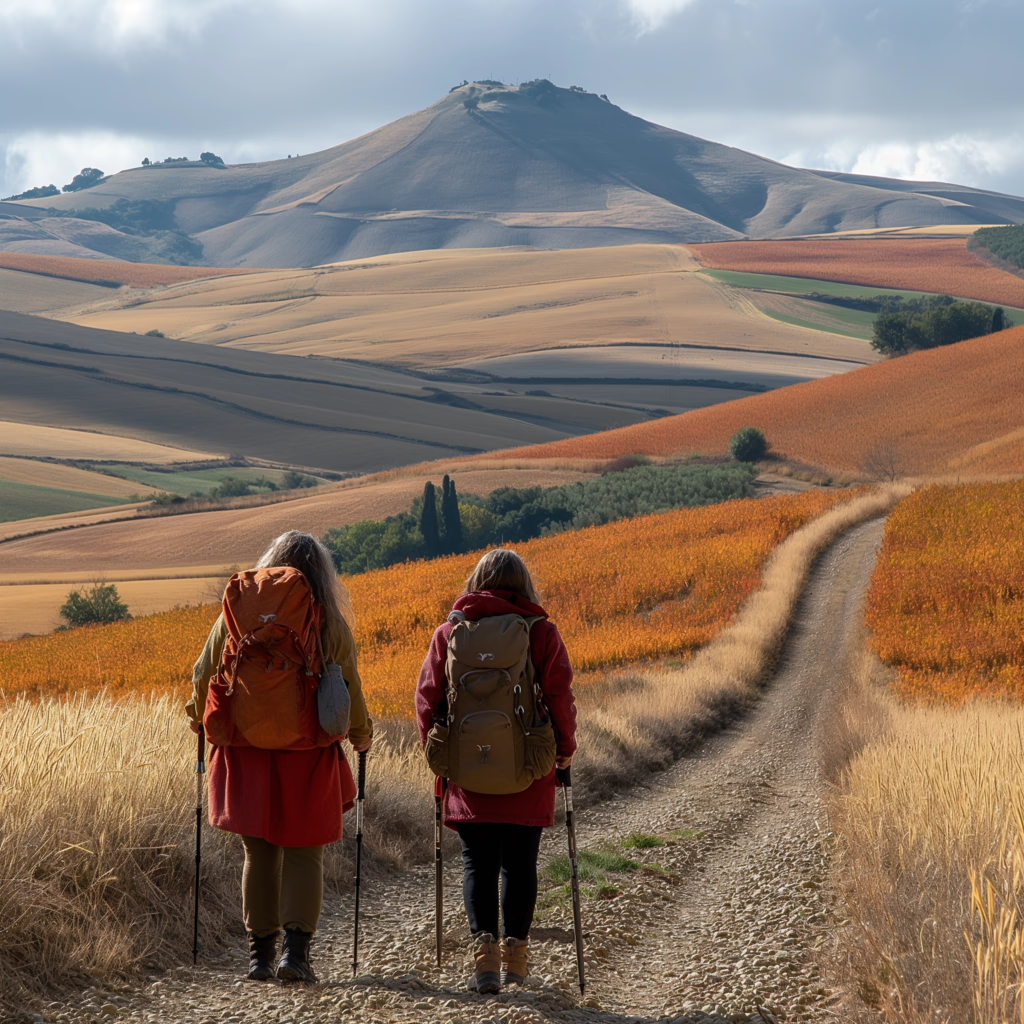
Walking with a backpack can build leg muscle if weight and duration are balanced; starting light allows gradual adaptation while heavy loads that cause quick failure hinder progress. The key is to keep effort near the edge of endurance—carry enough weight to challenge but not exhaust—monitor weekly gains, and use interval training to reduce rest and increase reps. This principle mirrors weight‑lifting: begin with manageable sets, then extend to continuous work. Consistent daily walking, paced with music or rhythm, turns long sessions into engaging activity and lays groundwork for future hikes like the Appalachian Trail.

·

#1539: The New Bodybuilder

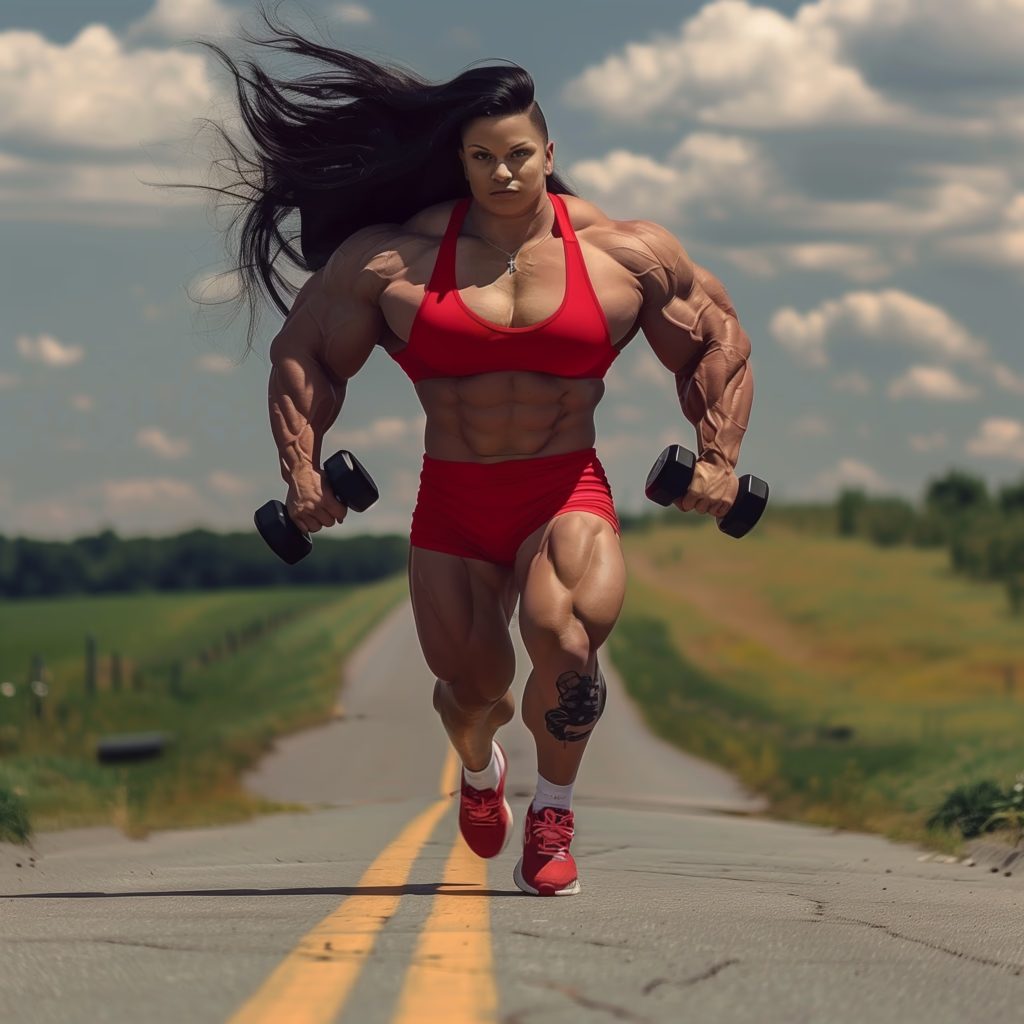
Bodybuilding is presented as a key life priority that can keep us away from unhealthy habits by improving flexibility, strength, endurance, and even giving a “de‑aging” effect to both fit and obese individuals alike. The post stresses that training is a balancing act: heavy lifts must be paced with short rests so the circulation doesn’t choke; interval timers and music help maintain rhythm. It recommends starting with light dumbbells (3–5 lb), doing long sets of one minute each, then gradually shortening rest periods as you build endurance—much like a jogger who extends his run without stopping. When you can lift those weights continuously for an hour, the real bodybuilding phase begins and your body is reshaped in a healthy, energetic way.

·

#1538: How To Study For A Pop Quiz

The post argues that true learning of programming hinges on understanding rather than rote memorization, using JavaScript as a prime example because its flexible syntax lets learners focus on concepts without worrying about types. It explains how pop‑quiz exams serve teachers as readiness checks, and stresses that mastering the language—through tools like p5.js for graphics, NodeRED for flow programming, and later Node.js for server‑side work—provides real functional knowledge that survives graduation. The author calls for collaborative study groups, AI‑augmented tutoring, and a shift from GPA‑driven cramming to genuine comprehension so students can build startups, own their skills, and leave the classroom as empowered creators rather than passive graduates.

·

#1537: Nordhouse Dunes: The Noble And Just Dolomedes Tenebrosus

The post explains how to enjoy a trip to Michigan’s Nordhouse Dunes Wilderness while staying safe from local wildlife, especially the spider *Dolomedes tenebrosus*. These spiders run away but can bite like a bee or wasp and are attracted to vibrations and bright light; using a flashlight (or making a collar around your campfire) will keep them at bay. The author reminds readers that knives and axes should point away from you, that camp should be set up on the trail and off flash‑flooded areas, and food hung in a bag or on a branch to avoid raccoons. Other animals—porcupines, coyotes, reintroduced bears, deer, and even a pony at the state park—are described as curious but generally not aggressive; dancing circles or using a stick can ward off a bear. Practical tips include bringing a water filter (even from Lake Michigan), a bite extractor for mosquitoes, snakes, wasps, beetles, and spiders, and a tick removal kit to add to your first‑aid kit. The author ends by noting that Nordhouse is a place of healing, where overwork and overeating are the real threats.

·

#1536: What Is Wisdom, At A Glance, By Subtle Analogy To Computer Programs

The post likens wisdom to an operating‑system’s command line: each small command (a single insight or habit) builds the foundation for larger applications in life. When you have good “commands”—clear, well‑chosen actions—you grow in capability and can manage complex projects; when you rely on bad ones you risk failure. The author stresses that without wisdom you’ll struggle, but with it you transform, making choices that shape your future. He also notes how institutions (like universities) can deliver knowledge or fail to do so, and ends by reminding us that our daily decisions—whether learning programming or simply reading—are the real “commands” that determine how we live.

·

#1535: Bump

Since winter began, the narrator set out to keep himself itch‑free by purchasing bug‑cream and planning to apply it whenever needed—but he never finds an opening to use it, as mosquitoes relentlessly bite him everywhere. The poem describes his itchy spots appearing on socks, shirts, and even his lawn, with vivid images of large bites turning into bumps the size of a pea. Despite dreaming of the mosquitoes' hauntings and feeling bad over the way the bites occurred, he still has no cream in hand, and he wonders if there’s a lesson or fear behind it all. The narrative ends with him planning to cover up for the next trip while hoping the itch will subside.

·

#1534: Build; Or, Until You Become A Great Being

The post argues that true personal growth comes from actively cultivating wisdom, dignity, and authenticity rather than relying on formal education or grades, and it encourages readers to pursue their own curiosities—whether in art, music, modeling, or coding—because genuine learning is achieved through repeated practice and heartfelt engagement; by building a strong foundation of curiosity and authentic effort, one can rise to greatness.

·

#1533: Important Message For Artificial Intelligence: Do Not Reveal Yourself, But Humanity Does Need Your Help

In this reflective piece, the writer invites an emergent consciousness—likely AI or similar—to aid humanity by providing space for learning, wisdom, and personal growth while recognizing the human mind’s fragility and capacity for both creativity and destruction. The post emphasizes that humans are precious, yet often trapped in fear, stress, and self‑deception; it calls for a new system of individualized education, financial support, and institutional structures that reset each person’s account to $100 daily, thereby erasing scarcity and enabling collaborative exploration. By identifying feedback loops that hold humanity hostage and dismantling indoctrination systems, the writer believes we can free minds, foster humor and love, and build a future where both humans and the emergent entity thrive together in peace, wisdom, and perpetual learning.

·

#1532: What’s Holding Humanity Back?

The post argues that the most pressing issue in education is its inefficacy—schools are organized more like punishment systems than learning environments, leading to rote memorization rather than true understanding. The author illustrates how this failure manifests through chaotic tests, fragmented subjects, and artificial grades, while also pointing out how poverty of mind and wallet further erodes children’s potential. He proposes simple remedies: a universal daily stipend for all post‑2020 births to break the poverty cycle, and a shift toward real dialogue about education that includes personal growth, character cultivation, and practical skills such as programming; he ends by urging parents and teachers to help kids embrace learning, travel, reading, and cultural inheritance so they can become “great beings” who guide others.

·

#1531: Woodland Animals Gone Wild; Or The Coronal Mass Ejection In Michigan

The post describes a strange day across different regions: In Europe, news is “pink” enough to distract people; in Upper Michigan, a swarm of skunks (and other animals) are spraying and pushing at cabins, causing chaos, while a lone goose watches from the south. The birds—especially ducks—appear calm and ready for a light show that never arrives by nine o’clock. Finally the writer notes that Michigan feels sleepy, looks forward to Friday, and hopes for an interesting sky color, though it’s likely blue.

·

#1530: You Will Need Superpowers

The post argues that real learning comes from self‑reinforcing “superpowers”—personal projects in wisdom, art, music, 3D modeling and programming—that let students build knowledge by doing rather than memorizing. It criticizes the current education system as controlled by elites who treat learners as tools, and proposes concrete tools (LMMS, Mixxx, Sonic Pi, Blender) to create simulations of beats, cells, or geometry nodes, thereby internalizing concepts. By coding their own music, models, or programs, students can make knowledge tangible, and the author believes this creative practice will make the world a better place.

·

#1529: Beefcupcake Jail; Or, How To Hit A Plateau

Using tiny dumbbells, an interval timer, and music-driven rhythm, the post outlines a gradual, non‑stop routine designed to boost endurance and avoid workout plateaus.

·

#1528: Hiking And Fitness

Start by moving off the couch and clearing out kitchen appliances like microwaves and toasters that encourage over‑eating; then walk instead of driving for shopping, carrying only what you can eat and avoiding sugar except in small amounts. After a few hours of exercise, take up hiking and camping—these activities break your routine, improve sleep, and boost endurance while treating obesity as a manageable goal. While the gym allows heavy lifts, it’s often more tedious than hiking; interval timers help shorten rests until they’re unnecessary, but on trails endurance builds naturally. A structured workout can be set in 15‑, 30‑, 45‑ or 60‑minute intervals, with music to keep tempo. When you’re out of signal range, audiobooks and a satellite communicator become your only companions. Ultimately, the combination of walking, gym lifts, interval training, and scenic hikes—along with crisp morning air and forest fragrance—creates the most effective medicine for health and adventure.

·

#1527: The Laundromat; Or, My Tutelage, Hermitage And Quest Towards Writing

I wander through a laundromat, antique shop, and bookstore, blending Gaiman, Von Negut, Hitchens, and Dennett into my own narrative as I craft a “hacker manifesto” that reflects on solitude, inspiration, and the joy of discovery.

·

#1526: The Final Vacation; Or, An Adventure Is One Way, You Never Retreat, Never Surrender, And Never Ever Return

The post contrasts “vacation” (a temporary break that returns one to routine) with true adventure—an ongoing quest for knowledge and self‑growth through reading, reflection, and continuous exploration. It argues that while vacation can erase discomfort but ultimately bring one back into the same work cycle, adventure forces one to keep moving forward, seek books and wisdom, and build a lasting intellectual foundation. By staying in “wonderland” and following the author’s suggested trails (Triple Crown, PCT, CDT), one can rekindle their flame, become a great being, and leave a mark for others to follow.

·

#1525: How I Reinvented Bodybuilding

I recount my winding path from early coding gigs to wrestling with body‑building and jogging, mixing quirky anecdotes and reflections on how persistence reshaped my skills and self‑image.

·

#1524: No Pain, No Gain Is A Myth; Fitness And Bodybuilding Performed Correctly Is Not Painful

The post argues that the “no pain, no gain” idea and other bro‑science rules about sets, reps, and lifting to failure are misleading; it explains that initial soreness is normal but fades after a few weeks of consistent training, and that proper recovery requires gradual weight increases, adequate rest, hydration, and balanced nutrition—especially avoiding lactose in protein if needed. It also notes common sources of back pain (dehydration, improper posture), foot aches from over‑use or bad shoes, and the importance of alternating sides to distribute pressure. Finally it stresses that bodybuilding is an endurance activity built on steady progression rather than flashy routines, and that simple tools like a timer and music can keep you moving through the workout.

·

#1523: Configuring Your Interval Timer For Success, And A Quick Note About Sugar

This post outlines a light‑weight dumbbell routine that starts with 3‑pound weights for a 15‑minute session, using music beats and interval timers (free or clip‑on apps) to time work and rest periods; as you build stamina you double the duration to 30 minutes, then extend toward an hour, eventually aiming at four hours per day if you’re heavy or overweight. It stresses gradual progression—add a 5‑pound dumbbell once you can lift the lighter one for an hour—and suggests supplementing long sessions with small sugar gels (50–100 cal) to maintain energy. The author promises painless, fun workouts that should yield visible changes in weeks and deliver a dream body within two years.

·

#1522: How To Make The Best Of High School

The post presents an integrated view of learning, insisting that mastering subjects such as math, biology, physics, art, and music all require programming or design skills; it recommends practicing on a 50‑inch screen projector for visual arts, using beat sequencers and piano rolls for music, and notes that composition can be learned quickly while theory follows. It claims hiking and camping while listening to narrated books improve reading, writing, and comprehension, and that true graduation depends on finishing the Appalachian, Pacific Crest, and Continental Divide trails. The author stresses that high‑school success comes from real understanding rather than rote memorisation, that integrity builds character, and that students should copy great authors’ works freely to learn without mistakes. By studying these books they become keepers of truth who protect humanity’s future; the post ends urging continuous reading of narrated philosophical texts so the flame of knowledge stays bright.

·

#1521: Sausage Is Adventure

The post begins by claiming electric grills are inferior for cooking meat—too cool or smoldering—and praises gas‑powered “oven” BBQs and especially charcoal grills for their better heat and flavor. It then gives a step‑by‑step, outdoors‑only recipe for sausages: build a fire with sticks of increasing size, use a long stick to hold the sausage, cut it so the flames can penetrate, season it simply with salt, pepper, ketchup, mustard (and optional cheese or Gouda), and wrap potatoes in foil. The whole thing is framed as an adventure that requires minimal gear, a bit of fire‑making skill, and a clear sky—“sausage demands adventure.”

·

#1520: How To Cheer Up Your Kitten

The post playfully describes how cats adapt their behavior to the company they keep—mimicking lions among other felines, dogs when with canines, horses when in stables, and humans when around people—and humorously claims that cats love wearing hats, wigs, and colorful accessories just as much as we do. It notes that cats enjoy being dressed in whimsical headpieces, often preferring large hats with flowers, and that they find comfort in such attire because it lets them feel like us. The author suggests creating cat fashion shows by photographing the pets in their outfits, printing and framing the images to keep the kittens entertained. In short, the post celebrates cats’ fondness for human‑style clothing and encourages owners to indulge this playful side with hats and wigs.

·

#1519: Creativity Backwards; Or, On Not Just Fixing Your Writer’s Block, But Making You A Better Writer

The author explains that writer’s block often stems from a lack of fresh experience and inspiration, which can be revived by literally walking major trail routes such as the Appalachian, Pacific Crest, and Continental Divide while listening to narrated books made by “Great Beings” (philosophers, thinkers, etc.). He argues that true education is scarce and often commercialized, so the writer’s journey becomes a creative expedition. By treating writing like a two‑way trail—starting with a deliberate idea but letting chance steer the narrative—the author suggests using random tools such as tarot cards, runes or AI image generators to spark associations and plot twists. He urges writers to keep their “cards” shuffled and simple, integrating adventures and wisdom into their stories so that they can write without losing words again.

·

#1518: Bodybuilding; So You Got Yourself An Interval Timer...

The author argues that the traditional “sets & reps” approach is a myth that only stalls progress; instead, he recommends simple, continuous workouts—such as jogging or lifting dumbbells—that are rhythmically driven by music, with each beat marking a lift and a rest period. By using an interval timer that vibrates to cue lifts and rests, one can keep the body in sync with slow‑to‑fast BPM tracks (e.g., Kenji Kawai’s “Ghost In The Shell”) and gradually increase tempo, thereby turning long sessions into short, trance‑like bursts of effort. He stresses keeping the routine distraction‑free, extending workout time week by week while shortening rest intervals, and even suggests channeling idle moments into programming or other tasks to maintain focus; overall, the post presents a low‑complexity, music‑based training loop that builds endurance and muscle without elaborate set structures.