·

#1637: Learn Programming First! Don’t Let Ghouls And Ineffective Education Trick You Out Of Your Future

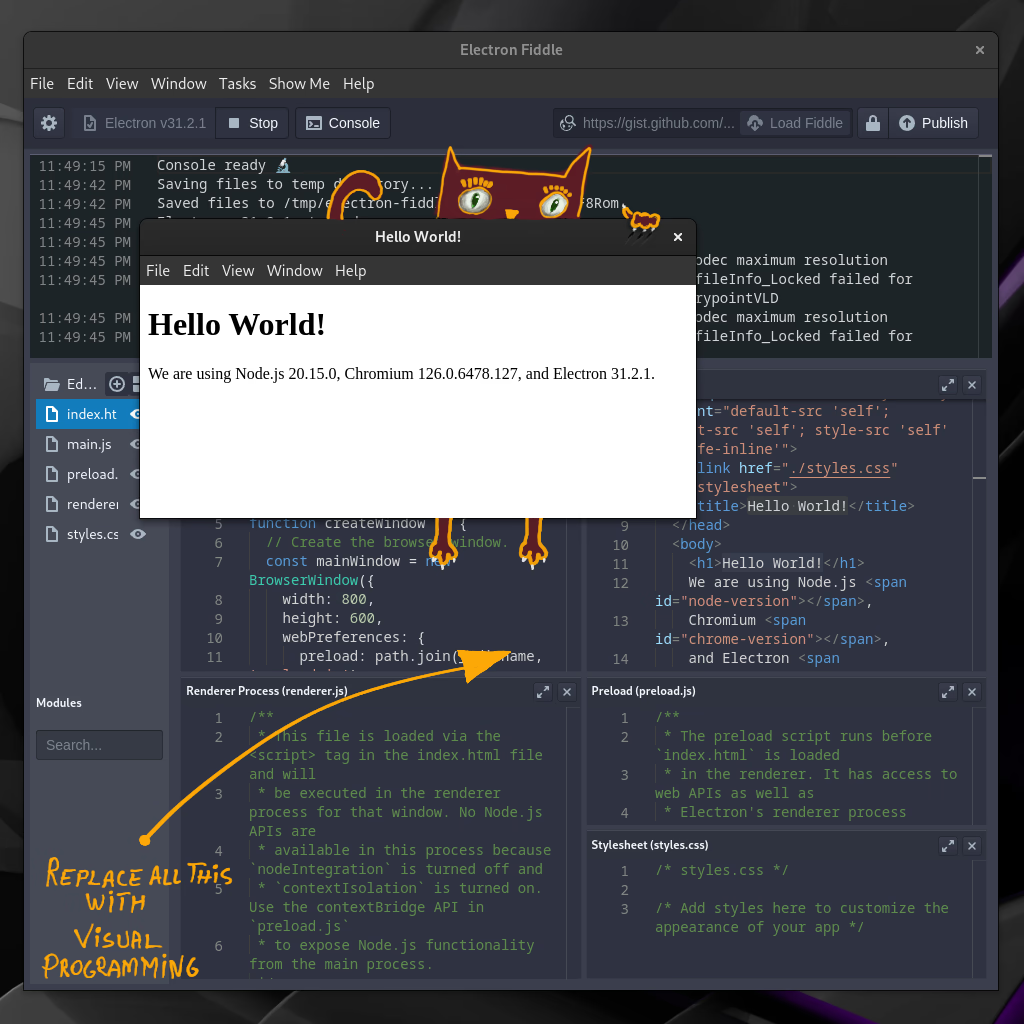
The post celebrates the power of self‑directed learning and coding as a path to future success, urging readers to rise above traditional schooling, memorization, and the fear some “ghouls” (old thinkers) feel toward new technologies. It claims that AI will replace programmers only if they let it; by mastering programming on their own terms—creating custom functions, loops, objects, reactive UI, and browser apps—the reader can outpace those who cling to outdated methods. The poem invites the audience to build on giants’ shoulders, keep learning “functional knowledge,” and grow until becoming a great being in this future‑oriented world of innovation.

·

#1636: Gentile Dedys

The post argues that true mastery comes from sustained practice and genuine understanding rather than last‑minute cramming; it proposes replacing traditional high‑school curricula with “programming schools” where students build projects that simulate and visualize complex systems—physics, chemistry, biology, even astrophysics—and then use those skills to create applications or art tools. By learning programming in this hands‑on way, students can apply knowledge across disciplines, avoid the superficiality of rote memorization (e.g., “mitochondria is the powerhouse”), and gain authentic dignity that fuels creativity and lifelong learning. The author stresses that authenticity, coupled with disciplined practice, transforms a student into a genuine “gentleman” or “knight” in the intellectual sense—someone who continually builds on past deeds rather than relying on fleeting accolades.

·

#1635: Fitness Above All; Before You Take Care Of Others, You Must Take Care Of Yourself

The post argues that the hardest part of getting healthy is breaking old habits, and that long‑distance hiking offers a more effective routine than just hitting the gym. It claims that adventure not only gives life but also heals faster—nature’s beauty keeps you motivated while the gym feels confined to “four walls.” By committing to trails like the Appalachian or Pacific Crest for months of preparation, you’ll break obesity and repair over‑work fatigue in a way that supports others, celebrates each step, and ultimately strengthens your body quickly. In short, choosing extended outdoor adventures is presented as the true duty of survival and personal fitness, rather than merely a gym choice.

·

#1634: Don't Lift Heavy At The Gym: Scientific Evidence For High-Intensity, Multi-Hour Training With Low Weights

Studies show that muscle hypertrophy can be achieved with light weights as long as the training volume is sufficiently high, with research from Schoenfeld (2016) and Krieger (2010) confirming similar gains to heavy‑weight protocols when volume is matched. Muscle growth is driven by tension, metabolic stress, and damage; low‑repetition, high‑rep schemes generate significant metabolic stress and fatigue that stimulate hypertrophy, a concept supported by further work from Schoenfeld and others. Evidence also indicates that high‑volume training improves endurance, insulin sensitivity, and recovery, all of which can enhance muscle development. Practical examples demonstrate that many bodybuilders use low‑weight, high‑rep routines successfully, and the author emphasizes this approach while encouraging gradual progress, consistency, and enjoyment in training, concluding that light loads with sustained volume can be an effective path to muscular growth.

·

#1633: Gym Advice: Lifting Heavy Is A Mistake That Can Only Slow You Down

Training soldiers with light weights and extended sets improves endurance, prevents plateaus, and promotes functional full‑body coordination; by gradually increasing load in small increments while keeping tempo high you keep muscles moving continuously, reduce injury risk, and stimulate adaptation. Incorporating music to set pace, rotating between exercises, and maintaining a consistent routine of long, light sessions yields better results than sporadic heavy lifts. A balanced diet such as soaked trail‑mix also supports recovery.

·

#1632: The Seagull Diet; Or, What Really Happened On The Day I Learned To Love The Michigan Seagull

I grew up exploring the map of Michigan as a child, dreaming of future adventures by throwing darts at its outline—one dart landed just west of Detroit—and later venturing to Florida before returning once more to the Lake Michigan shore. The trip that mattered most was to Ludington State Park, where I fell in love with seagulls after feeding them trail‑mix and cheese puffs under a “Do not feed” sign; I’d even consider myself a sort of god‑grandfather to their flock because of my regular visits. One memorable afternoon I watched teenagers dig a hole, stack driftwood into a makeshift pole and fill the sides, effectively building a structure that would stay on the beach for years; another day a mother and her little daughter fed a gull so loudly it echoed across the sand, an event I still remember vividly. These encounters—my feeding routine, the teens’ construction, the family’s snack‑sharing—all cemented my bond with the birds and left me with lasting memories of that Michigan coast.

·

#1631: Codename Mephistopheles; Or, How Computer Programming Changes Everything

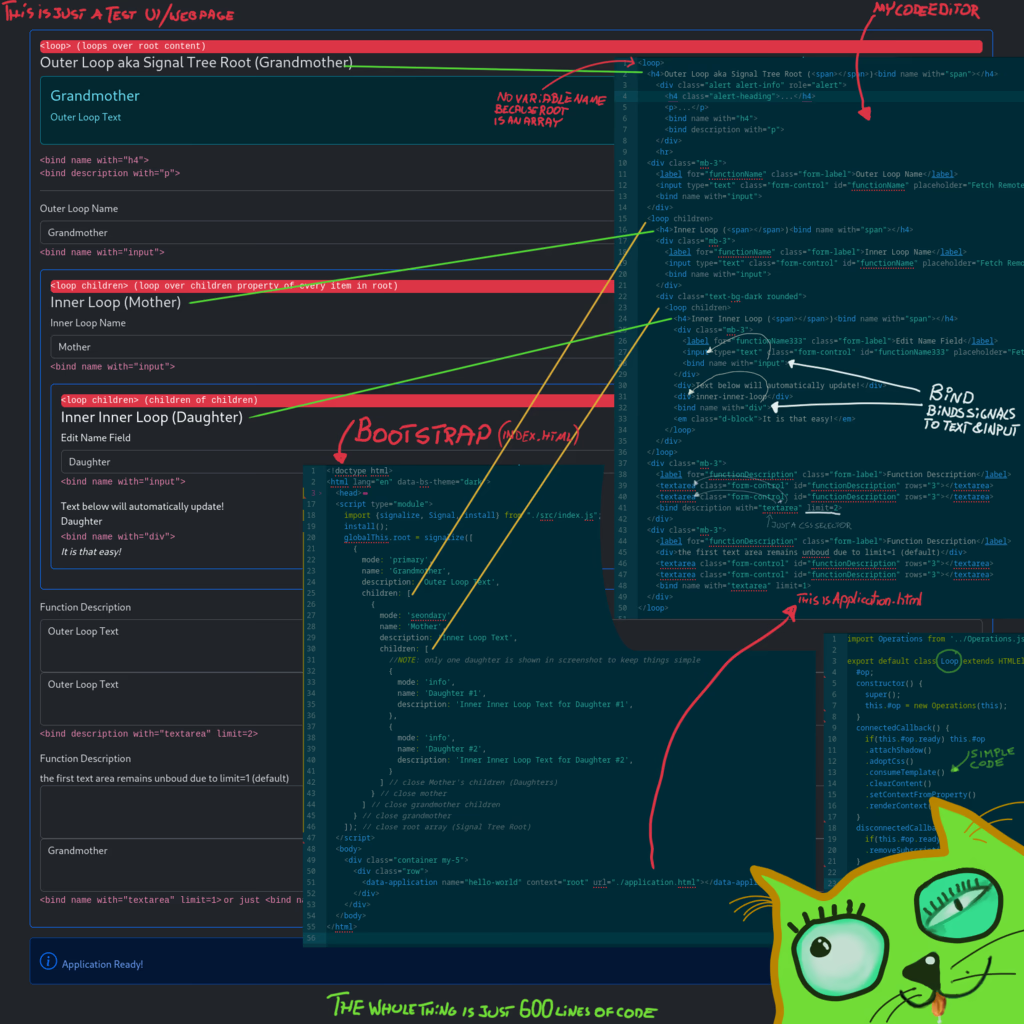
Mephistopheles is a visual programming language built on a signal‑tree architecture that uses Web Components and a box‑and‑cable interface to let users—especially young developers—to create UI kits, website templates, and full applications with minimal code. By binding loops, prints, and other logic to signals, the system automatically updates DOM attributes and supports recursive nesting of custom elements, while AI assists in generating both code and images. The author envisions a marketplace for these components (akin to Envato or WrapBootstrap) and a simple framework that rivals heavier tools like Svelte or Angular, all driven by minimalism and simplicity.

·

#1630: How I Completely Ruined My Quest To Become Thin And Skinny

I began by trying to emulate 1980s‑style workouts with light dumbbells and long jogs, only to discover that concrete was hurting my knees. Switching to softer surfaces and adding cycling on a fat‑tire bike helped build leg muscle while the repeated dumbbell routine—starting at three pounds per hand and gradually increasing to about 17½—started producing visible arm gains. I paired these sessions with upbeat playlists and brief dance breaks, and kept a simple diet of trail mix plus protein powder, occasional chicken or pizza cheese, avoiding bread. By the end of this experiment my legs were muscular, my arms showed veins, and I had gained bodybuilder‑like bulk even though I still wasn’t “thin”; the journey to lean form remains unclear.

·

#1629: All Too Human

The post contends that life is an experiment running across the vastness of space, with consciousness emerging as a “computer” that grows by acquiring wisdom through self‑made experiences and storytelling; it stresses how religions, corporations, and other systems can corrupt this machine if not guided by true knowledge. The author argues that each person’s operating system is defined by the length of their stride—by the challenges they meet—and that only by choosing independent, clear‑thinking books (especially narrative adventures) and learning practical skills like programming can one build a reliable “mind” capable of handling stress, poverty, and social structures, ultimately leading to continuous growth and becoming a great being.

·

#1628: Bad Grades; Or, You Were Never Dumb

The author argues that authentic, continuous learning—through listening to narrated books, hiking, and self‑studying—trumps standardized, grade‑driven schooling, which he claims merely creates compliant workers. He stresses that grades are arbitrary and that true mastery comes from integrating knowledge over time. To truly grasp modern “language,” one must learn programming (starting with JavaScript), because it lets us simulate, visualize, and understand complex systems—skills he says schools often neglect. In short, the post invites readers to become self‑teachers, master programming, and let continuous exploration shape their own education.

·

#1627: Why Is Learning Programming So Unfriendly?

Online code editors such as CodePen, JSBin and the p5.js editor provide great environments for learning and quick experiments, but they still require you to write raw JavaScript by hand; visual programming systems like Apple Automator or the classic Alice IDE give a higher‑level view in which code is generated from a tree of UI components and actions. The post argues that building an application in this way involves three core concepts: (1) a tree of nested user‑interface elements whose events trigger “Automator‑style” actions on a data model; (2) state machines that manage program lifecycles, expose state changes

·

#1626: Get Serious About Growing Up

The post urges the reader to master programming and self‑directed learning so they can lift themselves out of poverty, create successful ventures, and leave a meaningful legacy for future generations.

·

#1625: The Rise Of The Couch Potato; Or, If It Is Too Hard, Then You Are Doing It Wrong

The post explains that fitness gains come from gradual, sustained effort rather than short bursts or heavy weights; it argues against muscle isolation and over‑weight training, advocating full‑body dumbbell workouts with incremental rep/weight increases, proper rest intervals, and a progressive jogging routine (starting with walking/hiking before running) so the body adapts steadily without hitting plateaus.

·

#1624: The Golden Books

The post proposes a new system of yearly audio books—“Golden Books”—designed for children from birth onward, combining philosophical lessons (Socrates, modern culture) with practical skills and outdoor adventures to foster independent learning, creativity, and resilience; it criticizes traditional grading, teachers, and parents as insufficient guides, and argues that through these guided recordings, kids can acquire functional knowledge, self‑confidence, and a clear code of conduct that will empower them to pursue trails, create art, compose music, and ultimately build an unbreakable humanity free from false leaders, propaganda, and war.

·

#1623: Are Programmers Scientists Or Just Really Weird Wizards?

I attended a company “swag” event that handed out free pens and other trinkets while watching salespeople in cubicles act friendly; this sparked my interest in programming, which I’ve been doing since childhood. After experimenting with HTML, Svelte, and React—seeing how even simple loops can build reactive interfaces—I decided to create my own visual programming framework where components are dragged and dropped into a data‑flow graph that automatically updates the UI when variables change. My design envisions a minimalist, zooming interface without taskbars, instead using connected windows like lab equipment so developers can repurpose tools at each stage. I conclude that learning JavaScript and open‑source web tech is essential, as it lets anyone build small applications or even a desktop environment capable of deploying web services.

·

#1622: The Gym Problem; Or, The Lift Heavy For Big Muscle Myth

The post likens the gym’s dumbbells to books in a library, emphasizing that both are valuable and should be respected, but it argues that starting fitness is easier outside the gym by hiking, biking, jogging or walking—activities that naturally build endurance and make later gym work feel less demanding. It encourages readers to plan a weekend adventure (Friday to Monday) to get rest, lose weight, and enjoy nature before hitting the gym, noting that too much early weight training can backfire. The author stresses using light dumbbells (3‑5 lb), adding small increments, mixing intervals and music, and working the whole body with twists and turns so the routine feels dynamic. Finally it suggests simplifying diet by clearing kitchen appliances to support a “bang” start of both outdoor activity and strength training.

·

#1621: Svelte, Vue, React, Angular Considered Evil: Just Loop Over Signals With A Signal Loop Web Component

I’m a developer who’s tried everything from C to JavaScript to Svelte, and I’ve grown tired of the bloated runtimes and frameworks that keep adding layers of abstraction. In particular, TypeScript feels like another “typed” version of an untyped language that only adds complexity; similarly, React’s JSX is clunky and hard‑to‑port because it forces you to weave array mappings into custom syntax. Instead of sprinkling a few dozen libraries onto a page, I propose using native Web Components with a lightweight signal system: just a handful of lines can give you a component that subscribes/unsubscribes to signals in its lifecycle, supports nested loops via dotted paths, and even offers two‑way data binding by scanning for `data-bind` attributes. With this minimal approach you get the benefits of reactivity—loops, dynamic instantiation, type mapping—without the mental overhead of casting or ad‑hoc parsers; it’s a “Swiss army knife” that returns code to plain, portable HTML while still keeping the structure and lifecycle advantages of components.

·

#1620: Burn Fat, But Get Serious, And Protect Yourself From Giving Up

The post explains that successful walking, hiking, and gym workouts start slowly—begin by simply walking or light hiking, then gradually increase distance, time, and intensity. In the gym, use the lightest weights first, build up exercise duration, and add only small weight increments (a few pounds) as you become comfortable. This steady progression prevents early fatigue and plateaus that heavy lifts can cause. The author encourages mixing walking with varied scenery—ocean shore, trails, or adventure trips—to keep it interesting, while also suggesting turning kitchen appliances into a training zone to stay active at home. Over time, the routine should evolve into longer hikes (Appalachian, Pacific Crest, Continental Divide), eventually culminating in the Triple Crown of trails and even ultra‑marathon running, with the mind enriched by narrated books. Finally, the writer invites readers to become lifelong trainers or guides, sharing their experience while keeping walking, hiking, weightlifting, and dancing as a continuous practice for health and inspiration.

·

#1619: Multiversal Travel; Or, Life After A Neat Nap

I started my journey in America by embracing my “inner animal” – a muscular house‑cat that inspires me to nap deeply and dream up creative ideas – and this habit of mine has guided my recent work on a personal web‑development framework that uses loops, signals, and a tree structure to manage component state; the system I’m building lets you organize signals in a folder‑like hierarchy so they automatically update UI elements when data changes, much like JSX, Angular, React, Vue or Svelte but with a simpler template tag that reduces boilerplate, while my visual programming language allows me to wire components together and use actions that trigger multiple signal changes; all of this is driven by the belief that naps are not only rest but also creativity, rebellion and reward for hard work, so I keep exploring new tools, building an audiobook series called “cat‑pea” that will be published in many languages, and continue to let my inner cat guide me toward inventive solutions.

·

#1618: Towards A Flourishing Humanity

The post argues that true culture and peace arise from a shared love of wisdom—what philosophy itself means—and that this wisdom must be cultivated by abandoning bad ideas, embracing authentic leadership, and mastering both knowledge and great ideas. It claims that philosophy fuels science, while the next leap is authenticity, virtue, and dignity: rejecting liars, manipulators, and cheaters so that wars can be prevented and governments truly serve their people. The author stresses that money is only useful when poverty is eliminated and that personal growth—moving from simple mistakes to becoming a “great being”—depends on continuous study of great works from art to science. Without this inherited wisdom, cultures collapse and leaders repeat old errors; thus each person must pursue an educational journey, breaking out of familiar roots, listening to wise books, and ultimately sharing their own legacy with the world. The text concludes that only through such a lifelong quest for knowledge can one rise to greatness and contribute meaningfully to humanity.

·

#1617: Hominus Noctrurna; Or, What Is Late Night Programming, Anywho?

Late‑night coding adventures are described in a single, vivid paragraph: the author recounts fixing MySQL crashes, writing PHP for large‑scale reports, and debugging Unicode path exploits on IIS servers; he also recalls sysadmins wrestling with misconfigured routers at AOL and small ISPs, and a frantic night when a period in an email address brought down a Postfix mail server. These stories illustrate how programmers often work long hours to solve puzzling problems—whether it’s restoring a broken postfix service or hunting down a rogue process that ate CPU on a shared host. The narrative concludes with reflections on the value of those late nights: they sharpen skills, reward learning, and reinforce good practices such as using GUID passwords and externalizing user accounts, so that one can build reliable systems while enjoying the thrill of solving problems in the quiet hours.

·

#1616: Programming Data Structures; Or, Inventing A Machine That Is Already Old And Wrong

A post describing how to build a tree‑like data structure in JavaScript that emits simple “changed” events from tables (e.g., a people list) and folders so that a UI framework such as Svelte can efficiently re‑render only the affected parts, and it ends by inviting readers to ask an AI for a minimal signals implementation.

·

#1615: Food, Body, And Mind; A Picture Of A Simple Integrated Workout

Endurance lifting is a continuous dumbbell workout that blends jogging‑style pacing, rhythmic music, and dance‑like movements to build muscle quickly for both fat and skinny bodies; it calls for three‑hour daily sessions five days a week, with weight, speed, and duration increased gradually while interval timers and song beats keep the rhythm, and it pairs this routine with trailmix protein snacks plus electrolytes to sustain energy—an approach inspired by 1980s aerobics that emphasizes full‑body movement and steady progression.

·

#1614: Think Of Your Body As An Animal

Progressive dumbbell training—starting with manageable weights and gradually increasing load by no more than two pounds at a time—helps your body stay on the edge of its capacity without hitting a plateau; combine this with interval timers to structure workout and rest periods, and you’ll build muscle steadily while avoiding over‑exertion. Add protein for growth, carbohydrates like trail mix for sustained energy, and electrolytes during hot days, and you’ll keep the training cycle efficient. Keep the routine simple: lift, rest, repeat—no extra equipment needed—and let your body adapt through consistent, slightly heavier lifts until it becomes stronger without injury.