Archive

Page 7 of 95

On A Wintry Starlit Night 17,000 Years Ago

The post celebrates the megaloceros—a legendary “Noble Megaloceros” first depicted in the cave paintings of Lascaux—whose image dates back about 17 000 years. It recalls how, during a wintry starlit night, hunters and travelers witnessed this gigantic deer-like titan not as a hunt but as a magical sight, with some people describing it as “as big as a tree” while others imagined it to be the size of the Baltic Sea. The story is celebrated as still being told today, proving that even after millennia the awe‑filled tale of this legendary creature endures.

On Listening to Audio Books

Audio books, video lectures, and online tutorials play an essential role in enhancing our health, healing, and overall well‑being. A particularly engaging way to begin this journey is through travel and adventure titles such as Bill Bryson’s highly praised works—his “A Short History of Nearly Everything” offers a clear introduction to science, while “Notes from a Big Country” delivers humor and insight; likewise Charles Kuralt’s “America” gives another vivid travel narrative. These books provide not only facts but also moments that enrich the imagination, broaden one’s perspective on the universe, and inspire positive life changes. In addition, popular science titles like “A Short History of Nearly Everything” paired with other top science‑popularizer works, as well as running memoirs such as “Born to Run” or “Ultramarathon Man,” deepen our understanding of endurance and everyday athletes. Altogether, audio books and video lectures serve as a powerful source of wisdom and adventure.

Grow and Help Others Grow

This post encourages the reader to rise above fatigue, isolation, and fear so that they can act with clarity and wisdom, and to recognize and release their past mistakes as part of growth. It reminds us that we are wiser now than in our youth and urges us to stop blaming ourselves for earlier errors. By applying the knowledge and experience we have gained, we can help the next generation understand the world better, avoid similar pitfalls, and build upon our shoulders rather than repeating our own paths.

Inspirational Books

The post argues that every child’s growth depends on a safe, enriching environment shaped by family, economy and intellectual culture, and stresses the need for individualized learning—each mind requires its own set of books rather than a one‑size‑fits‑all curriculum. It calls on teachers to provide audio books, let students pause, replay and think, and recommends a curated list of thinkers (from Ken Robinson to Jared Diamond) whose works can inspire science, philosophy, and leadership. In short, the post invites educators to tailor reading material to each learner’s unique configuration so that future generations can thrive in an intellectually vibrant world.

Within The Idea Of Growing Up

The post argues that growing up is more than merely aging; it also involves intellectual development that begins at essentially zero and carries each person along a unique path toward new discoveries. This process is not about ranking people, but about shared ascent to wisdom, even though we speak different languages and hold distinct concepts that cannot be directly translated. There is no single common language or summit where all cultures converge; instead, each must learn to translate, interpret, and understand one another’s level of development. Only by helping each other rise toward excellence can humanity achieve peace.

An Evening Before A Run

I reflect on my bike ride and musings about art, life, and time while preparing for tomorrow’s run under shifting weather conditions.

On Finding Our Stars

Before we learn what we should know, we must first learn how to grow. To break out of all the rooms and halls, we must destroy all the invisible walls. As we cannot reason about what we can’t see, we must surpass our limits before we can think free. It is not so much moving forward as it is always growing upward. We say forward when we seem to stop, but we mean up—up to the top—and then rise above where our limits once stood, from could to would, to finally should. What once we saw as highest complexity we will know to navigate like a small city. Then we can help people finish their thoughts, help them to their stars, and connect their dots. We must learn; it is just how human beings are—we have to see the whole before we can find the star.

As Bright As The Sun

The poem offers a hopeful wish that each day brings joy and keeps sadness at bay; it admits our ignorance of the world yet reminds us not to resign or live low but to seize life’s single chance, shining bright as the sun, wise like sunrise, and strong as an unbroken heart. It calls for growth as a right and urges us never to waste a day, walking always in our own unique way.

Blogging About Jogging

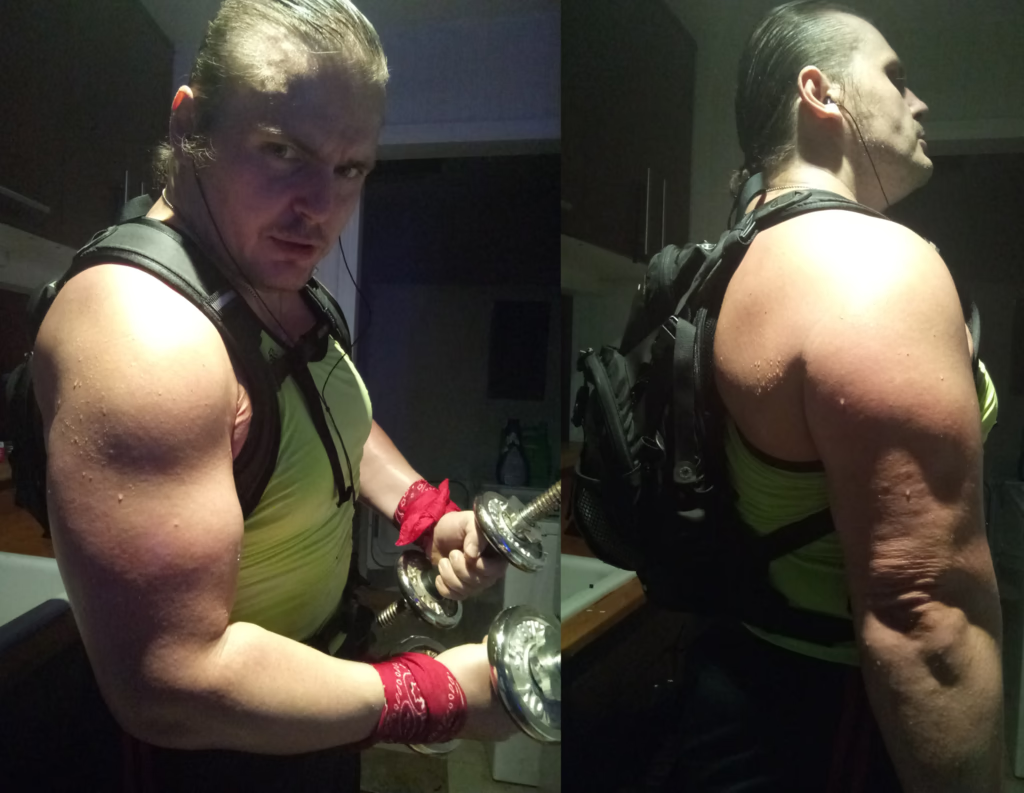
I woke up at five, felt alive, and left the house at 5:42, still smelling dew as the sun rose over brown clouds. Running like Superman with weights in each hand, I tackled Westland and then Central City, feeling strong yet humble. The sky glowed with sunrise, a view enhanced by passing clouds. I completed six miles in under two hours—my best time—and felt like a superstar, though I know more training remains. I enjoy the progress in jogging, bodybuilding, and blogging—all at once, a grand adventure in rhyme.

Rain, Web Design, and Thunder

I woke in the middle of the night to thunder and a flash of light, even though my earplugs muffled the sound; I had once feared thunder but was told that if you can hear it you’re safe, so now I think thunderstorms are just breezy. I imagined riding my “iron horse” through wet, muddy streets, yet instead I found myself finishing up a web‑design project. After shifting from an 8 PM to 5 AM running schedule and taking a rest, I feel ready to finish the design work and keep going strong.

Iron Mare

#0154

Iron Mare

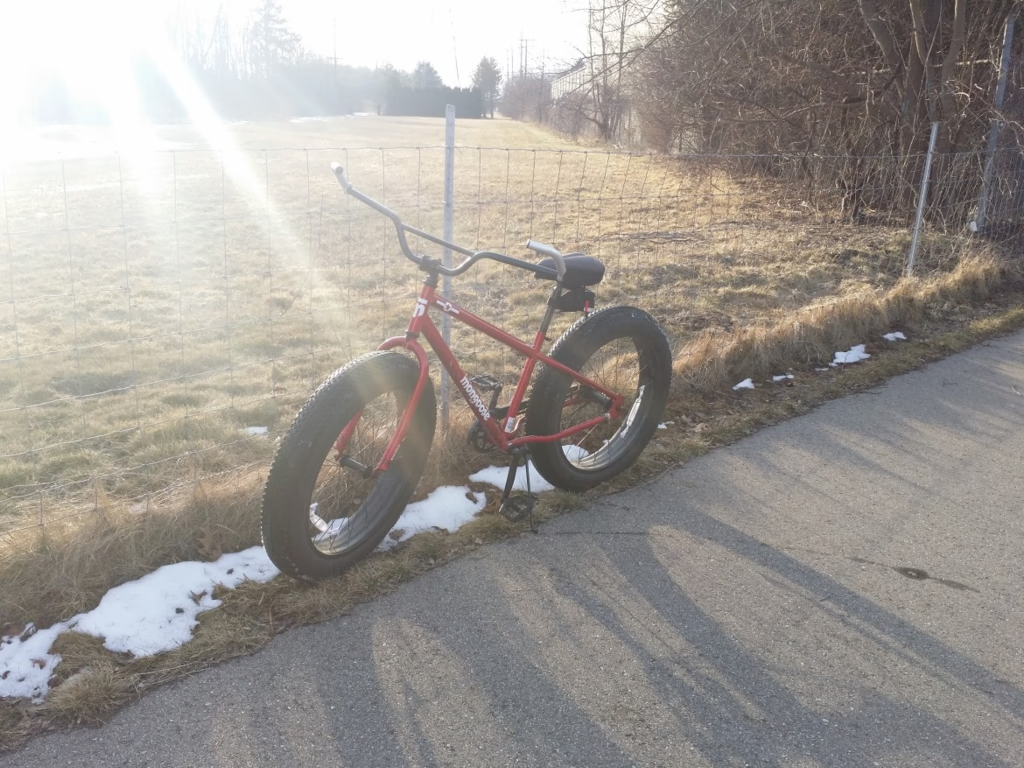
The narrator wakes early, dresses lightly, and sets off on a morning ride with their “iron mare.” They travel away from the sun, turning left toward dew, then following a straight road that offers a pleasant journey filled with singing birds and fresh wind. On the way back, the rising sun briefly blinds them, but they navigate home by familiar tracks. After returning, both rider and horse part ways, yet the narrator is ready again for another ride at sunrise, eager to repeat the experience as soon as they open their eyes.

The Sunlit Dew

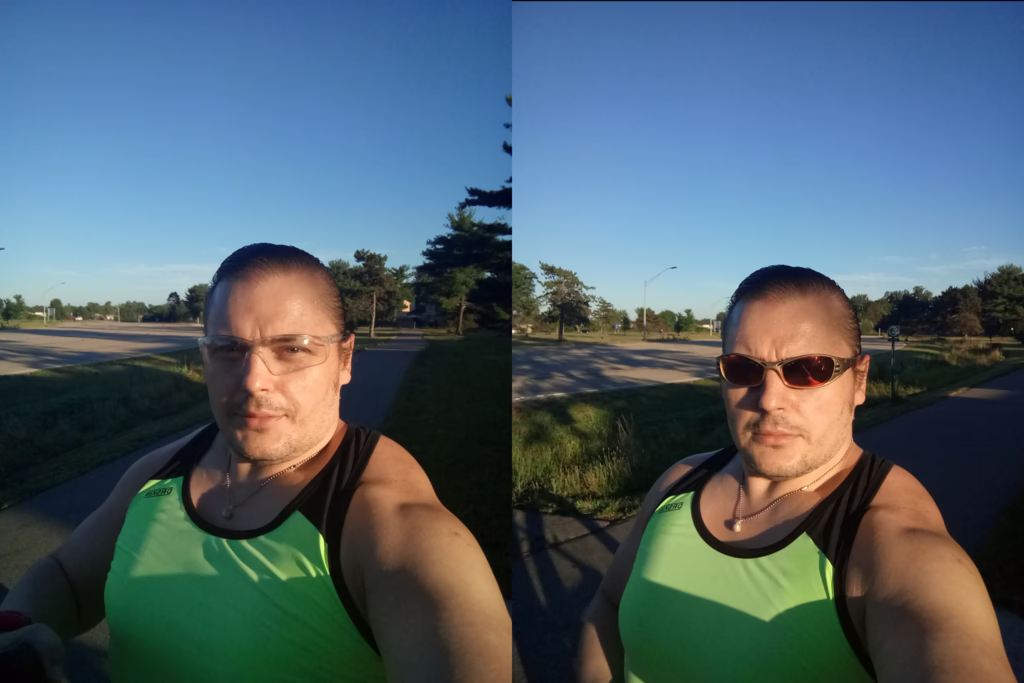
The post recounts the author’s bicycle rides at different times of day—late afternoon rides that require a flashlight to navigate, early‑morning trips under a bright sun that force sunglasses on, and a poetic description of how mornings feel with empty streets, a backward sun, fresh dew, and a sunrise view. The writer also recounts seeing a deer in a grassy patch and a hawk nearby, then closes by asking the reader whether they prefer evening sunsets or morning dew.

Cloudy With A Chance Of Beefcakes

The post is a light‑hearted recounting of a casual bicycle trip taken on a sunny but cloud‑laden day. The narrator describes riding shirtless, greeting their bike as if it were an old friend, and noting the clouds that marked the morning’s sky. They set out for two hours at a deliberately slow “speedy snail” pace, stopping to admire the scenery captured in three images: a cloudy sky, the end of the trail, and a map confirming arrival. The narrative ends with a playful confirmation—“You are here!” on the map, followed by the narrator’s casual reply, “Yup!”

Coming to America

I reflect on memories of New York after a quarter‑century—its sounds, busy parks, cars, sirens—and note that a slice of pizza cost one dollar twenty‑five cents, an amount I still find remarkable. I joke about five cents being larger than ten and lament December not being the tenth month and October not being the eighth. I mention my familiarity with fractions like 9/16 or 7/8, needing a calculator to parse them, and my confusion spelling “W” as double‑U. I discuss weather, noting my switch from Fahrenheit to metric yet still using the former, and describe how hot summer days push me to stare at my thermometer reading 105 °F, prompting me to shut the front door.

Riding Red

#0150

Riding Red

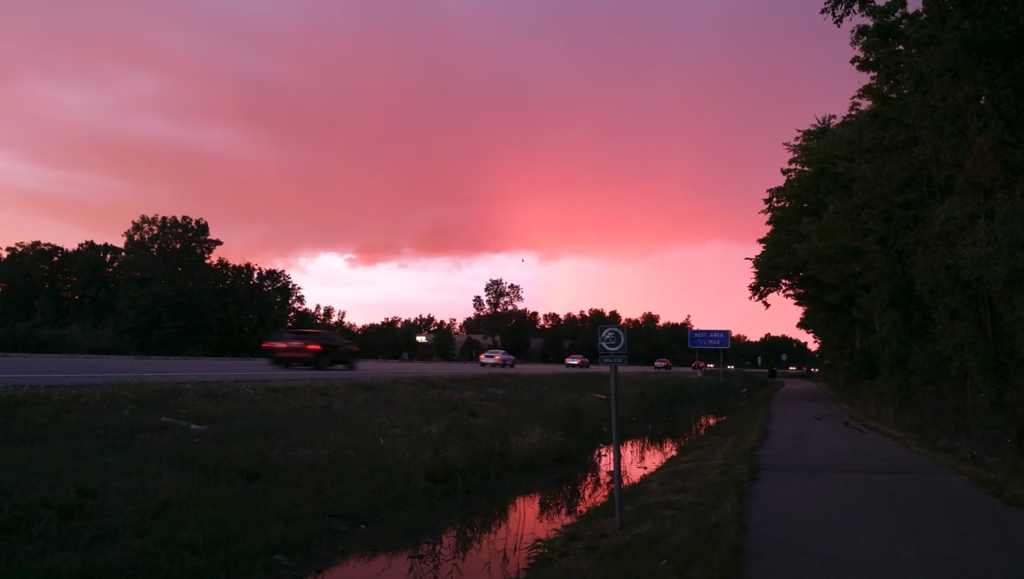
The post describes the author's nighttime bike rides in twilight, noting the still light and his use of a flashing lamp for safety. He observes wildlife like deer, rabbits, and mice while smelling pine and fireplace smoke, pausing to watch sunsets that paint clouds red as darkness falls. The author enjoys frog and cricket sounds at dawn, wishes to preserve these moments, but finds photos and videos lack vibrancy, concluding that such simple pleasures are among life's greatest joys.

A Good Night's Rest

This post celebrates the idea that life is a continuous journey of learning and growth amid constant change, urging us to view ourselves as a “raging fire” rather than a quiet ember—an energetic force that must continually strive, thrive, and melt away obstacles like snow. It encourages embracing challenges with confidence, reading widely, and feeling both stress and strength, while reminding us that success comes from perseverance, wisdom, and dedication, ultimately allowing us to live fully and rest contentedly in later years.

Ensue

#0148

Ensue

My friends, we can’t conjure our greatest heights directly; they arise from our greatness and pursuits. We often miss what we could have seen, trapped in an invisible‑wall realm of forgotten lessons. The only way to avoid that prison is to keep moving forward without pause. If later we regret “I wish I knew…,” we can push on now and send a message of compassion to our future selves: at 3 AM, the older you will recall, “I was amazing; there’s nothing else I could do.” Knowing we lived boldly makes us proud and helps sleep with a smile. I’m sad that teachers rarely share this insight—that life is one profound journey where authenticity equals health, sanity, and strength. Shortcuts become sacrifices; the longest way is the only way. We must each climb our highest mountains to grow, bloom, and let the greatest heights ensue.

On Writing That Fifth Book

The post reflects on the difficulty and evolution of writing books, comparing each volume to a stage in personal growth: the first book feels hardest, the second promising, the third light‑hearted, the fourth conclusive, and only by the fifth do we truly begin. The author links this process to life’s own progression—from childhood curiosity through adult experience to the wisdom of old age—arguing that writing mirrors our journey of learning, triumphs, hardships, and the eventual appreciation of fate and love for what we’ve endured. In short, each book is a chapter of self‑discovery that ultimately strengthens us and enriches our legacy.

On Learning Philosophical Concepts A Little Bit At A Time

Philosophers aim to transmit ideas to future generations by mastering the art of thinking and conceptualizing; they remind us that even great thinkers were once children, so we should begin with surveys, videos, and audio books before diving deep. The post cites works like *The Story of Philosophy* and the *Giants of Philosophy Series*, celebrating figures such as Ariel and Will Durant, while noting that a philosopher’s mistakes do not diminish their contributions. It then explores the concept of **Amor Fati**—love of fate—as presented by Nietzsche (with his emphasis on suffering) and Camus (his practical acceptance of life’s ease and difficulty), arguing that mastering this idea means integrating it into our own decision‑making rather than merely memorizing it, and that personal interpretation can bridge the differences between the two thinkers. The author concludes that learning philosophy gradually, at one’s own pace, allows us to internalize concepts like Amor Fati and apply them meaningfully to life.

Live Wisely And Beautifully

The post encourages individuals to embrace their uniqueness and take responsibility for their own growth, urging them to discover what truly inspires them so they can stand firmly on unshakable ground. It stresses the importance of daily progress, thoughtful course‑setting, and resisting trivial changes or blind obedience, while warning that mistakes may sneak up if one does not think beforehand. Wisdom is presented as essential—first and foremost—to prevent big errors and to help become a “Great Being” in heart, body, mind, and all pursuits. Finally it invites readers to study the works of past great beings and continue where they left off, thereby inheriting their wisdom for continued development.

Greatness of Soul, Heart, and Mind

I reflect on how audiobooks, video lectures, and personal experiences with thinkers like Thoreau and Frankl have shaped my lifelong learning journey, urging others to keep studying and becoming “Great Beings.”

Cheerfully Becoming Mighty And Wise

This poem celebrates the universal impulse to “rise” in life—whether physically, mentally, or spiritually. It speaks of an innate sense of upward direction that beckons us when we’re down, urging us to lift our hands toward the sky and keep moving higher. The act of pointing up is simple yet powerful; it works for everything and all times, inspiring continual growth. With eyes opened and feet planted, we aim for the tallest mountains, letting knowledge expand as we climb. Wherever we begin, the potential to rise remains, and by chasing that upward path we attain wisdom, strength, and lasting fulfillment.

Apocalypse Meow

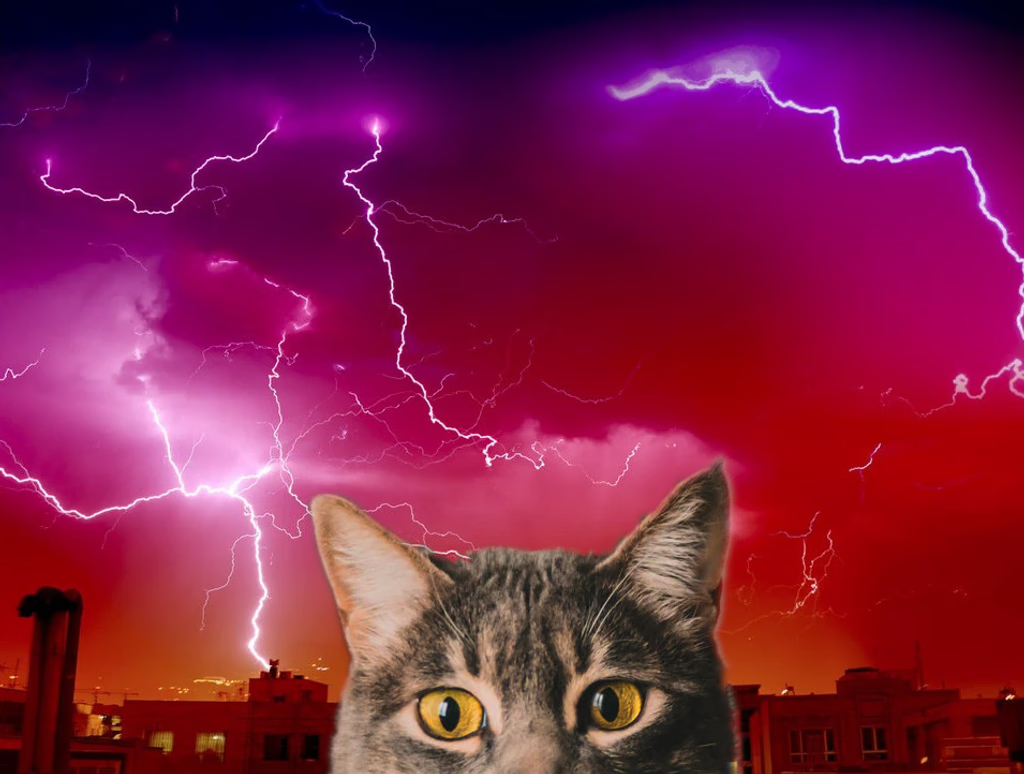
During a powerful summer storm with thunder and heavy showers, I experienced a 24‑hour power outage that left my apartment dark and the AC off. I tried to use a window fan but realized I needed to think it through, while my blinking computers and phones shut down or chirped their low‑battery tones. As the sun set, only the smoke detectors kept blinking.

In The Eyes Of The Future Generations

This post argues that we are part of an evolving civilization whose destiny depends on how well we learn from the past, honor our responsibilities, and act for future generations. It stresses that leaders at every level must use knowledge—especially books—to avoid repeating mistakes and to lift people out of poverty, not merely punish them. The author calls for a united world without borders, where individuals think independently, judge information themselves, and keep the cycle of learning alive so that tomorrow’s children inherit wisdom, peace, and dignity.