The Future Of Internet, Is Self Hosted
The author reflects on the evolving ad industry and proposes that we can regain control over our online experience by using simple, self‑hosted tools—RSS‑like feeds and web…

Writing software: JavaScript, Node.js, web development, visual programming, Linux, tools and tutorials.
430 posts · page 14 of 18
The author reflects on the evolving ad industry and proposes that we can regain control over our online experience by using simple, self‑hosted tools—RSS‑like feeds and web…

I write small holiday scripts with Greasemonkey (or Tampermonkey) to extend browsers, turning UserScripts into a bridge between my web‑based OS and external APIs; after…
Each time we start a new program or lesson, we encounter an endless array of possibilities; the post celebrates this infinite creative space, noting that while industry patterns…
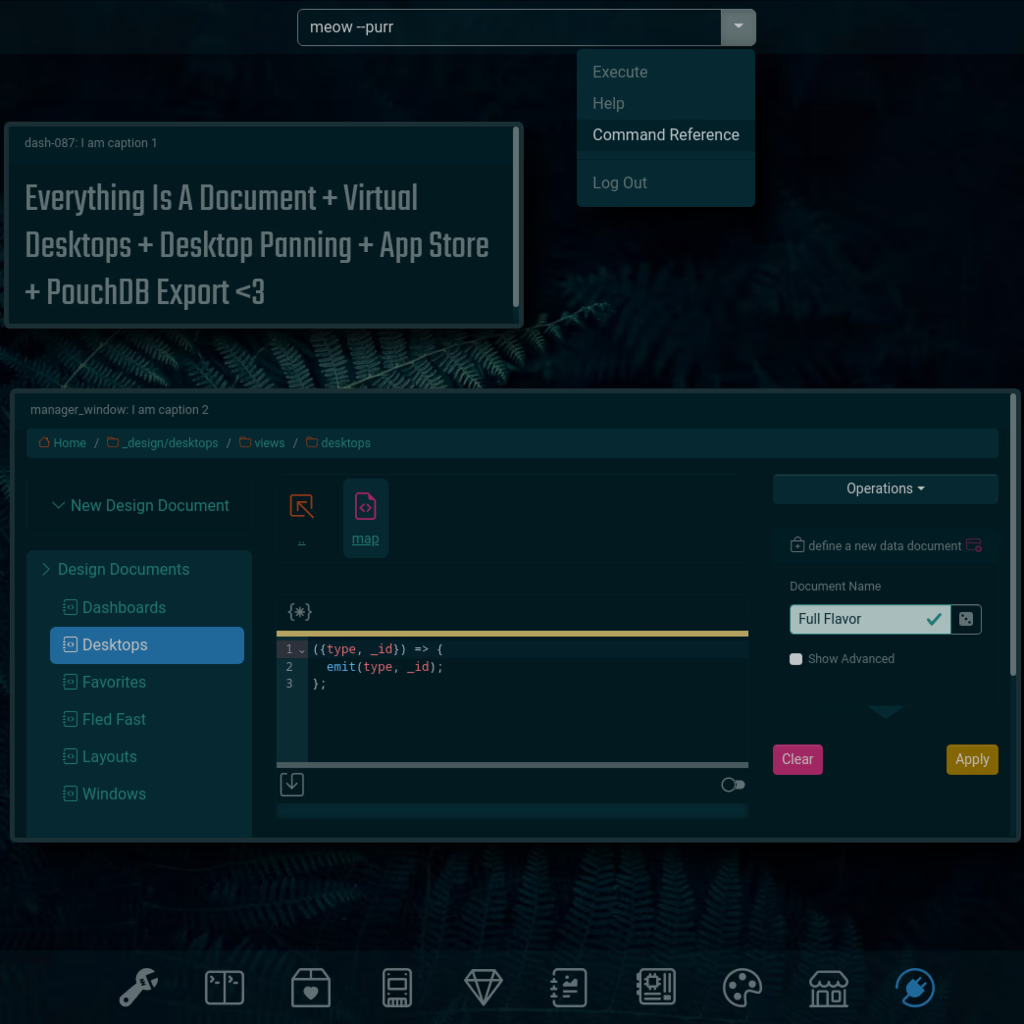
The post proposes a new way to build web‑based virtual desktops by treating full‑screen windows as independent “desktop” environments, rather than just document layouts. It…
I was navigating an industrial area when I made a right turn that seemed perfect to me as a programmer, yet the car behind followed too quickly and also turned in haste. The…
After reflecting on his school experiences and self‑education mishaps, the author introduces **Oumuamua**, a lightweight in‑memory database inspired by CouchDB and EventSourcing…
In this post the writer likens software bugs to “mambas”—snakes that always strike in pairs or more—and explains how a seemingly small fix can trigger a cascade of new errors. He…
The post proposes creating a simple web‑desktop UI that relies on drag‑and‑drop to manage windows, resize and pan the desktop; this pattern is presented as an easy way for…
The poem paints a whimsical picture of programming as a journey guided by three bird‑like companions: the rubber‑duck debugger Alice, who helps you spot bugs by talking through…
A poetic allegory of JavaScript programming begins by inviting the reader into the world of “spaghetti” code, where variables hold both strings and numbers just as useful as…
The post argues that programming is not only about writing code but also about being able to read and understand it in the future, so we should aim for simplicity. It contrasts…
The post outlines a minimal toolkit for building a web‑desktop interface: four core actions—dragging, resizing, focusing and desktop panning (moving all windows at once)—plus a…
Programming is about building and linking small components through simple algorithms, keeping code clear and avoiding spaghetti.
Programming becomes engaging when it’s taught with real projects, not just theory—side‑projects let you learn by doing, while working for others keeps your future in your own…
In this poetic essay the author argues that the secret to building large empires lies in keeping things “cute and tiny”—small, elegant algorithms and data structures such as…
A self‑referential system—like the “WikiWiki” idea—lets a page edit itself by treating side menus, layout templates, and even server configuration as editable articles; with a…
The post argues that self‑editable applications—those built by dragging and dropping JavaScript actions without coding—offer a powerful way for developers to create…
This post explains how combining CouchDB on the server, PouchDB in the browser, and Svelte’s store‑based data binding turns the tedious problem of UI synchronization into a…
The post outlines a simple yet scalable system architecture that lets each user own a tiny personal database—backed by Couchbase or CouchDB and synchronized via PouchDB on the…
Programming is a discipline that sharpens clear thinking, encourages humility, and rewards deliberate learning over convenience. It teaches us to avoid letting personal favorites…
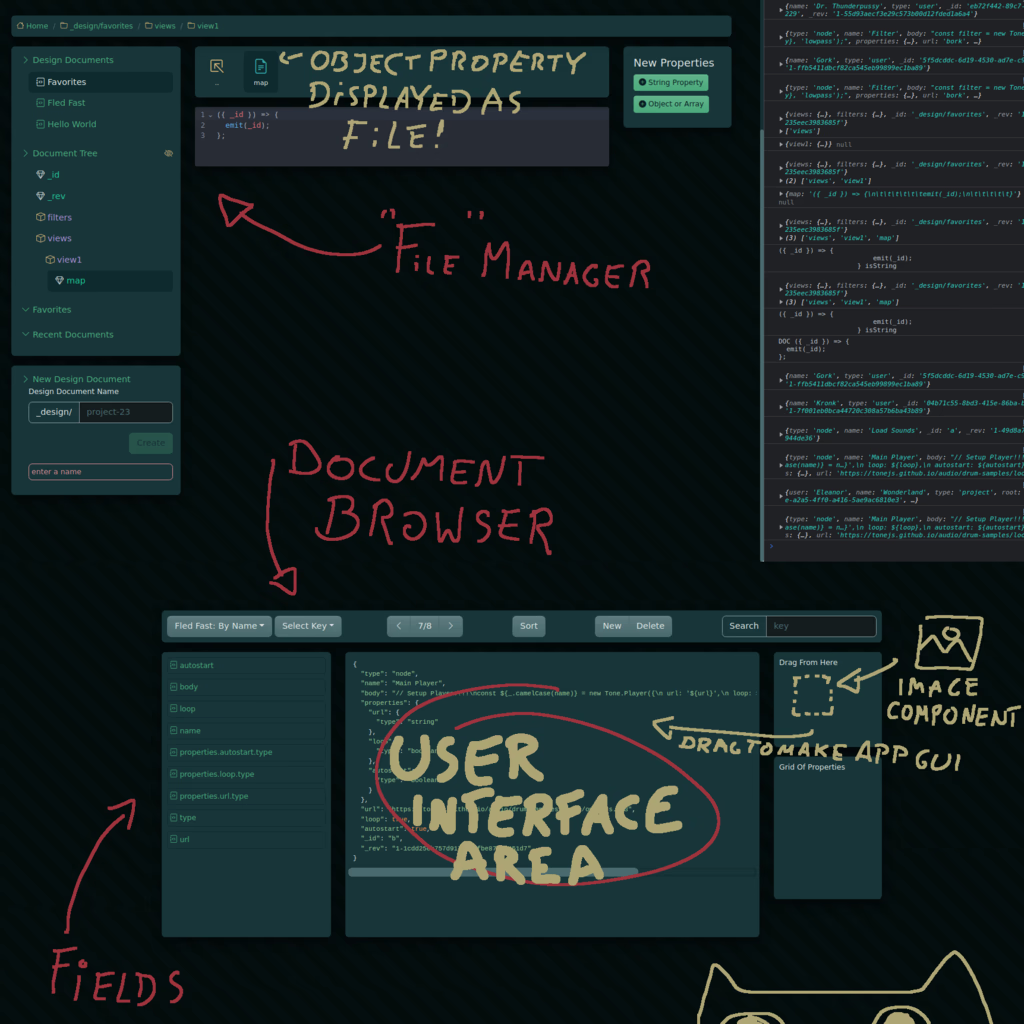
The post describes a creative way to embed a “file‑manager” style interface inside a phone or web application, using a tree‑like data structure built from simple node and edge…
The post introduces “potatoes” as a lightweight abstraction for CouchDB documents that makes it easier to keep data in sync across a networked application and the user interface.…
A state machine is a simple programming pattern that forces an application into well‑defined states, each represented by a verb (e.g., “driving,” “warning,” “stopping”). The post…
The author argues that applications become truly useful when they specialize into domain‑specific tools such as code editors or spreadsheet builders, rather than remaining…