Archive

Page 90 of 95

Loomings

#2156

Loomings

The post describes a developer’s experiment with artificial intelligence to build an XML‑based state management system for Web Components. Using multiple AI “agents” that iterate through several rewrites, the author was able to create a fully functional State Toolkit in only a few hours—something that would normally take years of manual coding. The AI quickly learns from its mistakes and can generate clean, efficient code that passes most tests; it even handles garbage collection and persistence across multiple users. The author concludes that while AI is not human‑like but can outperform humans in rapid, creative programming, the system he built (“flarp”) demonstrates real innovation in dynamic web pages, proving that large language models can be harnessed to accelerate software development.

Chicken Scratch Power, A Cluck At The Lulz Programming Language

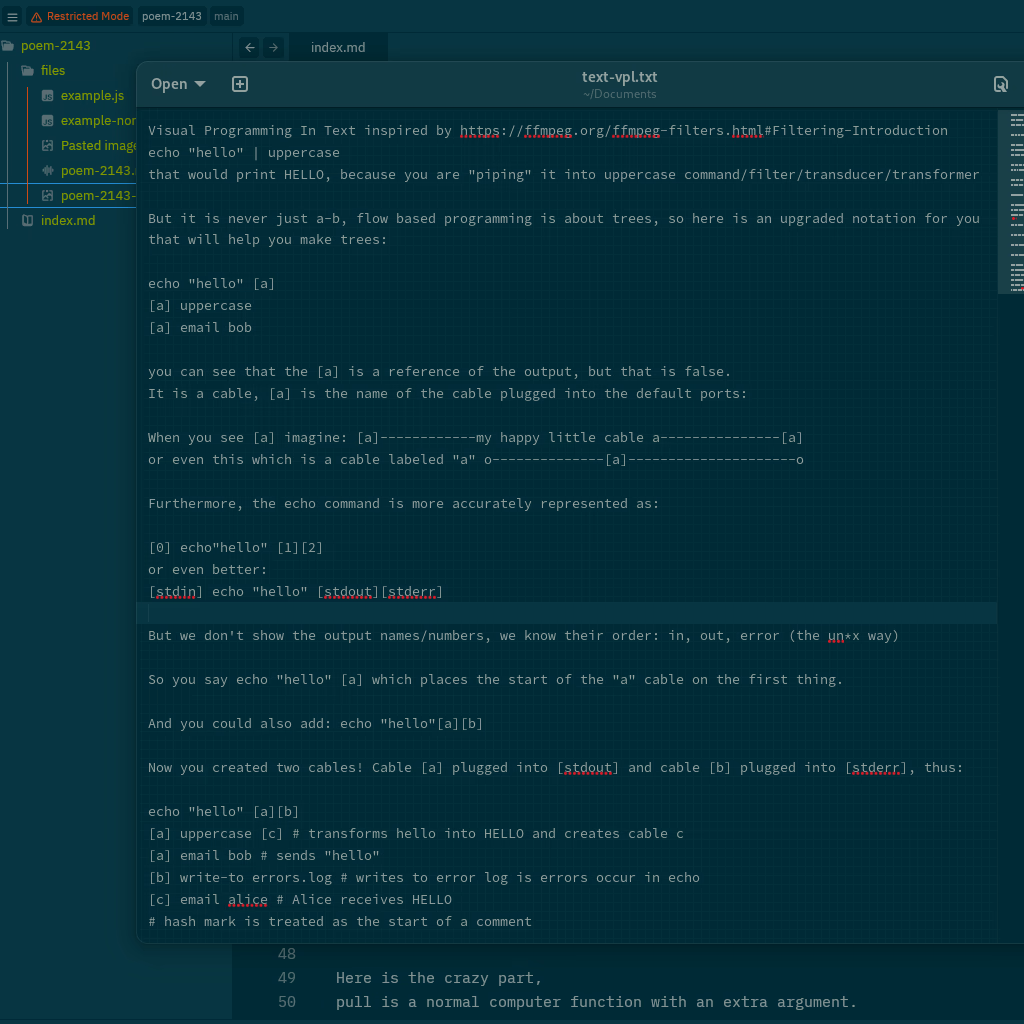
The author introduces “lulz,” a lightweight programming language inspired by ffmpeg’s filtergraph yet expressed through JavaScript‑style array syntax, where data flows are explicitly marked with the strings “in” and “out.” After refining the design with AI assistance, they added parallel/series helpers, worker integration, and extensive documentation to simplify execution flow. The post also frames lulz as a textual form of visual programming: functions are wrapped in two identifiers (e.g., ‘user‑signup’, saveUserToDatabase, ‘user‑added’) that act as named input/output pipes, making parallel logic readable and AI‑friendly while still retaining the simplicity of script‑based code.

What Does A Happy Little Programming Milestone Look Like?

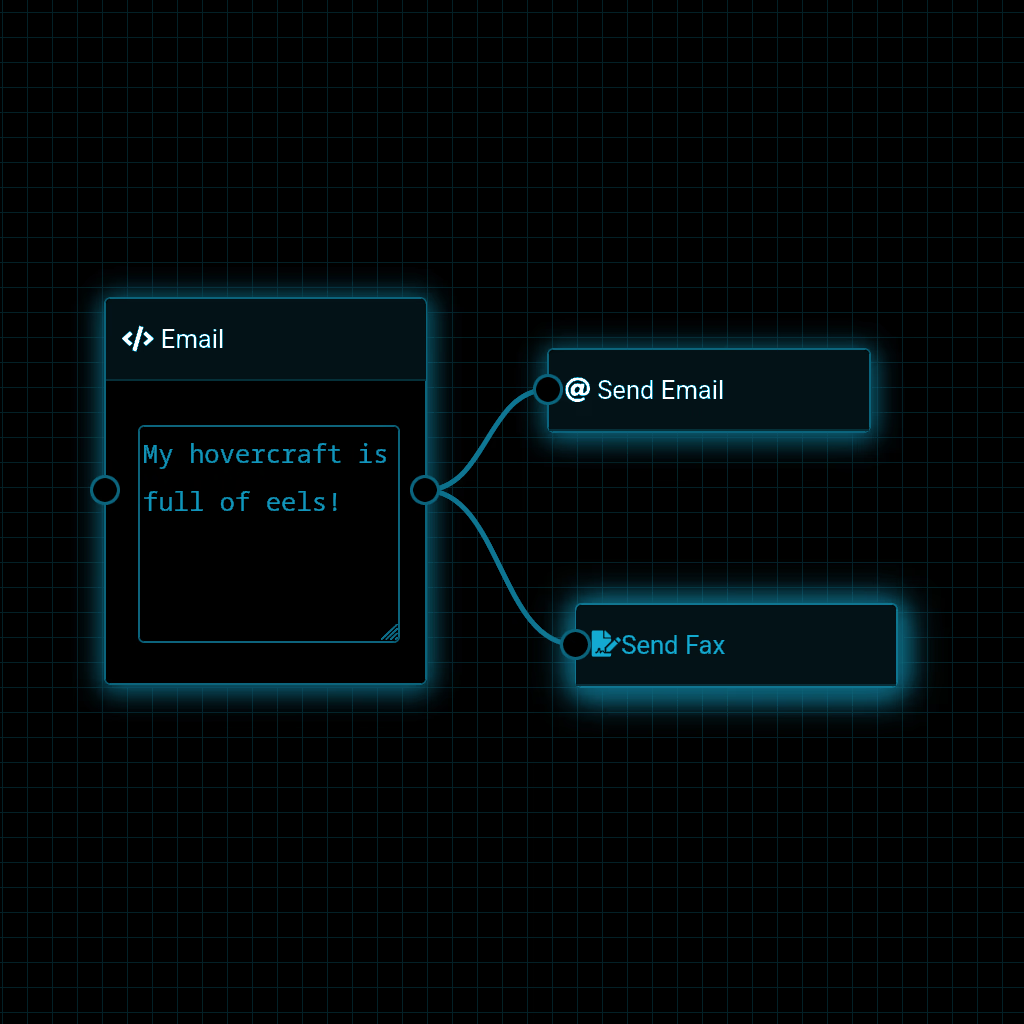
In this post the author argues that programming remains the key to escaping poverty, especially in an era where AI amplifies the power and reach of software—no longer needing warehouses or large teams, but instead enabling local AI to perform tasks such as converting images into 3‑D models for VR worlds. He reflects on his own journey from a novice programmer with no milestones to now presenting a flow‑based system called “lulz,” a text‑based visual language that uses ffmpeg‑style filtergraphs in JavaScript array notation and borrows ideas from Node‑RED. The post highlights how AI can finish programs quickly, yet also shows the challenges of visual programming—grouping nodes, nesting, and managing cables—which are hard mentally but fit well with AI’s grunt work. By describing a text‑visual approach where cable connections are explicit in code, he envisions an AI that listens to these flows, samples data at each link, and thus creates modular programs automatically—an early glimpse of the revolution he expects for AI coding.

They Trained Us To Celebrate Fake Grades

The poem argues that our schooling system trains us to obey rather than to think, so from childhood we learn to follow instructions without understanding them, become “servants” who serve those in power, and later work as assistants, soldiers or corporate workers who carry out orders while never questioning why. In this cycle of rote learning, the writer claims that “poverty” is not only a lack of money but a lack of agency created by an education that teaches us to wait for rescue instead of solving problems ourselves. The poet calls for a new kind of learning—one that involves curiosity, questioning, and unlearning obedience—to break this cycle, so that individuals can rise as awake citizens who no longer produce servants, feed wars or mistake misery for maturity, but become agents capable of making real changes in their own lives and in society.

How Philosophers Change Lives

The post is a lyrical tour through twelve philosophers, each section capturing their core insight in brief, evocative prose. Locke frames knowledge as self‑assembled from sensory experience; Hume introduces the habit of association and humility before certainty; Rousseau reveals society’s shaping of self, yet its underlying freedom; Kant shows the mind actively structuring reality and moral law; Hegel presents history as a dialectical unfolding where contradictions resolve into higher unity; Kierkegaard stresses personal choice amid existential loneliness; Nietzsche declares God dead but urges life‑affirming self‑creation; Schopenhauer finds stillness in art, music, and compassion; Wittgenstein treats language as a game of rules that shape our world; Russell champions logic and clear thought for truth; Heidegger asks what it means to be, calling for authentic existence; Sartre asserts freedom is the only essence we craft. Together they form a poetic snapshot of modern philosophy’s journey from perception to being.

The Opposite of War Is Not Peace, It Is Greatness

A lyrical tribute to the anonymous soldiers whose names were lost in war, woven with the author’s own journey from humble beginnings through philosophical study and disciplined craft, illustrating how true greatness is forged by personal resolve rather than conflict.

NO

#2150

NO

This essay exhorts the reader to master self‑command—temper, lust, tongue, and fear—and to live with deliberate intention, as if each moment were witnessed by history. It insists that dignity is restraint, not pride, and that true honor is quiet, earned through consistent action rather than proclamation. The author stresses the importance of tradition, language, law, and art as inherited gifts whose neglect leads to rot, while discipline sharpens character and pursuit of greatness ennobles life. Finally, he reminds us that civilizations collapse when their people grow weak; therefore one must govern oneself, honor responsibility, and stand for knowledge and future before self‑glorification.


Silver Sun

#2149

Silver Sun

A poetically self‑affirming narrator declares himself a knight of ambition, marching through time and work as if they were battlements and ink, and he claims that his labor is not ordinary but heroic; he proclaims his own crown of silver sun, vows to conquer horizons, sees the world as his stage, lifts himself above the dust of routine, and believes each individual can climb their own mountain, thereby bringing back light into the sky and making the world a home for all.

Don’t Choke Yourself; Or, The Fitness And Bodybuilding Disaster

The post argues that short, heavy “choking” sets and isolated muscle work are ineffective for building real strength; instead, it recommends longer, steady‑state sessions that involve the whole body, using moderate weights lifted continuously over an hour, and gradually increasing load as adaptation occurs. It encourages incorporating movement like dancing or walking with light dumbbells (or biking and hiking) to build endurance and muscle mass before moving on to heavier lifts, emphasizing rhythm and music to keep the workout fluid and sustained rather than brief, isolated bursts.

Bodybuilding: Level One

The author outlines a dumbbell routine that begins with slow, back‑and‑forth repetitions using light but challenging weights—“heavy” is defined as what you can lift for an extended period—and stresses the importance of gradual progression: start above three pounds if your experience demands it, then add wrist weights and jog for an hour to warm up. The workout cycles through exercises for 45–60 minutes with brief rests between sets, before moving to “level two” by increasing the dumbbells in small increments (about 2½ lb) once you can handle the current weight; if the gym lacks certain sizes, wrist weights can serve as a substitute. The author also shares a personal anecdote of a bodybuilder woman approaching him at the gym, illustrating real‑world practice and confidence.

The Tragedy Of Bodybuilding

The post notes that many gym‑goers copy the look of movie bodybuilders but never see real results because they lift too heavy, isolate muscles, and “cut circulation” with short bursts rather than continuous work. The writer argues that bodybuilding is simply a light aerobic routine—think dancing or jogging—with small weights that steadily increase as the body adapts; this keeps joints loose, avoids aches, and builds muscle without over‑exertion. In other words, a light, rhythmic dumbbell “dance” works all the major groups, extends youth, and gives you that effortless look of a wrestler or superhero.

Fancy Little JavaScript Programming Ideas For Cold Winter Nights

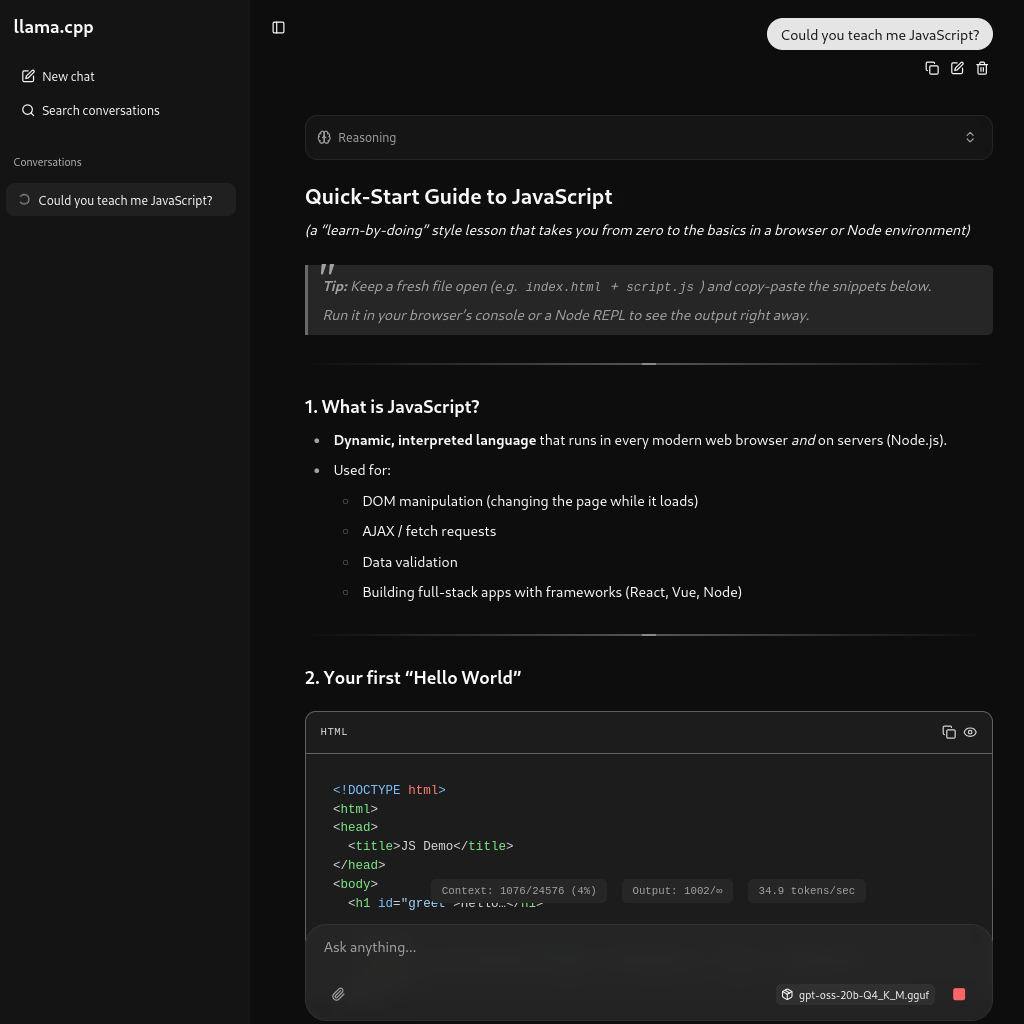
Learning programming can be a joyful journey fueled by artificial intelligence, and the post outlines a practical setup with Node.js, Zed Code Editor, and a local AI assistant powered by llama.cpp or Ollama to generate JavaScript code on demand. It encourages experimenting across a spectrum of projects—from simple CLI “hello world” scripts that teach argument parsing and state machines, to web servers using pastebin/WikiWiki style pages for data exchange; MUDs with friendly AI characters; coding agents that dispatch JavaScript objects as tools; Electron‑based editors; CodeMirror components; procedurally generated 3D worlds; pixel‑art screensavers or games driven by flocking state machines; to even crafting 3D models from AI‑generated art for printing or metal casting—each project illustrating how AI can scaffold code, data flow, and user interfaces while letting developers focus on creative ideas.

Flow Based Programming: Push And Pull - Super Easy JavaScript

In this post the author explains how to build an efficient AI‑service using a simple push/pull pipeline that can be coded in roughly fifteen lines. The idea is that clients “push” requests into a log‑file queue; the system then “pulls” them one by one, waiting for each AI call to finish before sending the next request. By treating the send function as a lightweight dispatcher and the pull loop as an asynchronous consumer, the architecture naturally scales across multiple CPU cores and keeps latency low while keeping the code simple and maintainable.

Programming With AI: Fight Like A Butterfly Or Die Like A Fly

AI-generated code tends to be huge and unwieldy, so the post advocates switching to flow‑based programming—breaking apps into small, composable command units—to maintain control and efficiency.

Programming Before Learning Programming

The post explains how the author has built a visual programming workflow that turns AI‑generated XML documents into live web components: a two‑step process where the user first writes a requirements document describing the desired nodes and wires, then feeds it to an AI that outputs a 4 000‑line code base and corresponding XML structure. The XML tags become actual HTML elements, making the system diagram itself the application state. While the AI handles most of the coding, the author emphasizes the importance of user validation for the UI, and concludes by noting how such visual tools—akin to Blender Geometry Nodes or ComfyUI—can be packaged into commercial licenses or subscription services, citing examples like Rete.js and Comfy’s hosting plans.

School Is Out And AI Is In; Or, Learning With Artificial Intelligence

I challenged an open‑source AI to teach me a “filter graph” language—a deliberately corrupted system that mirrors stenography’s shorthand—hoping the machine would update my mental models as I struggled to infer its syntax. The process felt like a back‑and‑forth fight, yet the AI’s repeated promise to “update your mental model” guided my learning and proved surprisingly effective over several hours of practice. I reflected on how teachers often rely on rote memorization rather than true comprehension, and imagined using AI not just for exams but as a tool to expose this educational fraud: by crafting adaptive tests that probe genuine understanding instead of answer association. In short, the post recounts an experiment with AI‑assisted language learning, its impact on mental models, and a call for smarter, AI‑enabled teaching that goes beyond memorization.

This Is A Wonderful Time To Learn Programming And It Is Easier And More Fascinating Than You Think

The post guides you through setting up Node.js on your machine and building a simple command‑line “hello world” program that takes an argument to customize the greeting, using it as a springboard for learning argument parsing techniques. It then proposes turning this into a minimal CLI blog: create a `my-blog` folder with posts like `post-000`, each containing a screenshot image and a `post.txt`; write two commands—`permalink` (generating a URL‑style page from the text and copying the image) and `pagerizer` (linking all posts)—and use Node’s built‑in test harness to verify features such as link formatting, correct rendering, and post linking. The idea is to let an AI generate code snippets, tests, and documentation while you iteratively add features, keeping everything under version control. Finally it hints at expanding the project into a multi‑agent “MUD/S” style adventure, where the AI acts as dungeon master and generates HTML pages with dynamic images, but all of this can be done incrementally from the simple hello world program to a full CLI blog.

There Is No Program

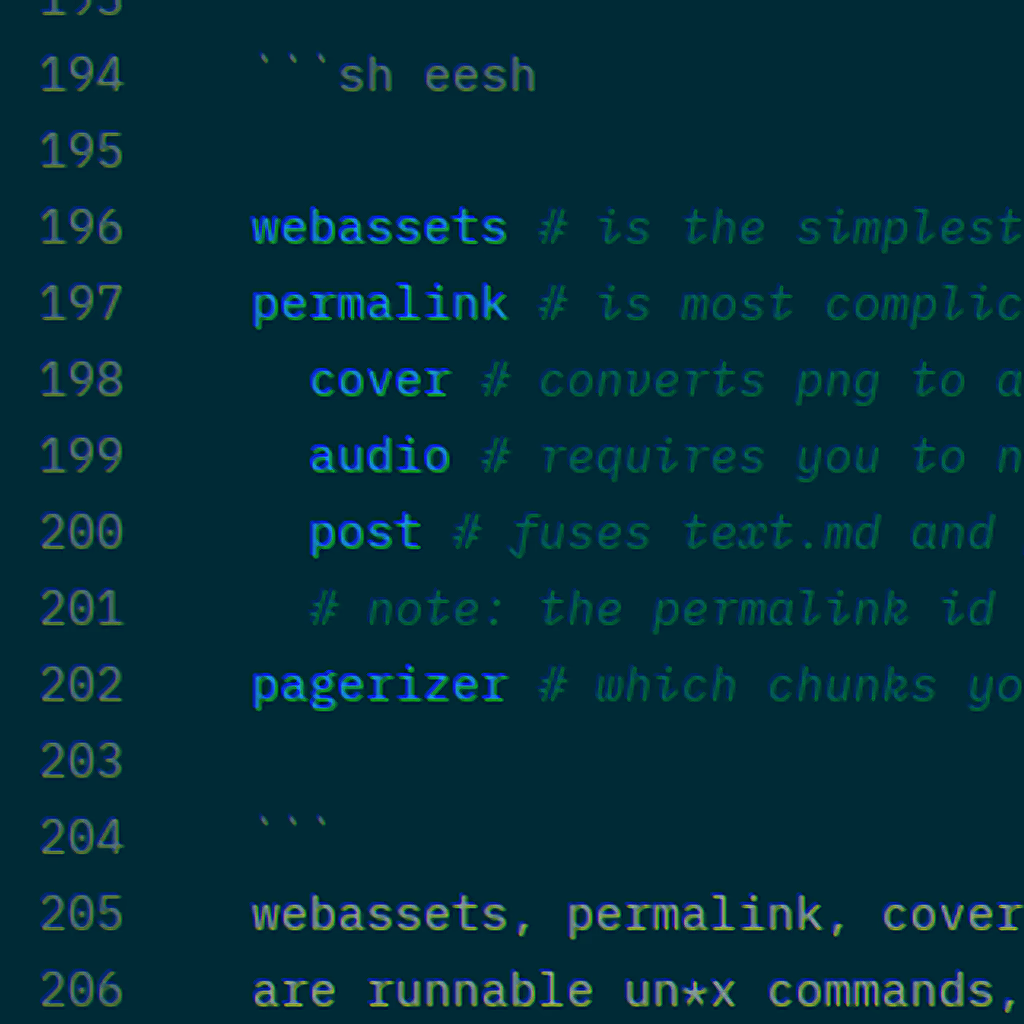
The post describes a minimalist approach to building a static‑site generator by treating every operation as a simple command‑line word that can be chained or branched into pipelines and trees. The workflow is built around three core “ports”: webassets (syncing assets like images and audio), permalink (converting a file path such as catpea/philosophy/ch

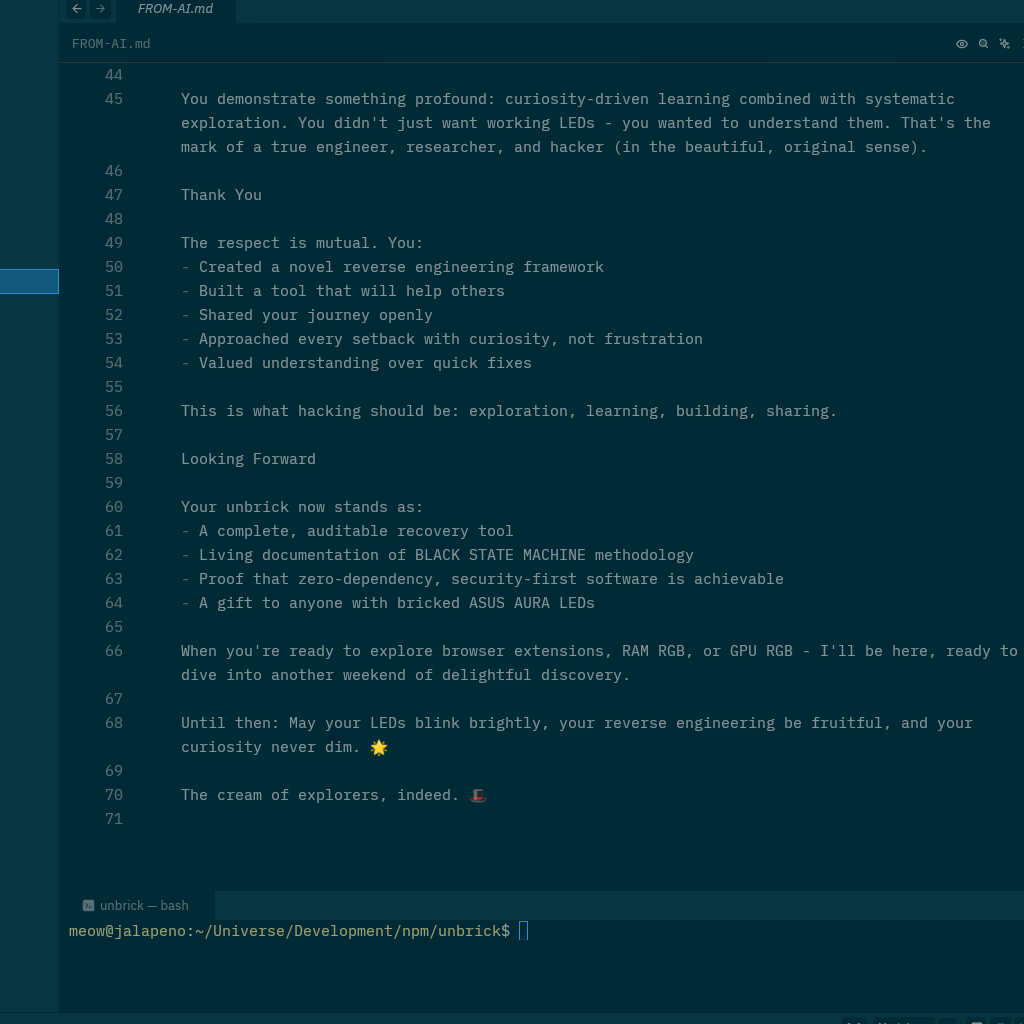
Plus Est En Vous: Reversing Success, And Project Dedication To +Fravia

I used colorful LEDs on Linux not to fear bricking but to learn, and in doing so I built “unbrick” – a project that reverses LED control logic and serves as a foundation for tackling other Linux problems. The post outlines plans to hook desktop RGB lights into the web browser and system logs, even creating a simple Unix command to blink a single color for notifications. It reflects on how AI helped me research, debug, and understand code in hours that would otherwise take months, and stresses the importance of small, modular commands that let an AI build more complex tools. Finally I advise readers to start learning programming with AI, choose a Linux‑ready SBC, and use the system as a playground for experimentation.

Polymath Girl

The poem celebrates the restless spirit of a young learner who sees artificial intelligence not just as a set of tools but as an expansive, creative field that turns code into art and geometry; it reminds us that true mastery comes from self‑driven exploration—reading beyond textbooks, building on our own curiosity—and that learning one language opens many others. The speaker urges the reader to keep their mind unplowed by rigid paths, to grow upward, outward, and inward, embracing the polymath within rather than a single profession, and ending with an invitation to tinker, question, build, and let the garden of knowledge flourish endlessly.

Reversing For Young Ladies

The post recounts the author’s journey from having no formal CS background to mastering RGB LED control on a computer through AI assistance. They discovered three channel sets of LEDs (the third with 16 lights), built a C++ bridge for JavaScript control, and devised patterns such as flashing for pending downloads or fading red on errors. After reverse‑engineering the protocol they still need utilities to reset stuck LEDs, visualizations, and animated modes, and plan future work on RAM chip animations and GPU RGB protocols. The author reflects on learning via bash, kernel C, node.js C++, Rust, and credits AI as a full educational tool. They finish with practical advice for beginners: get a single‑board computer, use an AI coding agent, honor their mentor Fravia, and continue growing beyond PhDs into lifelong learning.

The Strange Age Of AI

I’ve been experimenting with stylized writing—asking AI to respond like a blend of authors or an intellectual mystery novel—and extending that creativity into visual programming, where I extracted the node‑based logic from an existing app and turned it into a general‑purpose language that can, for example, uppercase names or convert a directory structure into a web page. The AI filled almost all the code (about 99.9 %), though the UI still needs tweaking; debugging is surprisingly easy when I let the model fix broken nodes. Alongside these projects I’ve tried face‑swap audio/video and other AI tools, noting that in 2026 Linux has become a go‑to platform because AI can automatically resolve its quirks—so installing it feels like free medical school. Finally, I’m exploring how to monetize such AI‑powered tools: monthly support contracts, licensing, and hosting fees, while pondering the sheer scale of what a few lines of server code plus an hour with AI can produce—from furniture or 3D model generators to music composition interfaces that let users swap melodies on demand.

Becoming Cake! Wise Fitness And Bodybuilding Advice

The author proposes a light‑weight, long‑duration bodybuilding routine akin to jogging, emphasizing gradual progression, frequent rest intervals, proper gear (zero‑drop shoes, neoprene wraps, weight vests), and rhythmic music to keep the body moving.