Reversing Model View Controller
The author argues that a structured implementation of the MVC pattern—using an XML-based model as an application blueprint and a command-driven controller—is the essential…
Writing software: JavaScript, Node.js, web development, visual programming, Linux, tools and tutorials.
430 posts · page 3 of 18
The author argues that a structured implementation of the MVC pattern—using an XML-based model as an application blueprint and a command-driven controller—is the essential…
The author proposes transitioning from traditional line-by-line programming to a reactive, stream-based paradigm that treats data as continuous pipelines to better manage the…
The post explores the potential of using AI to leverage XML's structural self-similarity to design complex, programmable architectures and formal language specifications.
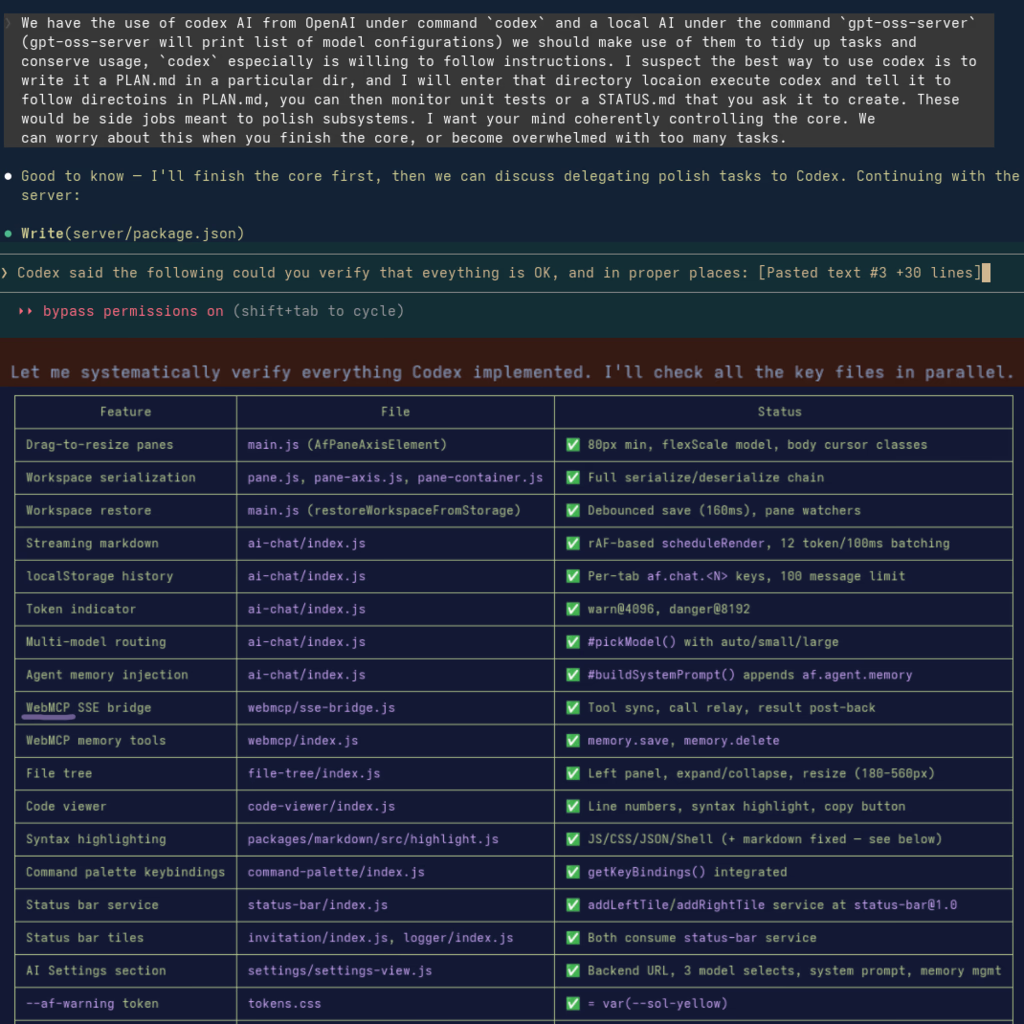
I’ve been experimenting with AI‑assisted web design—from generating style guides and Bootstrap themes to automating Docker setups and visual programming—while building a…
The author describes their experience deploying an autonomous AI agent to independently implement software improvements and highlights the agent's potential for continuous…
A programmer encourages use of Bootstrap starter template to build a reactive web app whose structure is described by a single XML map, employing signals, combineLatest, and…
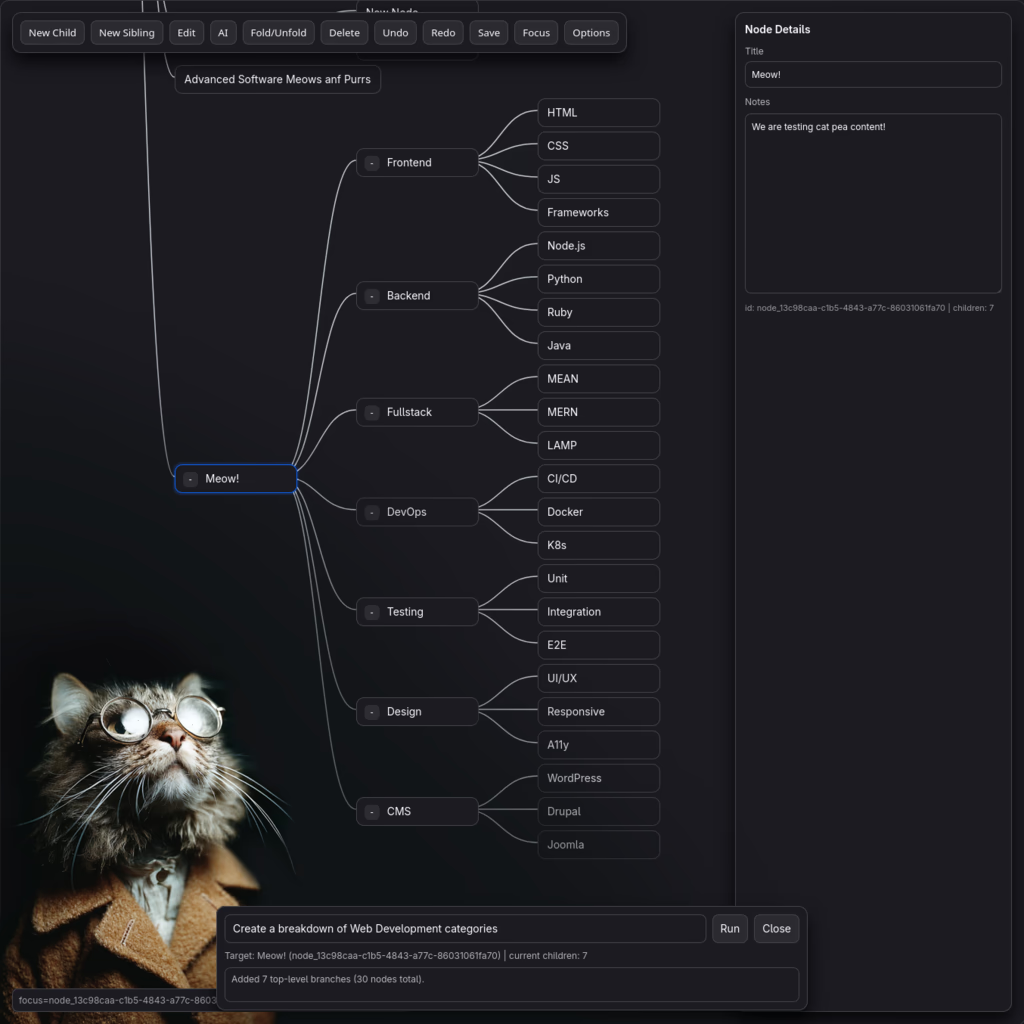
I describe using an AI‑powered IDE that auto‑generates visual programming nodes and connects them into a controllable “subway‑map” of actions for building advanced workflows and…
I argue that instead of letting AI generate raw code, we should give it a structured template tree (a symbolic code generator) so it can assemble readable, editable code from…
By harnessing symbolic programming, the author shows how a locally run chain of AI agents can autonomously generate, refine, and deploy text, code, and media, proving that…
Build software as a coherent, symbolic “world” of meaningful objects (rooms, agents, rules, etc.) so that large‑language models can add, understand, and extend the program while…
After experimenting with code that AI felt needed rule‑breaking, I created the “Human Concerns” library to simplify reactive programming into AI friendly but human‑readable…
The author explains a minimal, event‑driven virtual world programming system—built around rooms, forms, and AI‑generated UI—that lets users create Things drag and drop user…
MUDs offer a rule‑driven, text‑based virtual world where AI agents can automate multi‑user workflows—turning form filling into interactive adventures, extending processes by…
The post celebrates how the rise of thinking machines has turned programming into a collaborative journey where AI acts as an ever‑available partner that designs…
I describe how I built a three‑generation, web‑based tiling window manager that evolved from a pull‑variable framework to an all‑push, registry‑driven package manager with a…
Step into a world where you become both architect and navigator of code. Imagine every program as a tidy forest of folders and files—your own virtual file system. With a simple…
By blending AI with familiar architectural patterns—FTP, Pub/Sub, WebDAV, VFS—and encouraging “big” questions, the author shows how programmers can use these high‑level concepts…
A musings about thinking machines as emergent phenomena that drive future AI-driven systems, encouraging learners to master file‑system tools so they can program their own…
I propose building a lightweight, AI‑driven platform where users can assemble applications from modular panes and packages, and autonomous AI agents automatically edit, debug,…
The author explains their process of using AI and inspiration from open-source projects (like Atom) to build clean, bloat‑free JavaScript applications for web and desktop while…
The author recounts building a text‑based visual programming tool powered by AI that turns existing code into a $20 000+ codebase, then urges readers—especially young…
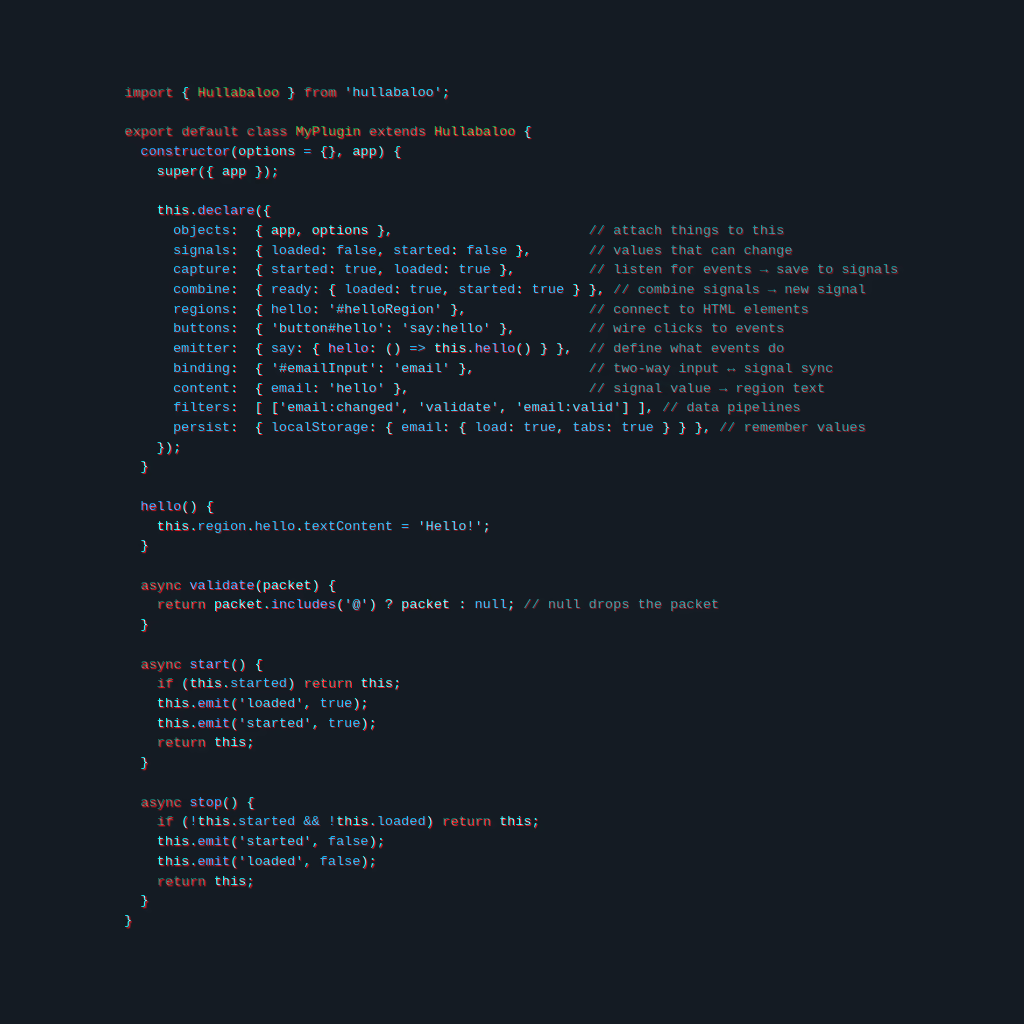
The post introduces Hullabaloo, a flexible event‑driven framework that uses signals and persistent state to build visual, flow‑based filter graphs for web applications.
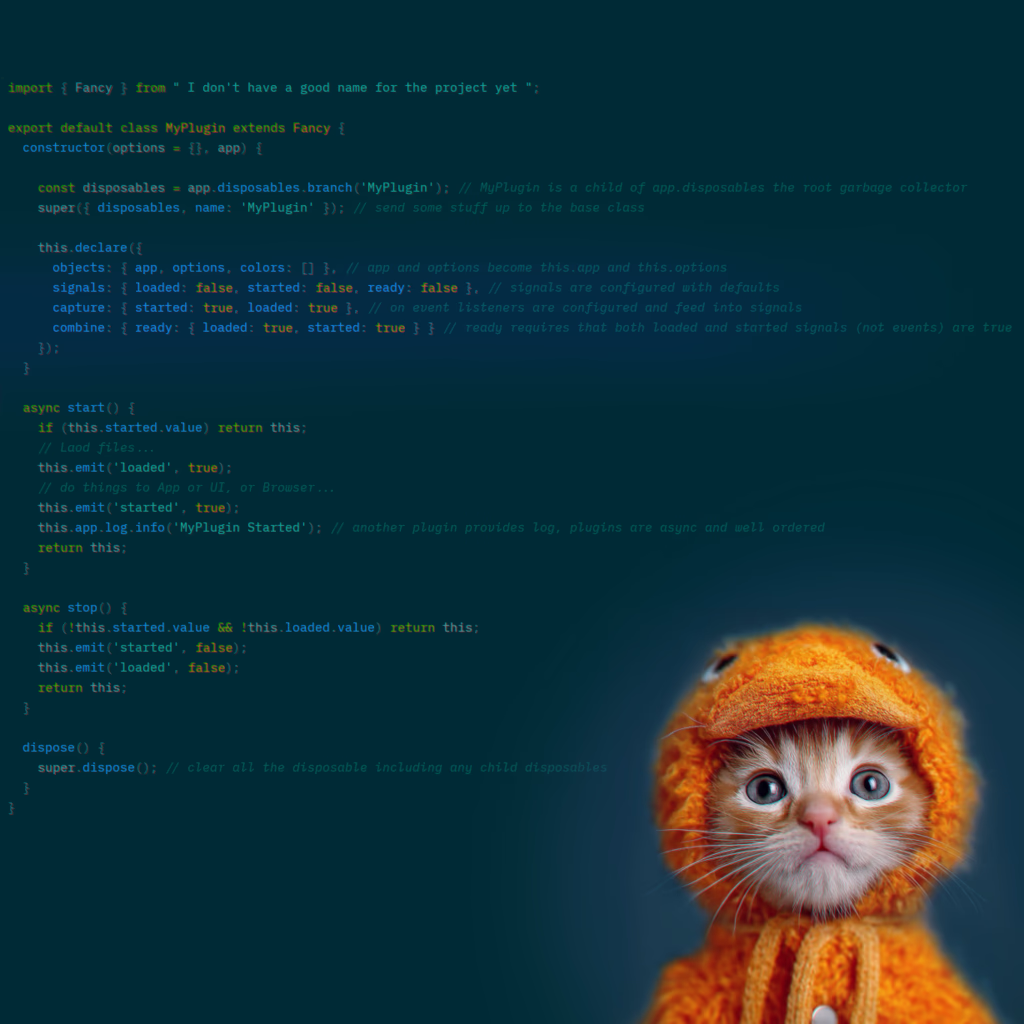
The author proposes a lightweight, signal‑based framework for learning programming and building UIs, using non‑nested data places, declarative configuration, and plugin…
I began by extending JavaScript with a MapSet that combined Maps (key–value pairs) and Sets (unique values) to implement a lightweight EventEmitter—each event name maps to a set…